

Abhishek Sharma praises ‘selfless’ Sanju Samson for letting Vaibhav Sooryavanshi open
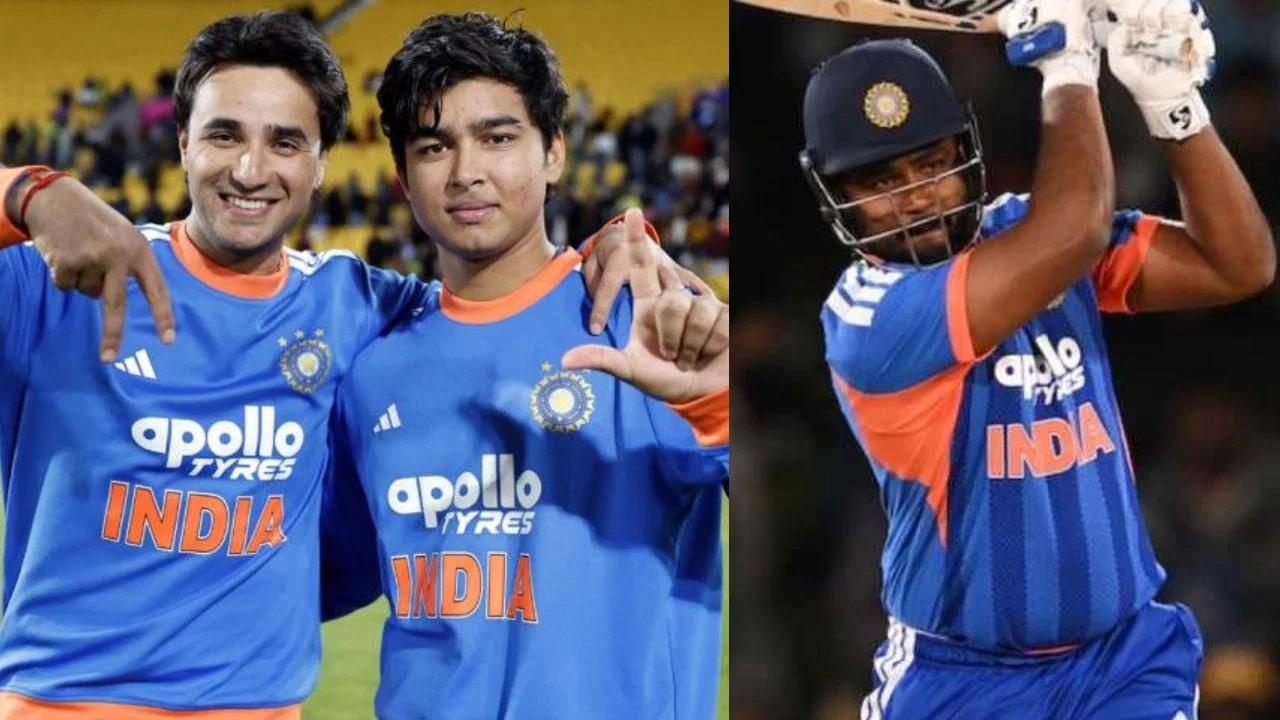
Abhishek Sharma Praises Sanju Samson’s Selfless Move in India’s Record T20I Chase
India’s record-breaking victory over New Zealand in the third T20I was powered by explosive batting, but Abhishek Sharma says the performance also reflected something less visible: a team-first culture in the dressing room. The opener praised Sanju Samson for willingly moving down the order to make room for young batter Vaibhav Sooryavanshi at the top.
India chased New Zealand’s target of 199 in just 13.2 overs, winning by six wickets and taking a 3-0 lead in the five-match series. Abhishek’s extraordinary century and Sooryavanshi’s rapid contribution dominated the scorecard. For Abhishek, however, Samson’s willingness to adjust his role helped give the rest of the batting group the confidence to play freely.
Sooryavanshi and Abhishek Set the Tone
India’s decision to pair Sooryavanshi with Abhishek at the top proved decisive. The two left-handers attacked from the outset, putting pressure on New Zealand’s bowlers before they could settle into their plans. Their opening stand of 133 came from just 7.1 overs, laying the foundation for a remarkably swift chase.
Abhishek produced the innings of the match, scoring 113 from only 38 balls. He struck nine fours and 11 sixes, reached his half-century in 15 deliveries and brought up his fourth T20I hundred in just 35 balls. His combination of clean hitting and relentless intent turned a demanding target into a chase India completed with time to spare.
Sooryavanshi supplied equally valuable momentum at the other end. He made 40 from 19 deliveries, hitting four boundaries and four sixes. The young opener’s aggressive start meant New Zealand had little opportunity to build pressure, even as India pursued a target that required a strong scoring rate.
India also set a new T20I benchmark by scoring 118 runs in the powerplay without losing a wicket. That record-breaking start was not simply a product of individual power. It reflected a clear approach: attack the available scoring options, keep the fielding side on the defensive and make the most of the opening overs.
Samson Accepts a Change in Batting Position
Samson had opened alongside Abhishek in the first T20I in Christchurch, where he scored 67 from 33 balls during India’s successful pursuit of 226 and earned Player of the Match honours. With that performance, he had made a strong case for retaining his place at the top of the order.
India’s batting combination changed as the series progressed. After Ishan Kishan was sidelined by injury before the second T20I, Sooryavanshi came into the side at number three, while Samson and Abhishek continued as openers. For the third match, the team restored Sooryavanshi to his familiar opening role, with Samson moving to number three.
The adjustment mattered because opening is often considered a specialist role in T20 cricket. Batters develop routines around the first few overs, including how they approach the new ball and respond to field restrictions. Samson’s experience at the top made his willingness to shift positions particularly significant. Rather than treating the change as a personal setback, he accepted the team’s plan.
Abhishek: Team Unity Creates Freedom
Speaking in a video shared by the Board of Control for Cricket in India, Abhishek highlighted the positive effect of Samson’s decision. He said the team’s willingness to make changes without complaint helped create an atmosphere in which players could bat with confidence.
Abhishek noted that Samson had opened in the previous matches and had delivered an impressive innings in Christchurch. Even so, the senior batter made way for Sooryavanshi when the team wanted the youngster back at the top. Abhishek described that response as an example of the character shown by the entire group.
He also pointed to the flexibility within India’s batting order, where players may be asked to take on different positions depending on the match situation. In his view, the willingness to adapt—and to do so positively—is a defining feature of a champion team.
That flexibility can offer India more than a feel-good story. In a long T20I series, teams may need to respond to injuries, changing conditions, opposition match-ups or a player’s current form. A batting order that can shift without disrupting the team’s confidence gives the captain and coaching staff more options. It can also help younger players settle into important roles when opportunities arise.
Why Samson’s Gesture Matters Beyond One Match
Samson’s move down the order did not guarantee a record chase, but it helped reinforce the conditions that made one possible. When established players show that roles are flexible, teammates can focus on the task rather than on their place in the lineup. That can be especially valuable for a young batter such as Sooryavanshi, who was given the chance to open in a high-pressure international match.
Abhishek’s comments also offer useful context for reading India’s performance. The result was built on spectacular hitting, but the team’s preparation and willingness to accommodate one another were part of the story. A successful batting order is not always a fixed sequence; it can be a combination of players prepared to take on the role that best serves the match.
For fans looking ahead, the series has provided plenty to consider in any prediction about India’s T20I prospects. Abhishek’s form, Sooryavanshi’s fearless start and Samson’s adaptability give the side several strengths. Still, maintaining that level of execution against different opponents will be the bigger test. New Zealand’s bowlers will look to adjust their plans, while India will need to keep balancing aggression with sound decision-making.
For now, India’s third T20I victory stands out both for its numbers and its team message. Abhishek delivered a breathtaking century, Sooryavanshi helped launch the chase, and Samson’s selfless adjustment demonstrated the value of putting collective goals first. As Abhishek suggested, that shared mindset may be just as important to India’s success as the record-breaking runs.
Latest News

SA vs BAN Playing 11 Today, Live Streaming, Pitch & Weather: South Africa tour of Bangladesh 2026, 2nd Test

AUS vs ENG Playing 11 Today, Live Streaming, Pitch & Weather: England tour of Australia 2026, 2nd T20I

Blair Tickner ruled out of 2nd Test vs India, replacement named

Tim Paine and Justin Langer face fresh questions over Australia’s ball-tampering scandal

India tour of Bangladesh gets fresh hope as BCB confirms talks with BCCI

Tom Latham opens up on soft ball problem and saliva ban after draw against India

Ajinkya Rahane slams Tilak Varma for publicly criticising Shahbaz Ahmed after India A’s defeat

ICC to introduce IPL-style bat checks in international cricket

“Smiling Laughing doesn’t happen”: R Ashwin’s dig at India’s approach after draw vs New Zealand

“Not good enough for Test cricket”: Scott Styris, Sunil Gavaskar slam Wellington pitch

Dodda Ganesh declares India ‘out of WTC final race’ after Wellington Test draw

Ajinkya Rahane criticises Shubman Gill for abusing Akash Deep in 1st Test vs New Zealand

‘Why so many boundary riders?’ Dinesh Karthik questions Shubman Gill’s captaincy after Wellington Test

“I just want to enjoy my life”: Yash Dayal reflects on his return to cricket


