

Arshdeep Singh creates history with two sixes in just four balls against New Zealand
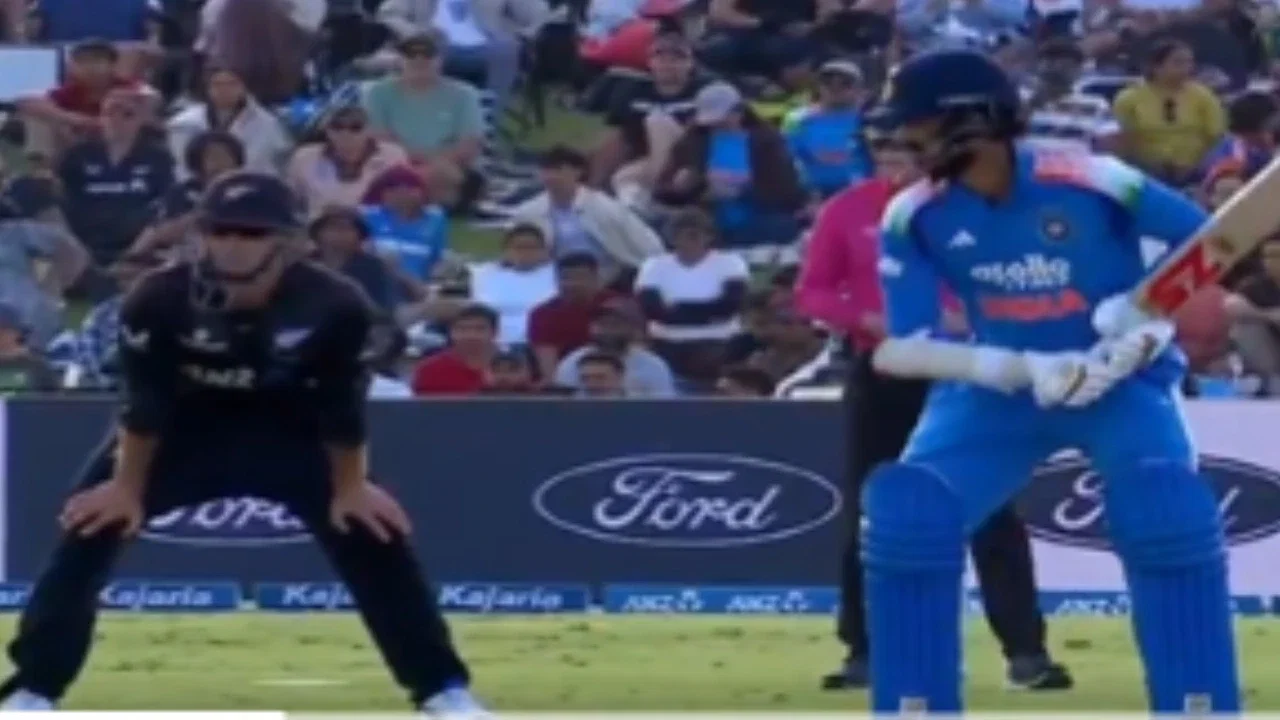
Arshdeep Singh’s Four-Ball Cameo Makes ODI History at No. 11
Arshdeep Singh turned a brief stay at the crease into one of the most memorable moments of India’s fifth and final ODI against New Zealand. Batting at No. 11 at Bay Oval in Mount Maunganui on Sunday, November 15, the Indian fast bowler struck two sixes from his first three deliveries, matching a pair of notable records for India’s lowest-order batters.
Arshdeep faced just four balls and finished with 14 runs. The innings was short, but his fearless hitting gave India a late burst of aggression and added his name to a select group of Indian No. 11s who have cleared the boundary twice in an ODI innings.
Arshdeep Attacks from His First Ball
Arshdeep wasted no time settling in. Facing New Zealand pacer Jacob Duffy, he launched the first ball he received over the boundary. He followed it up by striking another six off Duffy on the third delivery, briefly putting the bowler under pressure and energising the closing stages of India’s innings.
Duffy eventually had the final say, dismissing Arshdeep on the first ball of the 43rd over. Even so, the Indian left-armer had already made his mark. His rapid 14 off four balls was a reminder that lower-order players can change the mood of an innings in moments, particularly when they commit to attacking rather than simply trying to survive.
For fans looking ahead to India’s future matches, the cameo may also add an unexpected element to any prediction about the team’s batting depth. Arshdeep is primarily selected for his left-arm pace, but his ability to contribute quick runs could offer India another option in tight finishes.
A Rare First-Ball Six for an Indian No. 11
Arshdeep’s opening blow placed him among only three Indian batters to hit a six with the first ball of their ODI innings while batting at No. 11. Before him, Venkatesh Prasad and Jasprit Bumrah had achieved the feat.
Prasad struck his first-ball six against Australia during the 2000 Champions Trophy quarter-final in Nairobi. Nearly two decades later, Bumrah cleared the ropes off his first delivery against Pat Cummins in Mohali on March 10, 2019. Arshdeep’s six against Duffy added a new entry to the list.
Indian No. 11s to hit a six off their first ODI delivery
Venkatesh Prasad: Against Australia, Nairobi, October 7, 2000.
Jasprit Bumrah: Against Australia, Mohali, March 10, 2019.
Arshdeep Singh: Against New Zealand, Mount Maunganui, November 15, 2026.
The milestone underlines how the role of the No. 11 has evolved. Tailenders are still expected to support specialist batters and protect their wickets, but modern limited-overs cricket increasingly rewards players who can make the most of even a handful of deliveries.
Two Sixes Put Arshdeep Level with Prasad and Shami
Arshdeep’s second maximum brought another record into view. He became one of three Indian No. 11 batters to hit two sixes in a single ODI innings, joining Venkatesh Prasad and Mohammed Shami.
Prasad reached the mark against Pakistan in Toronto in 1996, scoring 19 from 19 balls. Shami matched it against Sri Lanka in Fatullah in 2014, making an unbeaten 14 from seven deliveries. Arshdeep’s 14 from only four balls was the quickest of the three innings by strike rate, although the small number of deliveries makes direct comparisons difficult.
India’s No. 11 batters with two sixes in an ODI innings
Venkatesh Prasad: 19 from 19 balls against Pakistan, Toronto, 1996.
Mohammed Shami: 14 not out from seven balls against Sri Lanka, Fatullah, 2014.
Arshdeep Singh: 14 from four balls against New Zealand, Mount Maunganui, 2026.
Several other Indian tailenders have also produced valuable late-order contributions. The records include one-six efforts from players such as Madan Lal, Zaheer Khan, Harbhajan Singh, Bhuvneshwar Kumar and Bumrah. These cameos may not always decide a match, but an extra 10 or 20 runs can prove significant in a close ODI contest.
Four-Six World Record Remains Out of Reach
While Arshdeep matched India’s two-six benchmark, the global ODI record for the most sixes by a No. 11 in one innings stands at four. Pakistan’s Mohammad Amir and Naseem Shah share that mark with New Zealand’s Blair Tickner.
Amir’s explosive 58 from 28 balls against England in Nottingham in 2016 remains one of the most remarkable lower-order innings in ODI cricket. Naseem produced a similarly memorable effort against New Zealand in Hamilton in 2025, scoring 51 from 44 deliveries. Tickner also struck four sixes against India in Auckland on November 4, 2026, making 34 from 23 balls in the first ODI of the series.
The contrast between those innings and Arshdeep’s cameo is striking: the Indian bowler had far less time at the crease, yet still matched the two-six record for his country. His innings was not a long rescue effort, but a concentrated burst of hitting that demonstrated the value of being ready to attack from the first ball.
Why the Cameo Matters
Arshdeep’s contribution should be viewed in context. Four deliveries are too few to establish a broader batting trend, and his primary value to India remains his work with the ball. However, the innings offered a glimpse of the confidence and intent that teams increasingly seek from their lower order.
For India, the episode adds an intriguing detail to discussions about batting depth and late-innings strategy. A No. 11 who can strike cleanly may help turn a modest total into a more competitive one—or provide a useful finishing push when the top and middle order have already built a platform. Whether Arshdeep can repeat the feat in future matches remains an open question, but his Mount Maunganui cameo has given fans a compelling reason to watch closely.
In the end, Arshdeep’s 14 runs may look small on the scorecard. Yet two towering sixes, a first-ball boundary and a place alongside Indian ODI record-holders made the innings far more significant than its length suggests.
Latest News

SA vs BAN Playing 11 Today, Live Streaming, Pitch & Weather: South Africa tour of Bangladesh 2026, 2nd Test

AUS vs ENG Playing 11 Today, Live Streaming, Pitch & Weather: England tour of Australia 2026, 2nd T20I

Blair Tickner ruled out of 2nd Test vs India, replacement named

Tim Paine and Justin Langer face fresh questions over Australia’s ball-tampering scandal

India tour of Bangladesh gets fresh hope as BCB confirms talks with BCCI

Tom Latham opens up on soft ball problem and saliva ban after draw against India

Ajinkya Rahane slams Tilak Varma for publicly criticising Shahbaz Ahmed after India A’s defeat

ICC to introduce IPL-style bat checks in international cricket

“Smiling Laughing doesn’t happen”: R Ashwin’s dig at India’s approach after draw vs New Zealand

“Not good enough for Test cricket”: Scott Styris, Sunil Gavaskar slam Wellington pitch

Dodda Ganesh declares India ‘out of WTC final race’ after Wellington Test draw

Ajinkya Rahane criticises Shubman Gill for abusing Akash Deep in 1st Test vs New Zealand

‘Why so many boundary riders?’ Dinesh Karthik questions Shubman Gill’s captaincy after Wellington Test

“I just want to enjoy my life”: Yash Dayal reflects on his return to cricket


