Australia vs Bangladesh: Mackay pitch likely to get ‘very good’ rating

Australia vs Bangladesh Two-Day Test Match in Mackay Pitch Receives ‘Very Good’ Rating
The Great Barrier Reef Arena pitch in Mackay has raised eyebrows with the recent two-day Test match between Australia and Bangladesh ending in lightning-fast fashion. Despite the short duration of the match, reports suggest that the pitch is set to receive the highest possible International Cricket Council (ICC) rating of “very good”. Match referee Sir Richie Richardson is expected to give the surface a glowing review after witnessing 30 wickets tumble in just 125 overs.
Australia emerged victorious in the Test, dismantling Bangladesh by an innings and 51 runs. Bangladesh were skittled out for a paltry 64 and 95 in their two innings, while Australia managed to post 210 on the board. The standout performer of the match was Mitchell Starc, who ended with impressive match figures of 10/51, including a remarkable 6/12 in the first innings alone. The Test saw a total of only 369 runs being scored off 750 balls, highlighting the dominance of the bowlers.
The main argument in favor of the pitch receiving a positive rating is that it provided traditional seam movement and bounce, rather than exhibiting any dangerous or unpredictable behavior. Starc himself defended the pitch, stating that the high number of wickets falling on the first day was a result of good bowling rather than a poor playing surface.
The match figures suggest that batting failures played a significant role in the quick finish of the Test. Bangladesh’s dismal performances with the bat in both innings, coupled with Australia’s strong bowling display, contributed to the swift conclusion. Cameron Green’s gritty 67 and Mitchell Starc’s superb bowling were the standout performances for Australia, while Shoriful Islam shone for Bangladesh despite the heavy defeat.
Mackay curator Peter Kazakoff expressed surprise at the high number of wickets falling on the first day but dismissed claims that the pitch was overly favorable to bowlers. He attributed the aggressive modern batting style to the influence of T20 cricket, stating that curators must adapt to the changing trends in the game. Kazakoff emphasized the need to strike a balance between bowler-friendly conditions and the demands of contemporary international cricket.
In conclusion, despite the brevity of the Australia vs Bangladesh Test match in Mackay, the pitch is set to receive a positive rating from the ICC. The focus now shifts to how both teams will adjust to the conditions in the upcoming matches and whether the pitch will continue to provide an even contest between bat and ball.
Impact of Pitch Conditions on the Outcome of the Test Match
While the Great Barrier Reef Arena pitch in Mackay received a “very good” rating from the ICC, it is essential to analyze how the pitch conditions influenced the outcome of the Test match. The traditional seam movement and bounce provided by the pitch favored the bowlers, leading to a high number of wickets falling in a short span of time. The dominance of the bowlers, exemplified by Mitchell Starc’s exceptional performance, played a crucial role in Australia’s comprehensive victory.
Player Adaptation to Playing Conditions
The rapid conclusion of the Test match also highlights the importance of players adapting to varying pitch conditions. With the proliferation of T20 cricket and the evolution of aggressive batting styles, batsmen are constantly challenged to adjust their approach to different surfaces. The Mackay pitch’s characteristics demanded a disciplined batting display, which was exemplified by Cameron Green’s resilient innings amidst the flurry of wickets falling around him.
The Role of Curators in Modern Cricket
Peter Kazakoff’s remarks on the influence of T20 cricket on modern batting techniques shed light on the evolving role of curators in international cricket. As the game progresses and players become more adept at aggressive stroke play, curators face the challenge of maintaining a balance between providing a fair contest between bat and ball while also catering to the demands of the contemporary game. The Mackay pitch exemplified this delicate balance, offering seam movement and bounce without veering into overly bowler-friendly territory.
Looking Ahead to Future Matches
As both teams prepare for upcoming matches in the series, the lessons learned from the Mackay Test will undoubtedly inform their strategies moving forward. Bangladesh will look to address their batting collapses and adapt to the challenging conditions, while Australia will aim to build on their strong bowling performance. The pitch in Mackay has set the stage for an intriguing battle between bat and ball, and the teams will need to showcase their adaptability to succeed in the remainder of the series.
In conclusion, while the Australia vs Bangladesh Test match in Mackay may have been brief, it provided valuable insights into the impact of pitch conditions on the game, the necessity for player adaptation, and the evolving role of curators in modern cricket. The positive rating received by the pitch underscores its quality, and the focus now shifts to how both teams will navigate the challenges posed by the playing surface in the upcoming matches.
Latest News

Top 10 highest run-chases in T20 cricket history, ft. West Indies’ Ranchi win vs India

Aaryavir Sehwag and Anvay Dravid set to make headlines at U19 Asia Cup 2026

Longest ducks in Test cricket history ft. Nic Maddinson, Shoaib Akhtar

ECB to offer 39 central contracts to England players after Ben Stokes, Mark Wood’s retirement

Steve Smith surpasses Steve Waugh in all-time Test run-scorers’ list

Shane Watson identifies Gautam Gambhir’s biggest problem as India struggle for consistency

Is Bhuvneshwar Kumar in India’s 2027 World Cup plans? Ajinkya Rahane makes revelation

BCCI’s big ₹127 Crore move after injury crisis raises concerns over Team India

Parthiv Patel reveals RCB ignored his Jasprit Bumrah recommendation in IPL 2014 Auction

“Never spoke ill of any faith”: Irfan Pathan hits back at fake news using his name
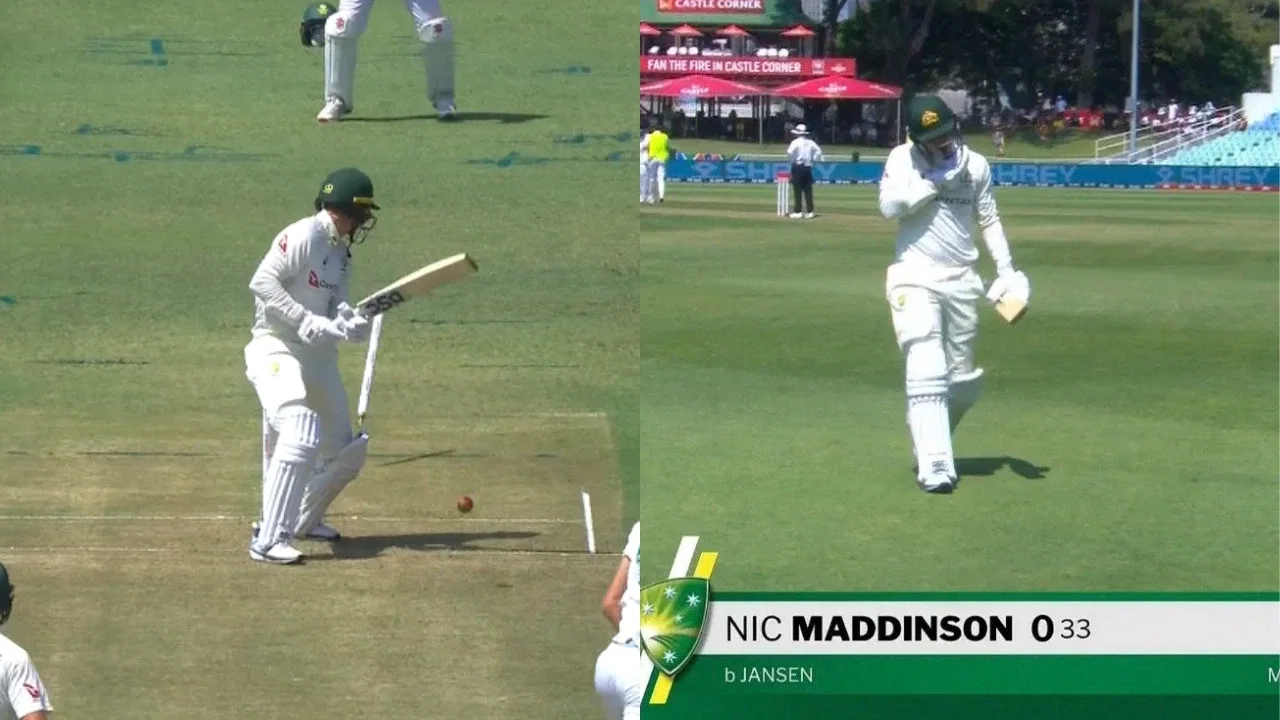
Nic Maddinson bags 33-ball duck on Test comeback, disappoints George Bailey

Imran Tahir predicts 2027 ICC ODI World Cup Semi-Finalists, snubs India for title

Australia create unwanted history with first all-30-plus Test XI

Ravindra Jadeja returns to Ranji Trophy as Saurashtra announce squad