

‘Bhuvneshwar Kumar’s India career is over’: R Ashwin delivers blunt verdict
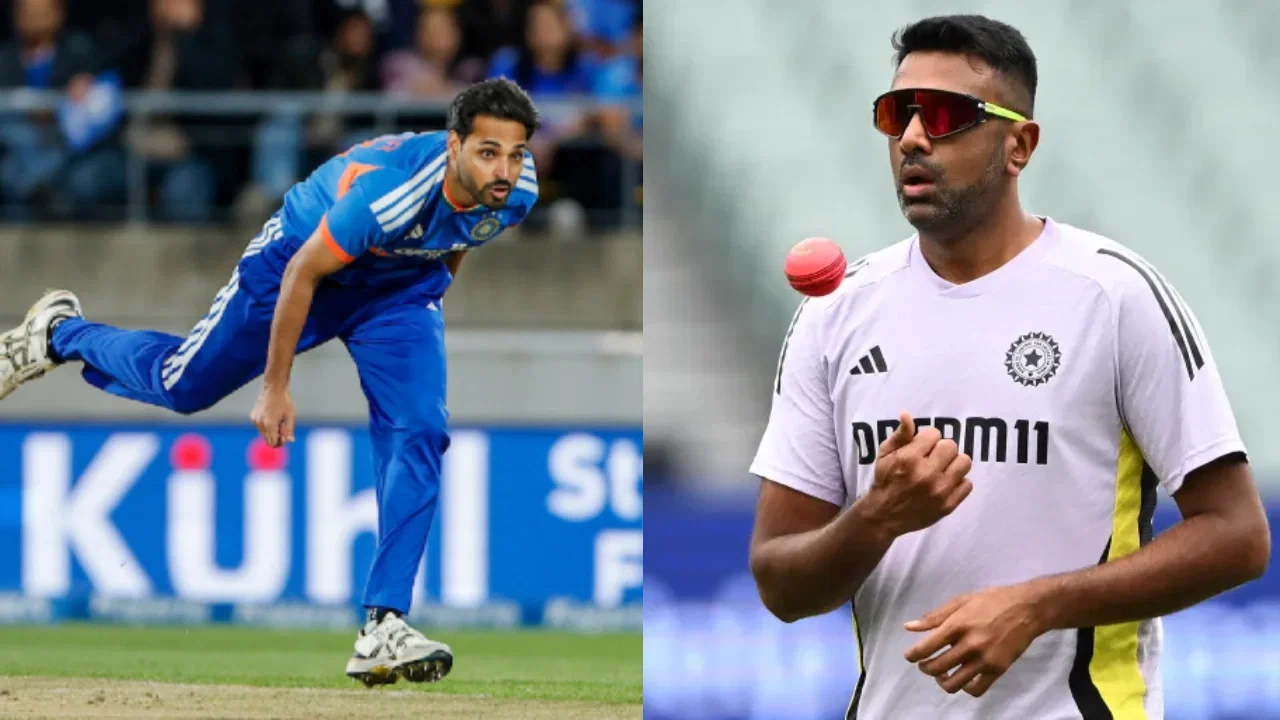
Ashwin Questions Bhuvneshwar Kumar’s India Future After Tough T20I Comeback
Ravichandran Ashwin has cast doubt on whether Bhuvneshwar Kumar will get another opportunity in India’s T20I side after the veteran fast bowler struggled during his return to international cricket. Bhuvneshwar was recalled following several impressive Indian Premier League seasons, but his performances against New Zealand fell well short of expectations.
India ultimately won the five-match series 3-2, yet the result offered little comfort for Bhuvneshwar. Across four appearances, the 36-year-old claimed just one wicket and conceded runs at a costly rate. Ashwin believes the contrast between the bowler’s IPL form and his international showing may leave selectors questioning whether he can still contribute at the highest level.
Bhuvneshwar’s Return Falls Short of Expectations
Bhuvneshwar’s recall marked his first appearance in India’s T20I setup in nearly four years. His strong displays for Royal Challengers Bengaluru in the previous two IPL seasons had revived hopes that his experience, control and ability to move the ball could strengthen the national attack.
However, the New Zealand series proved a difficult test. Bhuvneshwar gave away 180 runs in 16 overs, while taking only one wicket. His bowling average of 180.00 was reported as the worst recorded in a T20I series, surpassing the previous mark of 175.00 set by New Zealand’s Kyle Jamieson against Australia in 2021.
The figures underline how little margin for error the fast bowler had during the series. He opened with 0/49 in the first T20I, then took his only wicket in the second match while conceding 50 runs. In the third game, he finished wicketless after giving away 40 runs. Bhuvneshwar missed the fourth T20I before returning for the series finale, where he conceded 41 runs without a breakthrough.
None of his four outings produced an economical spell. For a bowler whose reputation has long rested on precision, swing and the ability to manage difficult overs, the lack of control was particularly striking. His experience and previous success had raised expectations, making the gap between promise and performance more noticeable.
Ashwin Sees a Clear Difference Between IPL and International Form
On his YouTube channel, Ashwin said Bhuvneshwar had not carried his franchise form into the India series. In his view, the issue was not simply the number of runs conceded; the bowler’s overall intensity appeared different from what he had shown in the IPL.
“Bhuvneshwar Kumar hasn’t bowled that well; he didn’t prove his form,” Ashwin said. He described the difference between Bhuvneshwar’s IPL performances and his displays against New Zealand as “night and day,” adding that the experienced pacer could find it difficult to return to the side.
Ashwin also pointed to aspects of Bhuvneshwar’s approach that are not always captured in a scorecard, including his run-up speed and bowling pace. He suggested that the bowler did not appear to be at his physical or preparation peak for the series.
“Leave performance, leave giving extra runs. It’s not that,” Ashwin said. “The intensity, his run-up speed was lower, and his bowling speed was also lower. That tells me maybe he didn’t come in prime training form for this series.”
Those observations raise a broader question for India’s selectors: how much weight should a team give to a player’s recent domestic or IPL success when his international return does not match it? Franchise cricket can demonstrate current skill and confidence, but international T20 cricket brings different pressure, opposition plans and expectations. A short series may not tell the whole story, though a costly spell can quickly influence selection discussions.
Why Another Opportunity Could Be Difficult to Secure
Ashwin argued that selectors may judge a senior player returning from a long absence differently from a young newcomer. An emerging cricketer might be given several matches to settle into international cricket, while an experienced player is often expected to make an immediate impact.
“If you’re a new kid or a young boy, you’ll get ten chances. But you’re an experienced guy coming back,” Ashwin said, suggesting that Bhuvneshwar’s record and reputation could make the expectations around his comeback especially demanding.
That does not necessarily mean the bowler’s international career is over. Selection decisions depend on India’s schedule, team balance, fitness, conditions and the performances of other available pace options. Bhuvneshwar’s experience could still be valuable, particularly in conditions where swing bowling and control are important. But after this series, a future recall may require a strong run of performances and clear evidence that his pace and rhythm have returned.
Ashwin Points to Mohammed Shami’s Red-Ball Rhythm
Ashwin also mentioned Mohammed Shami as a potential pace option, noting that the fast bowler had been building rhythm in the Ranji Trophy. Shami had taken 12 wickets in three matches at the time of Ashwin’s comments, offering a reminder that domestic cricket can play an important role in shaping India’s selection picture.
“Right now I’m thinking that the way Shami is coming in Ranji and bowling, he is in much better rhythm,” Ashwin said, comparing Shami’s current momentum with Bhuvneshwar’s showing in the New Zealand T20Is.
The comparison is not a direct guarantee that Shami will be selected for T20Is, since formats place different demands on fast bowlers. Still, strong domestic performances can strengthen a player’s case, especially when selectors are assessing fitness, workload and match readiness. For India, the challenge is to identify bowlers who can deliver reliably across different phases of a T20 innings.
What the Prediction Means for India’s T20I Pace Plans
Ashwin’s prediction that Bhuvneshwar’s chapter with India may be closed reflects the uncertainty created by a difficult comeback, rather than a formal selection announcement. The final decision rests with the selectors, who will weigh the series numbers against Bhuvneshwar’s overall career, current fitness and future performances.
For now, the New Zealand series has shifted attention from the IPL success that earned Bhuvneshwar his recall to the areas he must improve if he hopes to return. A sharper run-up, greater pace and better control would help rebuild confidence, while consistent performances at domestic or franchise level could provide further evidence of a resurgence.
The wider lesson is that reputation can open the door, but current form often determines whether a player stays in the conversation. Bhuvneshwar’s next steps will be closely watched by fans, selectors and analysts as India continues to assess its fast-bowling options. Whether this series proves to be a temporary setback or the final chapter of his international career will depend on what he does next—and on the opportunities India’s selection plans allow.
Latest News

SA vs BAN Playing 11 Today, Live Streaming, Pitch & Weather: South Africa tour of Bangladesh 2026, 2nd Test

AUS vs ENG Playing 11 Today, Live Streaming, Pitch & Weather: England tour of Australia 2026, 2nd T20I

Blair Tickner ruled out of 2nd Test vs India, replacement named

Tim Paine and Justin Langer face fresh questions over Australia’s ball-tampering scandal

India tour of Bangladesh gets fresh hope as BCB confirms talks with BCCI

Tom Latham opens up on soft ball problem and saliva ban after draw against India

Ajinkya Rahane slams Tilak Varma for publicly criticising Shahbaz Ahmed after India A’s defeat

ICC to introduce IPL-style bat checks in international cricket

“Smiling Laughing doesn’t happen”: R Ashwin’s dig at India’s approach after draw vs New Zealand

“Not good enough for Test cricket”: Scott Styris, Sunil Gavaskar slam Wellington pitch

Dodda Ganesh declares India ‘out of WTC final race’ after Wellington Test draw

Ajinkya Rahane criticises Shubman Gill for abusing Akash Deep in 1st Test vs New Zealand

‘Why so many boundary riders?’ Dinesh Karthik questions Shubman Gill’s captaincy after Wellington Test

“I just want to enjoy my life”: Yash Dayal reflects on his return to cricket


