Cheteshwar Pujara exposes Australia’s dressing-room DRS tactic from 2017 BGT
Unveiling the Untold Stories of the 2017 Border-Gavaskar Trophy: Inside the Intense India-Australia Test Series
The 2017 Border-Gavaskar Trophy stands out as one of the most gripping and memorable Test series in Indian cricket history. Marked by fierce competition, intense rivalries, and controversial moments, this series not only tested the skills and resilience of both teams but also exposed the raw emotions and strategic maneuvers behind the scenes. India emerged victorious with a 2-1 series win, but the series’ true legacy lies in the stories of rivalry, controversy, and the fierce determination displayed by players on both sides.
Revisiting the Bengaluru Test: The Controversy That Shook Cricket
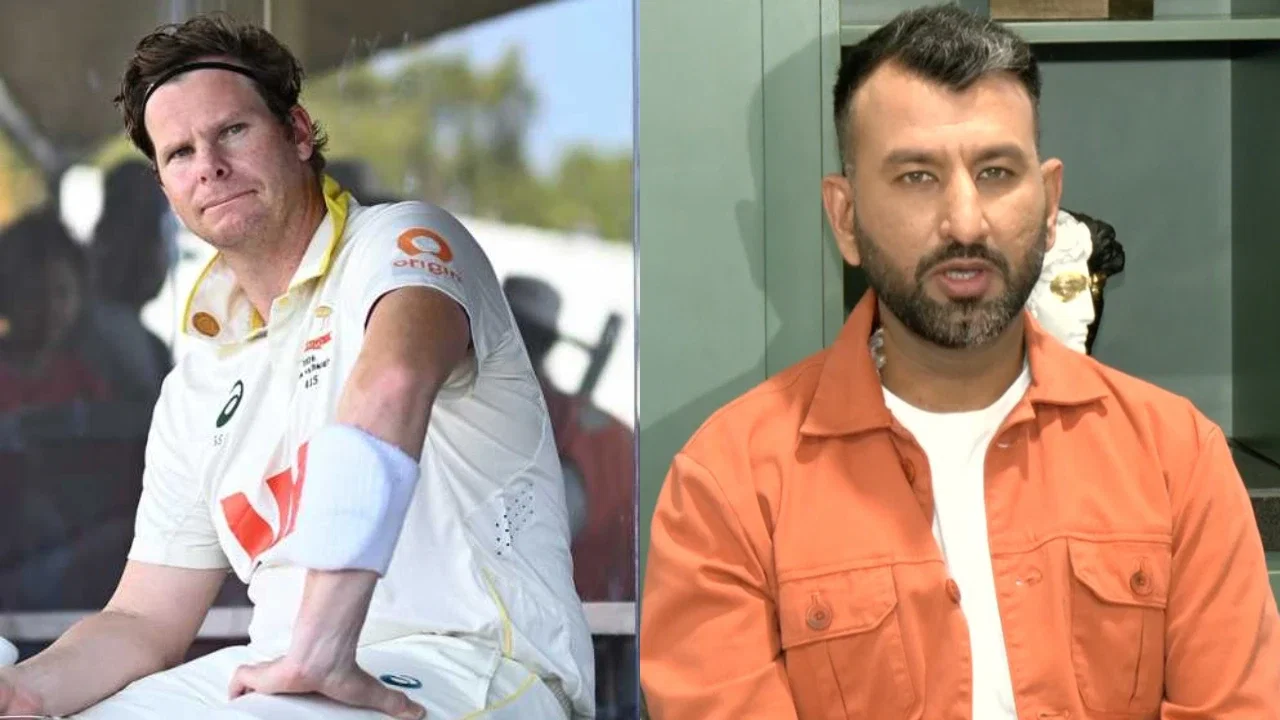
Among the four matches, the Bengaluru Test became the epochal showdown that fans and analysts still discuss today. Australia was chasing a modest target of 188 runs when Steve Smith, Australia’s then-captain, was dismissed LBW by Umesh Yadav. The moment turned into a controversy when Smith, instead of immediately walking off or consulting with his non-striker Peter Handscomb, looked towards the Australian dressing room. This act sparked immediate objections from Indian players, led by captain Virat Kohli, who argued that Smith was seeking external assistance, thus violating the spirit of the game.
The umpires ruled that the DRS (Decision Review System) could not be taken because the review window had expired, a decision that added fuel to the fire. Smith later admitted that his actions were a mistake, but the incident had already ignited a fierce debate about fair play and sportsmanship. The controversy was not just about a single decision but became emblematic of the wider rivalry and the undercurrents of strategic advantage being sought by both teams.
The Hidden Advantage: Australia’s Use of Live Dressing Room Feeds
In the aftermath of the series, revelations emerged that added a new dimension to the controversy. Cheteshwar Pujara, one of India’s stalwarts, disclosed that Australia had access to a live TV feed inside their dressing room during the Bengaluru Test. This insight provided the Australian team with real-time replays and strategic information, giving them an unfair advantage when deciding whether to contest DRS calls.
In a candid conversation with renowned cricket analyst Aakash Chopra on his YouTube channel, Pujara shared, “Every time you looked at their DRS decisions, they were spot on. They knew whether they had to take it or not. Until then, none of us Indian players were aware that Australia had a live feed in their dressing room.” He further explained how the Australian team would discreetly peek at the dressing room TV screens, often in a sneaky manner, to gather crucial information before making their DRS decisions.
Pujara emphasized that such tactics, while technically not illegal, blurred the lines of fair play. “It was unfair in a way. You are searching for the loophole. If this was done by any other team, they would’ve objected. But they had no problem doing it themselves.” His comments reignited debates about the ethics of using available technology and the importance of maintaining fairness in international cricket.
The Personal and Psychological Toll: When Rivalry Turns Personal
The 2017 series was not only marked by strategic battles but also by psychological warfare. Cheteshwar Pujara openly admitted that the intensity of the rivalry sometimes led players to cross personal boundaries. The series, which was Australia’s first serious challenge in India since 2012, saw both teams pushing their limits, often resorting to sledging and mind games.
According to Pujara, the players were aware of microphones and cameras capturing their exchanges, leading to some comments becoming quite personal. In his words, “A lot happened during the series. On the field, a lot happened, and a lot of them I cannot talk about, which I feel shouldn’t have happened.” He confessed that the rivalry sometimes escalated into personal jabs and sledging that went beyond the boundaries of sportsmanship.
He further reflected, “You do that when the opponent is sledging a lot; then you go into that space where I am not going to hold back now. Ultimately, the purpose is to pick a wicket, but a lot of the time you end up making personal comments, which you are not proud of.” This candid admission sheds light on the emotional toll such high-stakes matches can have on players, pushing them into a space where personal and professional boundaries blur.
The Prediction and Future Outlook: What Do These Insights Mean for Cricket?
As cricket fans and analysts revisit the 2017 Border-Gavaskar series, a key question emerges: what can these revelations tell us about the future of international cricket? The series has become a case study in the importance of fair play, the ethical use of technology, and the psychological resilience required at the highest levels of sport.
From a prediction standpoint, such insights suggest that future series will need stricter regulations around technology use and more transparent oversight to prevent unfair advantages. The controversy surrounding the Australian dressing room feed underscores the necessity for the International Cricket Council (ICC) to tighten protocols and ensure that all teams adhere to the highest standards of integrity.
Furthermore, the emotional and mental aspects revealed by Pujara hint at the importance of mental conditioning and sportsmanship training for players. As cricket continues to evolve into a highly competitive and media-driven sport, maintaining respect, fairness, and professionalism will be crucial for preserving the spirit of the game.
The Legacy of the 2017 Series: Lessons Learned and Unfinished Business
The 2017 Border-Gavaskar Trophy remains a defining chapter in Indian cricket history, not just because of the on-field results but also due to the behind-the-scenes revelations that continue to influence how fans and players view the sport. The series highlighted the fierce competitiveness that characterizes cricket rivalries, as well as the ethical dilemmas that come with technological advancements.
Looking ahead, cricket authorities and teams are expected to implement stricter monitoring and to promote a culture of sportsmanship. The series also serves as a reminder that victory achieved through questionable means can tarnish a team’s legacy, no matter how significant the win.
In conclusion, the insights shared by Cheteshwar Pujara and other players shed light on the complex dynamics of high-stakes cricket. As the prediction models for future series suggest, maintaining fairness, transparency, and respect will be essential to safeguarding the integrity of the sport. The 2017 series was a watershed moment, teaching lessons that resonate well beyond cricket — about competition, ethics, and the true spirit of sportsmanship.
Latest News

Top 10 highest run-chases in T20 cricket history, ft. West Indies’ Ranchi win vs India

Aaryavir Sehwag and Anvay Dravid set to make headlines at U19 Asia Cup 2026

Longest ducks in Test cricket history ft. Nic Maddinson, Shoaib Akhtar

ECB to offer 39 central contracts to England players after Ben Stokes, Mark Wood’s retirement

Steve Smith surpasses Steve Waugh in all-time Test run-scorers’ list

Shane Watson identifies Gautam Gambhir’s biggest problem as India struggle for consistency

Is Bhuvneshwar Kumar in India’s 2027 World Cup plans? Ajinkya Rahane makes revelation

BCCI’s big ₹127 Crore move after injury crisis raises concerns over Team India

Parthiv Patel reveals RCB ignored his Jasprit Bumrah recommendation in IPL 2014 Auction

“Never spoke ill of any faith”: Irfan Pathan hits back at fake news using his name

Nic Maddinson bags 33-ball duck on Test comeback, disappoints George Bailey

Imran Tahir predicts 2027 ICC ODI World Cup Semi-Finalists, snubs India for title

Australia create unwanted history with first all-30-plus Test XI

Ravindra Jadeja returns to Ranji Trophy as Saurashtra announce squad