

Crazy Kuldeep Yadav stat shows how he is being wasted under Gautam Gambhir
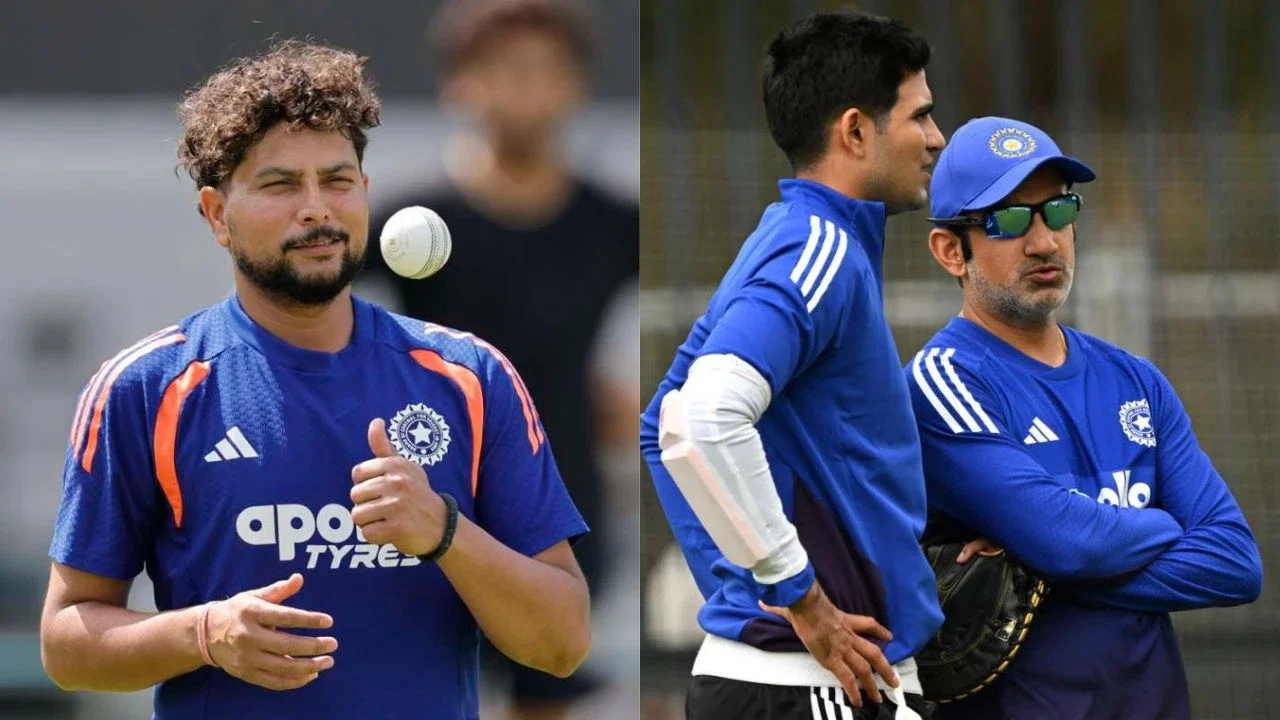
Kuldeep Yadav’s Limited Role Raises Questions Ahead of India’s New Zealand Tests and ODIs
Kuldeep Yadav’s place in India’s plans remains secure, but his limited involvement under head coach Gautam Gambhir has prompted fresh debate. The left-arm wrist-spinner has played in only three of India’s 35 matches in SENA countries—South Africa, England, New Zealand and Australia—over the past 24 months. For a bowler whose ability to change a game with a spell of attacking spin is well established, the lack of opportunities is striking.
Kuldeep has also been left out of the entire five-match T20I series against New Zealand, having appeared in just two matches against the West Indies before the tour. The team has instead favoured additional batting depth, selecting spin-bowling all-rounders Axar Patel and Naman Dhir. That approach may suit the demands of a particular T20 combination, but it has renewed questions about when India will make room for a specialist wrist-spinner.
Team balance behind Kuldeep’s T20I omission
India’s spin-bowling coach Sairaj Bahutule has said Kuldeep and fellow spinner Varun Chakravarthy understand the team’s balance requirements and remain prepared when called upon. The explanation reflects a familiar challenge in modern T20 cricket: teams want specialist bowlers who can take wickets, but they also value players who add runs and flexibility to the batting order.
In a format where a lower-order batter can determine whether a side reaches a competitive total, selectors often weigh a bowler’s specialist skills against the extra batting options offered by an all-rounder. Axar’s left-arm spin and batting, for example, can provide India with useful flexibility. But that calculation becomes more complicated when a match demands a different kind of bowling threat.
India’s 87-run defeat in the fourth T20I at Eden Park, where New Zealand scored 259 for seven, intensified the discussion. The Auckland venue is known for its compact boundaries, making it difficult for bowlers to defend a total once batters find their range. After the loss, critics questioned whether India’s attack could have benefited from Kuldeep’s ability to vary his pace and flight rather than relying primarily on flatter, quicker deliveries.
Why a wrist-spinner could have changed the match-up
Former India batter Ambati Rayudu has argued that Kuldeep might have offered a different challenge to New Zealand’s batters. Finger-spinners such as Axar and Naman typically operate with a flatter trajectory and aim to limit scoring through accuracy and pace. Kuldeep, by contrast, can give the ball more air, invite an aggressive shot and use turn or changes of pace to create a wicket-taking opportunity.
That distinction can matter at a ground with short boundaries. Batters may be tempted to attack the longer square side when a spinner tosses the ball up, potentially turning a boundary into a catch in the deep. The strategy is not without risk—flighted deliveries can also disappear over the rope—but it gives a captain a different option when containment alone is not working.
Rayudu’s point is less about suggesting that Kuldeep would automatically have prevented India’s defeat and more about the value of tactical variety. Against a powerful batting lineup, a specialist wrist-spinner can disrupt a batter’s rhythm, challenge both edges and force decisions that a quicker, flatter spell may not provoke.
Kuldeep Yadav’s record supports his case
Kuldeep’s numbers underline why his omission attracts attention. In T20 internationals, he has taken 98 wickets in 56 matches, averaging 14.20 with an economy rate of 7.10. Those figures point to a bowler who has regularly combined control with the ability to break partnerships.
His record in SENA conditions is also notable. Across 10 matches, including nine bowling innings, he has claimed 19 wickets at an average of 12.52 and an economy rate of 7.17. The sample size is smaller than his overall international record, but the returns suggest that his style can be effective outside the spin-friendly conditions often associated with the subcontinent.
In South Africa, Kuldeep has taken six wickets in two innings at an average of 7.16, with a best performance of five for 17. In England, he has collected five wickets in two innings at an average of 11.60, including figures of five for 24. Those spells demonstrate the potential value of attacking wrist-spin even when conditions do not appear to favour slow bowlers.
His record in Australia includes six wickets across five matches, with best figures of two for 24. In New Zealand, he has taken two wickets for 26 runs in his only four-over spell. These figures should be viewed in context: conditions, match roles and opportunities vary considerably from tour to tour. Even so, they offer a strong case for keeping Kuldeep in consideration when India need a wicket-taking option.
ODI series offers a likely route back into the XI
Kuldeep is expected to have a stronger chance of featuring in India’s upcoming five-match ODI series against New Zealand. The 50-over format often gives teams more room to include a specialist bowler, particularly when they can build the batting order around a deeper top and middle order. That could allow Kuldeep to operate as a central attacking option rather than competing directly with an all-rounder for a lower-order place.
The ODI series is scheduled to begin at Eden Park in Auckland on November 4. The second match is set for Hnry Stadium in Wellington on November 7, followed by the third at Seddon Park in Hamilton on November 10. The final two games will take place at Bay Oval in Mount Maunganui on November 13 and 15. The venues offer different conditions, giving India an opportunity to assess how best to use their spin resources across the tour.
His selection would also offer India a chance to test combinations ahead of future international commitments. Kuldeep can be used to attack during the middle overs, when wickets are often more valuable than simply restricting the run rate. If he finds turn or deceives batters through changes in flight, he can alter the course of an innings quickly.
Test cricket could provide another opportunity
After the white-ball matches, Kuldeep is also part of India’s squad for the two-Test series against New Zealand, which is scheduled to begin in Wellington on November 19. Test cricket offers a different opportunity: longer spells, more time to work over a batter and the possibility of exploiting wear on the pitch as a match progresses.
His inclusion does not guarantee a place in the starting XI. India will have to consider the surface, weather, workload and balance of the bowling attack before choosing their combination. But a specialist spinner with Kuldeep’s wicket-taking record gives the selectors a valuable option, especially if conditions begin to assist turn.
For now, the key question is not whether Kuldeep remains part of India’s plans, but how the team intends to use him. The T20I omission reflects the management’s preference for batting depth; the upcoming ODIs and Tests may offer a clearer test of whether India are willing to prioritise his attacking strengths. The prediction is that Kuldeep will have a better chance of returning in the longer formats, where his ability to create breakthroughs may outweigh the extra batting cover offered by another all-rounder.
Latest News

SA vs BAN Playing 11 Today, Live Streaming, Pitch & Weather: South Africa tour of Bangladesh 2026, 2nd Test

AUS vs ENG Playing 11 Today, Live Streaming, Pitch & Weather: England tour of Australia 2026, 2nd T20I

Blair Tickner ruled out of 2nd Test vs India, replacement named

Tim Paine and Justin Langer face fresh questions over Australia’s ball-tampering scandal

India tour of Bangladesh gets fresh hope as BCB confirms talks with BCCI

Tom Latham opens up on soft ball problem and saliva ban after draw against India

Ajinkya Rahane slams Tilak Varma for publicly criticising Shahbaz Ahmed after India A’s defeat

ICC to introduce IPL-style bat checks in international cricket

“Smiling Laughing doesn’t happen”: R Ashwin’s dig at India’s approach after draw vs New Zealand

“Not good enough for Test cricket”: Scott Styris, Sunil Gavaskar slam Wellington pitch

Dodda Ganesh declares India ‘out of WTC final race’ after Wellington Test draw

Ajinkya Rahane criticises Shubman Gill for abusing Akash Deep in 1st Test vs New Zealand

‘Why so many boundary riders?’ Dinesh Karthik questions Shubman Gill’s captaincy after Wellington Test

“I just want to enjoy my life”: Yash Dayal reflects on his return to cricket


