

David Saker accused of asking Steve Smith and Cameron Bancroft to hide Sandpaper truth
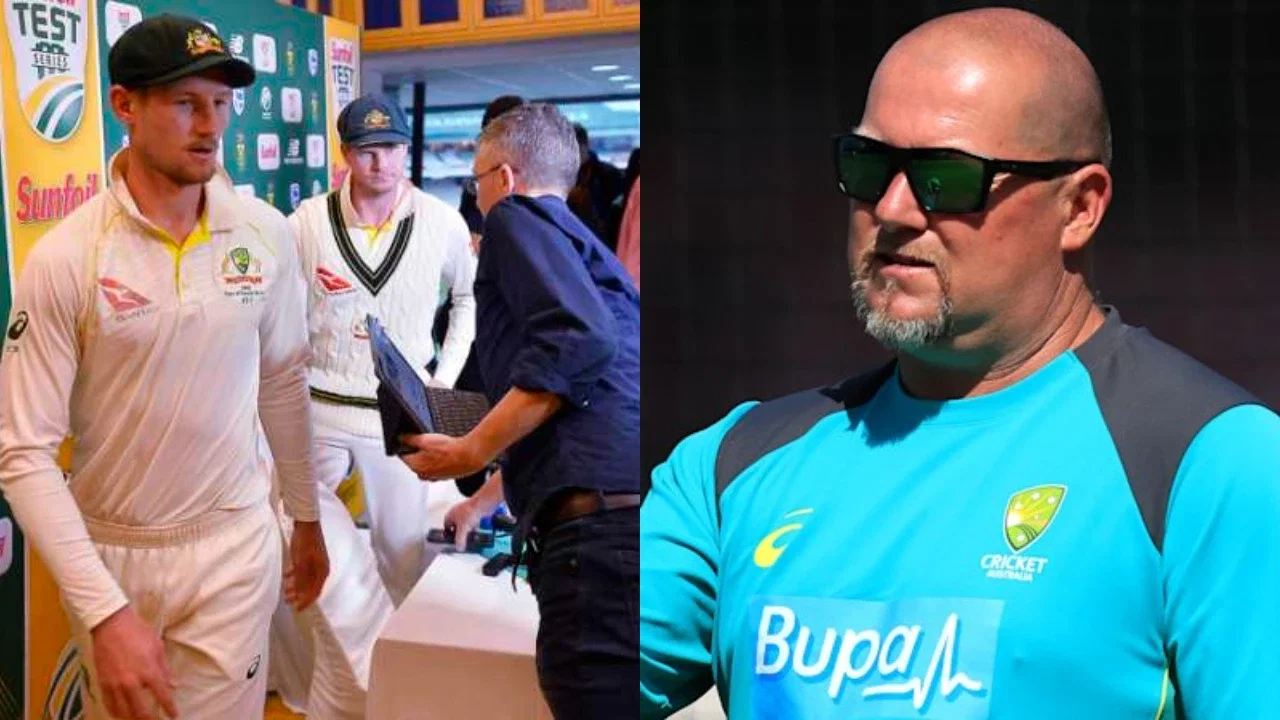
David Saker Faces Fresh Allegations Over Australia’s 2018 Ball-Tampering Scandal
Fresh claims have reopened debate about Australia’s 2018 ball-tampering scandal, with former bowling coach David Saker reportedly accused of urging Steve Smith and Cameron Bancroft not to disclose that the yellow object used at Newlands was sandpaper.
The allegations, reported by The Age, have surfaced after former Australia opener Usman Khawaja revisited the controversy in his autobiography. Khawaja’s account offers a new perspective on the events surrounding the Cape Town Test, though he does not directly identify Saker as the coach involved in the incidents he describes.
The renewed attention has also revived questions about how much members of the touring group knew, what was said in the hours after Bancroft was caught, and whether the public explanation initially given matched what players and staff understood at the time. The latest claims remain allegations and have not, by themselves, established responsibility beyond the sanctions imposed in 2018.
Reported advice to Smith and Bancroft
According to sources familiar with Australia’s 2018 tour of South Africa, Saker repeatedly told Smith and Bancroft not to say that the object used to alter the ball was sandpaper. The reported instruction was: “You can’t say sandpaper.”
Bancroft was caught on camera attempting to change the ball’s condition during the third Test at Newlands. At a press conference later that day, he said he had used tape to pick up abrasive material from the pitch and apply it to the ball. Smith, then Australia’s captain, was also questioned about the incident.
The full details became public after Cricket Australia announced sanctions against Smith, Bancroft and David Warner. Smith and Warner received 12-month suspensions, while Bancroft was banned for nine months. The episode became one of the most damaging controversies in modern Australian cricket, prompting widespread criticism of the team’s conduct and leadership.
The reported claim about Saker adds another layer to the discussion: not only how the ball was tampered with, but also how players and staff responded once the incident was exposed. However, the account attributed to sources should be distinguished from a formal finding, and it does not change the official penalties issued at the time.
Khawaja’s account of the hours before the scandal broke
In his autobiography, Khawaja describes confusion within the Australian camp as the story unfolded. He says he and team media manager Kate Hutchison tried to prevent Smith from facing the cameras while the team worked out how to respond.
Khawaja also recounts an earlier moment from the lunch break on the day the ball-tampering incident came to light. He says he saw a coach encourage Bancroft to continue whatever he was doing to generate reverse swing. Khawaja then describes seeing Bancroft pick up a piece of sandpaper and put it in his pocket, while the coach walked away smiling.
In the passage, Khawaja recalls the coach telling Bancroft: “Bangers, whatever you’re doing, we need more of it.” He adds that the coach referred to the damp conditions and the need for the ball to move through the air. Khawaja’s description has drawn attention because it suggests that the push for reverse swing may have been discussed within the team before the incident became public.
Still, Khawaja does not name the coach in the passage. The identity has been inferred by media reports and sources, rather than stated directly in the quoted account. That distinction matters as readers assess what the autobiography says—and what remains an allegation or interpretation.
Reverse swing and the pressure to find an edge
Khawaja also describes a team meeting before the South Africa series in which players were reportedly told to find a way to make the old ball move. The coach, according to Khawaja, argued that Test batters were becoming increasingly comfortable facing straight deliveries and that Australia needed reverse swing to challenge them.
“We need to get the ball shifting when it gets old,” the coach reportedly said, adding that the team needed to make it move in the air. The language is significant because “shifting” was reportedly a term Saker used when discussing reverse swing, strengthening speculation that he was the unnamed coach in Khawaja’s account.
Reverse swing is a legitimate feature of cricket, produced through the ball’s condition, age and the way it moves through the air. But the laws prohibit unfairly altering the ball’s surface. The distinction between pursuing a tactical outcome and using an illegal method is central to the Sandpapergate controversy—and to the questions now being raised about what players were encouraged to do.
Why the allegations are resurfacing now
Saker was Australia’s bowling coach during the South Africa tour and left the role in February 2019. Reports have also said he signed a non-disclosure agreement with Cricket Australia after departing. In 2021, he spoke publicly about the scandal and said several people could be held responsible for what happened.
Former Australia fast bowler Chadd Sayers, who toured South Africa in 2018 and played his only Test in the final match in Johannesburg, has also been cited in coverage of Khawaja’s claims. His comments have added to the renewed scrutiny of the team’s recollections and the way the incident was explained publicly.
These developments have prompted fresh questions about whether other members of the Australian attack, including Pat Cummins, knew more than was acknowledged at the time. The available claims do not prove that any particular player lied, and no conclusion should be drawn without clear evidence. Instead, the debate highlights how incomplete or conflicting accounts can keep a major sporting scandal in the news years later.
What the new claims could mean for the Sandpapergate story
The latest reporting does not erase the established facts: Bancroft was caught attempting to alter the ball, the team’s initial explanation was later superseded, and Cricket Australia imposed substantial suspensions. What Khawaja’s book and the reported allegations add is a more detailed account of the atmosphere inside the dressing room and the pressure surrounding the search for reverse swing.
For cricket fans, the story is a reminder that a scandal is rarely defined by one moment alone. It also involves the decisions made before an incident, the response afterward and the trust between players, coaches, administrators and supporters. Any prediction about further revelations should be cautious: more accounts may emerge, but the claims will need to be checked against reliable evidence and the people involved should have an opportunity to respond.
As Sandpapergate returns to the headlines, the central question remains not simply who knew what, but how a team’s pursuit of a competitive advantage crossed the line—and why the truth took time to emerge.
Latest News

SA vs BAN Playing 11 Today, Live Streaming, Pitch & Weather: South Africa tour of Bangladesh 2026, 2nd Test

AUS vs ENG Playing 11 Today, Live Streaming, Pitch & Weather: England tour of Australia 2026, 2nd T20I

Blair Tickner ruled out of 2nd Test vs India, replacement named

Tim Paine and Justin Langer face fresh questions over Australia’s ball-tampering scandal

India tour of Bangladesh gets fresh hope as BCB confirms talks with BCCI

Tom Latham opens up on soft ball problem and saliva ban after draw against India

Ajinkya Rahane slams Tilak Varma for publicly criticising Shahbaz Ahmed after India A’s defeat

ICC to introduce IPL-style bat checks in international cricket

“Smiling Laughing doesn’t happen”: R Ashwin’s dig at India’s approach after draw vs New Zealand

“Not good enough for Test cricket”: Scott Styris, Sunil Gavaskar slam Wellington pitch

Dodda Ganesh declares India ‘out of WTC final race’ after Wellington Test draw

Ajinkya Rahane criticises Shubman Gill for abusing Akash Deep in 1st Test vs New Zealand

‘Why so many boundary riders?’ Dinesh Karthik questions Shubman Gill’s captaincy after Wellington Test

“I just want to enjoy my life”: Yash Dayal reflects on his return to cricket


