

David Warner accuses Cricket Australia of ‘Cover-Up’ in 2018 Sandpapergate Scandal
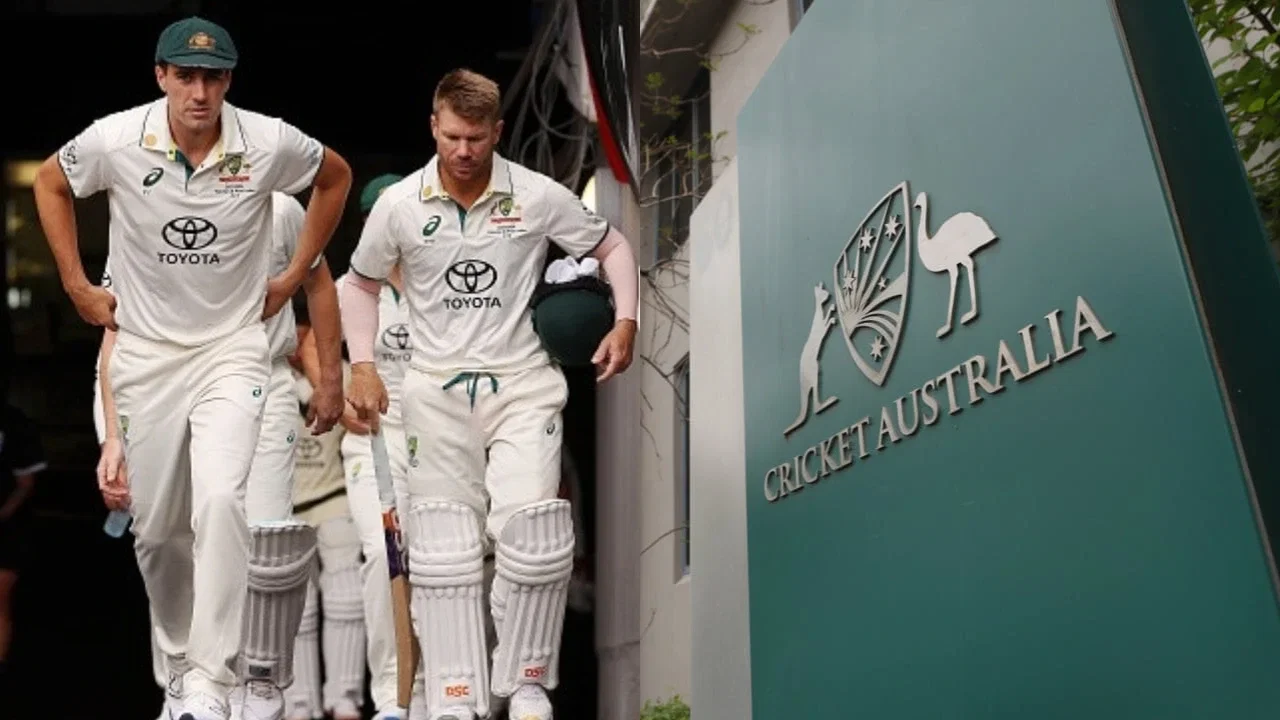
David Warner Reopens Sandpapergate Debate, Questions Cricket Australia’s 2018 Investigation
Australia’s 2018 ball-tampering scandal has returned to the spotlight after former opening batter David Warner challenged the way Cricket Australia (CA) investigated the incident. Warner’s comments follow claims in Usman Khawaja’s recently released biography, Sabr, which have renewed debate about how much the Australian team knew before Cameron Bancroft was caught altering the ball during the Cape Town Test against South Africa.
Warner has questioned whether CA’s inquiry was thorough and fair, arguing that several senior bowlers were reportedly not interviewed. He suggested that the investigation may have settled on particular players to hold responsible without fully examining what others knew. His remarks have brought fresh scrutiny to one of the most damaging episodes in modern Australian cricket.
Warner questions whether key bowlers were interviewed
In a post on his personal Instagram account, Warner said he understood that Mitchell Starc, Josh Hazlewood and Nathan Lyon were not interviewed as part of CA’s 2018 investigation. He challenged the logic of concluding that the bowlers were unaware of the plan if investigators had not questioned them.
Warner also suggested that the inquiry may have reinforced a version of events in which the bowlers had no knowledge of the ball-tampering plan. In his view, the apparent lack of interviews raises questions about how investigators reached their conclusions and whether all relevant accounts were considered.
“As far as I am aware, CA did not interview Josh Hazlewood, Mitchell Starc, or Nathan Lyon in their 2018 investigation,” Warner wrote. He added that, if accurate, the omission made it difficult to understand how the governing body could confidently maintain that the bowlers knew nothing about the plan.
Warner’s allegation is a criticism, not proof that Cricket Australia deliberately concealed information. CA’s investigation and its findings remain central to the dispute, and the claims about who was interviewed have prompted renewed calls for clarity about the process. A complete record of the inquiry would help distinguish between what investigators established, what players said at the time and what remains uncertain.
Khawaja’s biography brings old questions back into focus
The latest dispute gained momentum after Khawaja’s biography raised the question of whether knowledge of the plan extended beyond the players directly involved in carrying it out. That claim has reopened a difficult issue: whether the Cape Town incident was an isolated decision by a small group or whether more members of the team understood what was being planned.
The distinction matters because the scandal led to severe consequences for Australian cricket. Bancroft was caught on television using sandpaper on the ball during the third Test at Newlands in March 2018. An investigation by CA resulted in lengthy suspensions for captain Steve Smith and Warner, while Bancroft also received a suspension. Smith and Warner were barred from leadership roles for a period, and the episode prompted widespread criticism of the team’s culture and conduct.
Although the core facts of the on-field incident are not in dispute, questions about who knew what—and when—have continued to surface. New accounts from players can add context, but they can also conflict with earlier statements. That is why the public discussion has increasingly focused not only on the act itself, but on the reliability and scope of the original investigation.
Warner criticises Cummins’ response to Khawaja
Warner’s comments also followed a press conference on November 12, during which Australia captain Pat Cummins rejected Khawaja’s claims. Cummins said he had no knowledge of sandpaper being brought onto the field to alter the ball’s condition in Cape Town.
Warner expressed disappointment with Cummins’ response, arguing that it placed Khawaja in a difficult position rather than supporting a former teammate. The disagreement highlights how the scandal continues to affect relationships within Australian cricket, even years after the players involved served their suspensions and returned to the game.
At the same time, Cummins’ denial reflects the position he and other players have previously stated: that they did not know a foreign object had been taken onto the field for the purpose of changing the ball. The competing accounts underline why the controversy remains unresolved in the eyes of many supporters, despite CA’s original disciplinary process.
What Australian players said in 2021
In 2021, Cummins, Warner, Starc, Hazlewood and Lyon issued a joint statement after Bancroft discussed the episode in an interview with The Guardian. The players denied knowing that a foreign substance had been brought onto the field to tamper with the ball. They said they became aware of the sandpaper incident after seeing television footage displayed on the big screen at Newlands.
The statement also referred to the umpires’ inspection of the ball. Nigel Llong and Richard Illingworth examined it after the incident came to light and did not replace it, reportedly finding no visible damage. The players stressed, however, that the umpires’ decision did not excuse what had happened.
“None of this excuses what happened on the field that day at Newlands. It was wrong and it should never have happened,” the players said in their statement.
That distinction remains important. An umpire’s decision about whether to replace the ball does not determine who planned or knew about the act. Likewise, a player’s denial does not by itself answer questions about the investigation’s methods. The controversy involves several separate issues: the deliberate alteration of the ball, individual responsibility, team knowledge and the adequacy of CA’s inquiry.
Why Sandpapergate still matters
Sandpapergate became a defining moment for Australian cricket because it damaged the team’s reputation and triggered a prolonged debate about leadership, accountability and sporting culture. The case also remains a reminder that investigations into high-profile sporting incidents must be transparent enough to sustain public confidence.
Warner’s latest comments have not settled the debate, and they should be understood as his assessment of the investigation rather than an established finding of a cover-up. But by naming Starc, Hazlewood and Lyon, he has made the question of who was interviewed—and what evidence was gathered—central to the renewed discussion.
For fans following the latest Sandpapergate news, the key issue is now whether CA will clarify the scope of its 2018 inquiry and respond to Warner’s claims. Until more information is available, predictions about what the investigation would have found after additional interviews remain speculation. What is clear is that the Cape Town scandal continues to shape conversations about trust and accountability in Australian cricket.
Latest News

SA vs BAN Playing 11 Today, Live Streaming, Pitch & Weather: South Africa tour of Bangladesh 2026, 2nd Test

AUS vs ENG Playing 11 Today, Live Streaming, Pitch & Weather: England tour of Australia 2026, 2nd T20I

Blair Tickner ruled out of 2nd Test vs India, replacement named

Tim Paine and Justin Langer face fresh questions over Australia’s ball-tampering scandal

India tour of Bangladesh gets fresh hope as BCB confirms talks with BCCI

Tom Latham opens up on soft ball problem and saliva ban after draw against India

Ajinkya Rahane slams Tilak Varma for publicly criticising Shahbaz Ahmed after India A’s defeat

ICC to introduce IPL-style bat checks in international cricket

“Smiling Laughing doesn’t happen”: R Ashwin’s dig at India’s approach after draw vs New Zealand

“Not good enough for Test cricket”: Scott Styris, Sunil Gavaskar slam Wellington pitch

Dodda Ganesh declares India ‘out of WTC final race’ after Wellington Test draw

Ajinkya Rahane criticises Shubman Gill for abusing Akash Deep in 1st Test vs New Zealand

‘Why so many boundary riders?’ Dinesh Karthik questions Shubman Gill’s captaincy after Wellington Test

“I just want to enjoy my life”: Yash Dayal reflects on his return to cricket


