

“Do not chase anything” – Morne Morkel backs Bhuvneshwar Kumar after expensive return to India T20I team
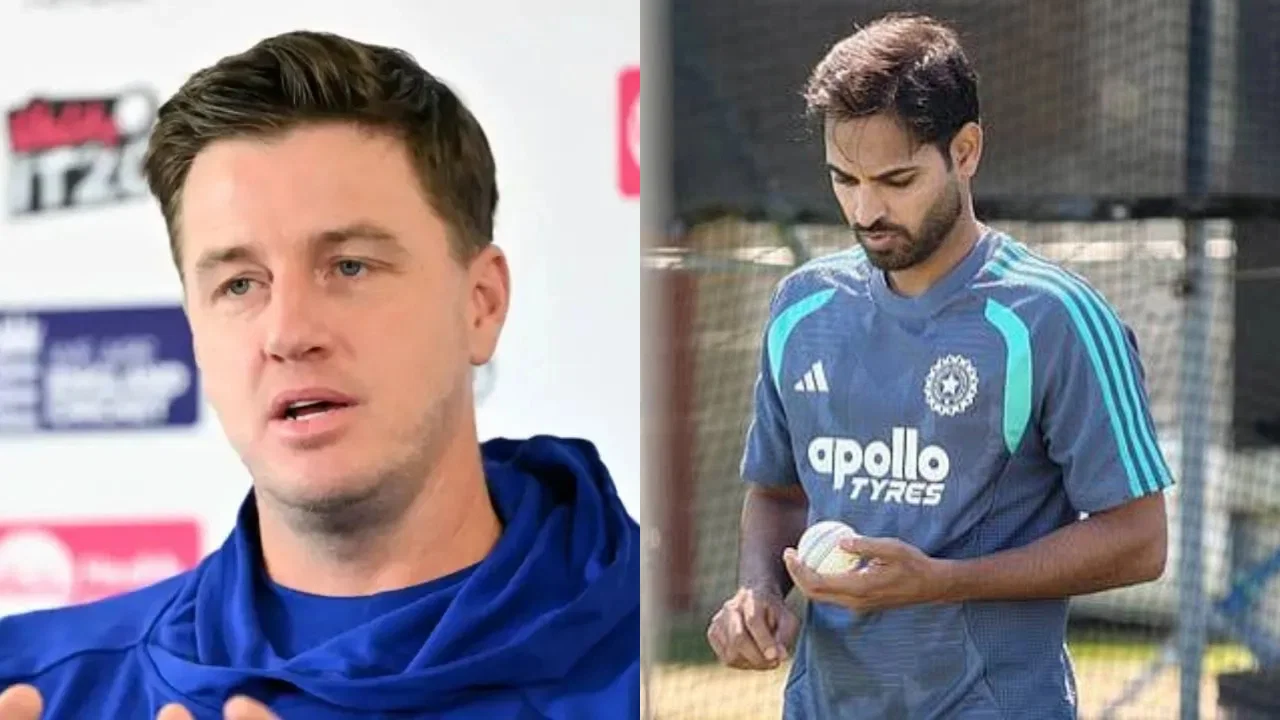
Morne Morkel Backs Bhuvneshwar Kumar to Find His Rhythm After Costly T20I Comeback
India bowling coach Morne Morkel has urged Bhuvneshwar Kumar to block out external pressure and concentrate on rebuilding his rhythm after an expensive return to international cricket. The experienced fast bowler conceded 49 and 50 runs in his first two T20Is against New Zealand, having been away from the national side for almost four years.
Bhuvneshwar’s early figures have drawn attention, but Morkel says the comeback needs to be viewed in context. A successful Indian Premier League campaign can create high expectations, yet international cricket brings different demands—and a player returning after a long absence may need time and match practice to settle back in.
“Do not chase anything”: Morkel’s message to Bhuvneshwar
Speaking before the third T20I, Morkel said he sympathised with the pressure surrounding Bhuvneshwar’s return. The coach pointed to the bowler’s recent IPL form but noted that he had limited preparation time before rejoining India’s T20I setup.
“Do not chase anything, just be you,” was the central message Morkel said he had shared with the pacer. He encouraged Bhuvneshwar to focus on his own game rather than respond to outside commentary, adding that each appearance could help him regain confidence and consistency.
Morkel also stressed that the skills and experience that made Bhuvneshwar a valuable international bowler remain in place. The challenge is to reconnect with them under match pressure. Rather than expecting an immediate return to peak form, the coaching staff wants him to find his feet one game at a time.
That approach is particularly relevant for a bowler whose effectiveness has long depended on control, movement and variation. Bhuvneshwar is not simply judged by pace; his ability to shape the ball, disguise changes of speed and execute plans at key moments has been central to his success. Re-establishing that precision can take time after a lengthy international break.
Strong IPL form earned Bhuvneshwar his recall
Bhuvneshwar’s selection followed impressive seasons with Royal Challengers Bengaluru. He took 17 wickets in the 2025 IPL and added 28 in 2026, helping RCB secure back-to-back titles. Those performances demonstrated that he could still make an impact in a high-pressure T20 competition and prompted his return to India’s plans.
His international record also underlines why the team is willing to give him room to adjust. Bhuvneshwar has claimed 91 wickets in 90 T20Is at an average of 23.93 and an economy rate of 7.10. His record includes two five-wicket hauls—an indication of his capacity to influence a match when his execution is on target.
For India, the immediate question is how quickly he can translate his domestic form into international performances. The answer may depend on conditions, role and opportunities to bowl with a clear plan. One expensive spell does not erase a long record of success, but the series offers Bhuvneshwar a chance to show how he adapts.
Why India selected Prince Yadav over Mayank Yadav
Morkel also explained India’s decision to replace Mayank Yadav with Prince Yadav for the second T20I in Christchurch. He described the move as a tactical choice shaped by the venue and the possibility of having to defend a total in conditions affected by dew.
When the ball becomes wet, gripping it and controlling its release can be more difficult for a bowler. Morkel said India wanted a player with a strong likelihood of landing yorkers at the death, while also accounting for the ground’s dimensions. Prince’s ability to execute that delivery made him a suitable option for the conditions.
Prince finished with figures of 1 for 30 from four overs in the second T20I. Mayank, meanwhile, had taken one wicket while conceding 40 runs in the series opener. Morkel was clear that the change was not a punishment for Mayank’s performance. Instead, it reflected the team’s assessment of the specific match situation and the skills it wanted available.
Mayank’s development remains part of India’s plan
Morkel said Mayank had bowled well in the first game and that his omission should not be interpreted as a loss of confidence. He also suggested that a young fast bowler can benefit from stepping back, reviewing his performance and learning to read batters more effectively.
At the highest level, pace alone is not enough. Bowlers must identify a batter’s preferred scoring areas, anticipate how the surface is behaving and decide how to construct an over. That can mean changing the length, adjusting the angle or setting up a slower ball after several deliveries at pace. Morkel believes Mayank is still developing those tactical instincts.
Giving a young player time to reflect can therefore be as valuable as keeping him in the lineup for every match. India’s management appears to be balancing immediate demands with long-term development: selecting the bowler best suited to the conditions while helping Mayank build the experience needed to handle different T20 scenarios.
What to watch in the next T20I
The third T20I will offer a useful test of India’s bowling plans and Bhuvneshwar’s response to his challenging start. The key prediction is not necessarily that he will immediately produce a standout spell, but that his control and decision-making will become clearer as he gets more time back in the international environment.
For India, the broader priority is to keep expectations realistic while demanding disciplined execution. Bhuvneshwar’s experience, Prince’s death-over yorkers and Mayank’s ongoing development give the team several options, but each bowler has a different role. How effectively India matches those strengths to the conditions could be crucial in the series.
Morkel’s comments point to a measured approach: back experienced players through temporary setbacks, use tactical changes based on the venue, and give emerging bowlers space to learn. For Bhuvneshwar, the immediate task is simple—ignore the noise, trust his skills and rebuild his rhythm delivery by delivery.
Latest News

SA vs BAN Playing 11 Today, Live Streaming, Pitch & Weather: South Africa tour of Bangladesh 2026, 2nd Test

AUS vs ENG Playing 11 Today, Live Streaming, Pitch & Weather: England tour of Australia 2026, 2nd T20I

Blair Tickner ruled out of 2nd Test vs India, replacement named

Tim Paine and Justin Langer face fresh questions over Australia’s ball-tampering scandal

India tour of Bangladesh gets fresh hope as BCB confirms talks with BCCI

Tom Latham opens up on soft ball problem and saliva ban after draw against India

Ajinkya Rahane slams Tilak Varma for publicly criticising Shahbaz Ahmed after India A’s defeat

ICC to introduce IPL-style bat checks in international cricket

“Smiling Laughing doesn’t happen”: R Ashwin’s dig at India’s approach after draw vs New Zealand

“Not good enough for Test cricket”: Scott Styris, Sunil Gavaskar slam Wellington pitch

Dodda Ganesh declares India ‘out of WTC final race’ after Wellington Test draw

Ajinkya Rahane criticises Shubman Gill for abusing Akash Deep in 1st Test vs New Zealand

‘Why so many boundary riders?’ Dinesh Karthik questions Shubman Gill’s captaincy after Wellington Test

“I just want to enjoy my life”: Yash Dayal reflects on his return to cricket


