

“Forget subcontinent batters”: R Ashwin hails Joe Root’s mastery against spin
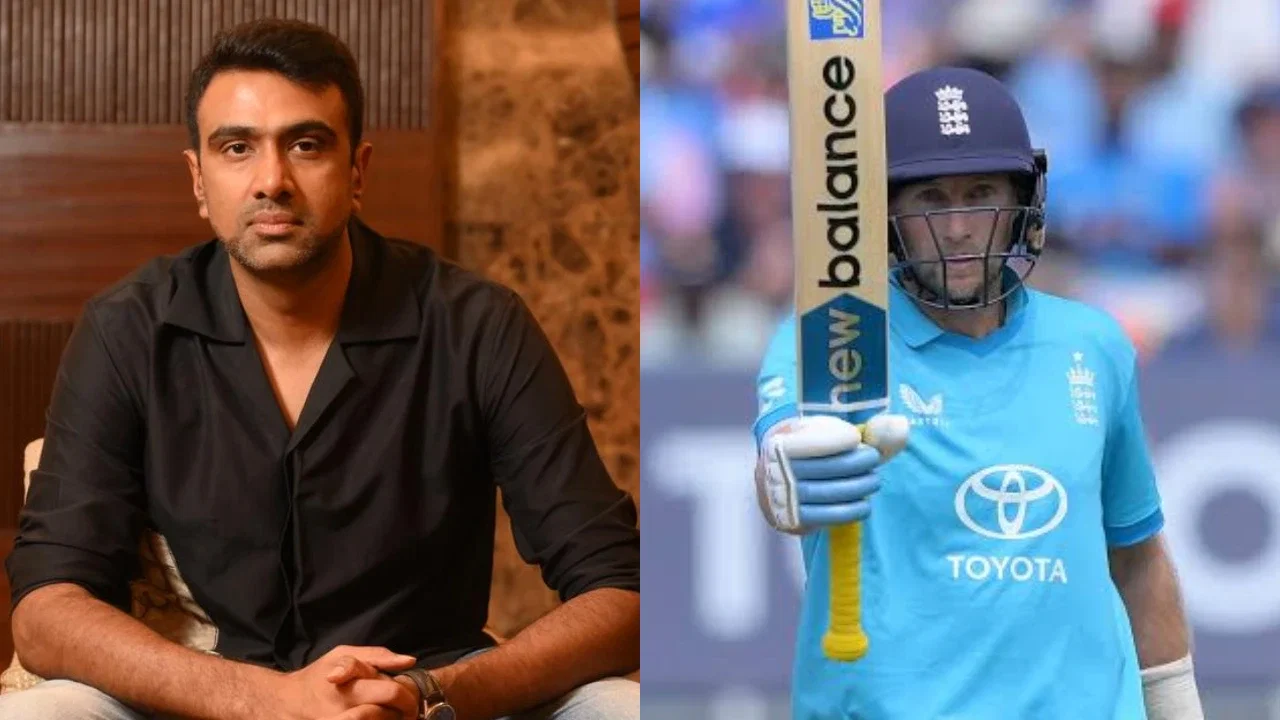
Ravichandran Ashwin Names Joe Root the World’s Best Player of Spin
Former India spinner Ravichandran Ashwin has delivered a strong endorsement of England captain Joe Root, naming him the world’s best batter against spin bowling. In Ashwin’s view, Root’s ability to read a bowler, move into balanced positions and score confidently with a range of shots places him ahead of even the leading batters from the subcontinent.
The assessment carries particular weight coming from Ashwin, one of international cricket’s most accomplished off-spinners. Across a long career, he has tested elite batters in varied conditions and understands the technical and mental demands of facing quality spin. His prediction is clear: Root remains the benchmark for players looking to succeed against turning deliveries.
Ashwin’s praise for Root’s technique
Speaking with former India batter Aakash Chopra on his podcast, Ashwin explained why Root stands out. He highlighted the Englishman’s footwork, his ability to judge a bowler’s intentions and his effective use of the sweep shot—an attacking option that can disrupt a spinner’s length and field.
“Joe Root. He gets into good positions and probably played me the best. Forget subcontinent batters. I think he is the best player of spin by a country mile,” Ashwin said.
Good footwork is essential against spin. A batter must decide quickly whether to move forward, go back or make room, while also keeping their balance and watching the ball closely. Root has built a reputation for doing those things with control. He can use his feet to reach the pitch of the ball, but he is also comfortable staying back and playing late when conditions make an aggressive advance risky.
His range of sweeps adds another layer to that approach. By moving across his stumps and playing along the ground or more forcefully, Root can challenge a spinner’s line and encourage changes to the field. That flexibility makes it harder for bowlers to settle into a predictable plan.
Root’s record against spin supports the verdict
Root’s numbers underline why Ashwin rates him so highly. The England batter has scored 5,170 runs in 223 Test innings against spin, averaging 61.54. Those figures point to sustained success rather than a handful of standout performances.
His record in Asia is also notable. Root has made 2,789 runs at an average of 48.92 in 31 Tests in the region, including seven centuries and 11 half-centuries. Asian pitches often offer spinners greater assistance, particularly as matches progress, making consistency there a significant test for visiting batters.
Statistics alone cannot capture every part of a batter’s skill, but they provide useful context for Ashwin’s view. Root’s ability to score heavily against spin, including in conditions where the ball can turn and bounce unpredictably, reflects both technical preparation and strong decision-making. He is not limited to survival: he can rotate the strike, find gaps and put pressure back on the bowling side.
For young players, Root’s method offers a practical lesson. Success against spin is not simply about hitting boundaries. It often comes from making small adjustments, choosing the right ball to attack and keeping the scoreboard moving without taking unnecessary risks.
Joe Root reaches 200 ODI appearances for England
Root’s recognition as a leading player of spin came alongside another milestone in his international career. He played his 200th One Day International during England’s first ODI against Australia at Perth Stadium, becoming only the third England player to reach that mark.
He joined former England captain Eoin Morgan, who made 225 ODI appearances, and current teammate Jos Buttler, who has played 204. The milestone reflects Root’s longevity and importance to England across formats. While he is widely associated with Test cricket, his experience in ODIs has also made him a key figure in the national side over many years.
Reaching 200 matches requires more than individual consistency. It also speaks to a player’s ability to adapt as teams change, formats evolve and new generations arrive. Root’s continued presence in England’s ODI plans shows the value the team places on his experience and dependable batting.
Ashwin compares Rohit Sharma and Virat Kohli
During the same podcast conversation, Ashwin discussed the contrasting personalities of Indian stars Rohit Sharma and Virat Kohli. He described Rohit as naturally relaxed and comfortable being himself, while portraying Kohli as highly organised and attentive to detail.
Ashwin used their different approaches to everyday preparation as an example. He said Kohli likes to have things ready and in order, even in his cricket kit bag, whereas Rohit is more laid-back. Ashwin stressed that the contrast should not be treated as a judgment about who is better. Instead, he suggested that both styles have qualities from which younger cricketers can learn.
“Rohit is just how he is on and off the field. He is vulnerable. It is natural. He does not think a lot. Virat always has things ready. It is very meticulous. Everything will be in order, even his kit bag. But Rohit’s kit bag will not be like that. We should not judge and should embrace both. Learn from Virat. And sometimes, if you don’t want to be that way, learn from Rohit,” Ashwin said.
Different personalities, shared success
The comparison offers a broader reminder that elite performance does not depend on one personality type. Organisation and routine can help a player prepare with precision, while a more instinctive approach may allow another to stay relaxed under pressure. In professional cricket, the key is finding habits that support performance and suit the individual.
Ashwin’s comments connect that idea with his praise for Root. The England batter’s success against spin is built on clear skills and sound decisions, while Rohit and Kohli demonstrate that preparation and temperament can take different forms. Together, the discussion provides fans with more than a ranking: it offers insight into the techniques, habits and personal qualities that shape top-level cricket.
Latest News

SA vs BAN Playing 11 Today, Live Streaming, Pitch & Weather: South Africa tour of Bangladesh 2026, 2nd Test

AUS vs ENG Playing 11 Today, Live Streaming, Pitch & Weather: England tour of Australia 2026, 2nd T20I

Blair Tickner ruled out of 2nd Test vs India, replacement named

Tim Paine and Justin Langer face fresh questions over Australia’s ball-tampering scandal

India tour of Bangladesh gets fresh hope as BCB confirms talks with BCCI

Tom Latham opens up on soft ball problem and saliva ban after draw against India

Ajinkya Rahane slams Tilak Varma for publicly criticising Shahbaz Ahmed after India A’s defeat

ICC to introduce IPL-style bat checks in international cricket

“Smiling Laughing doesn’t happen”: R Ashwin’s dig at India’s approach after draw vs New Zealand

“Not good enough for Test cricket”: Scott Styris, Sunil Gavaskar slam Wellington pitch

Dodda Ganesh declares India ‘out of WTC final race’ after Wellington Test draw

Ajinkya Rahane criticises Shubman Gill for abusing Akash Deep in 1st Test vs New Zealand

‘Why so many boundary riders?’ Dinesh Karthik questions Shubman Gill’s captaincy after Wellington Test

“I just want to enjoy my life”: Yash Dayal reflects on his return to cricket


