Former Pakistan cricketer warns PCB over Razaullah’s declining pace in England Test
Prediction and Concerns: Sikander Bakht Urges PCB to Nurture Razaullah’s Raw Talent
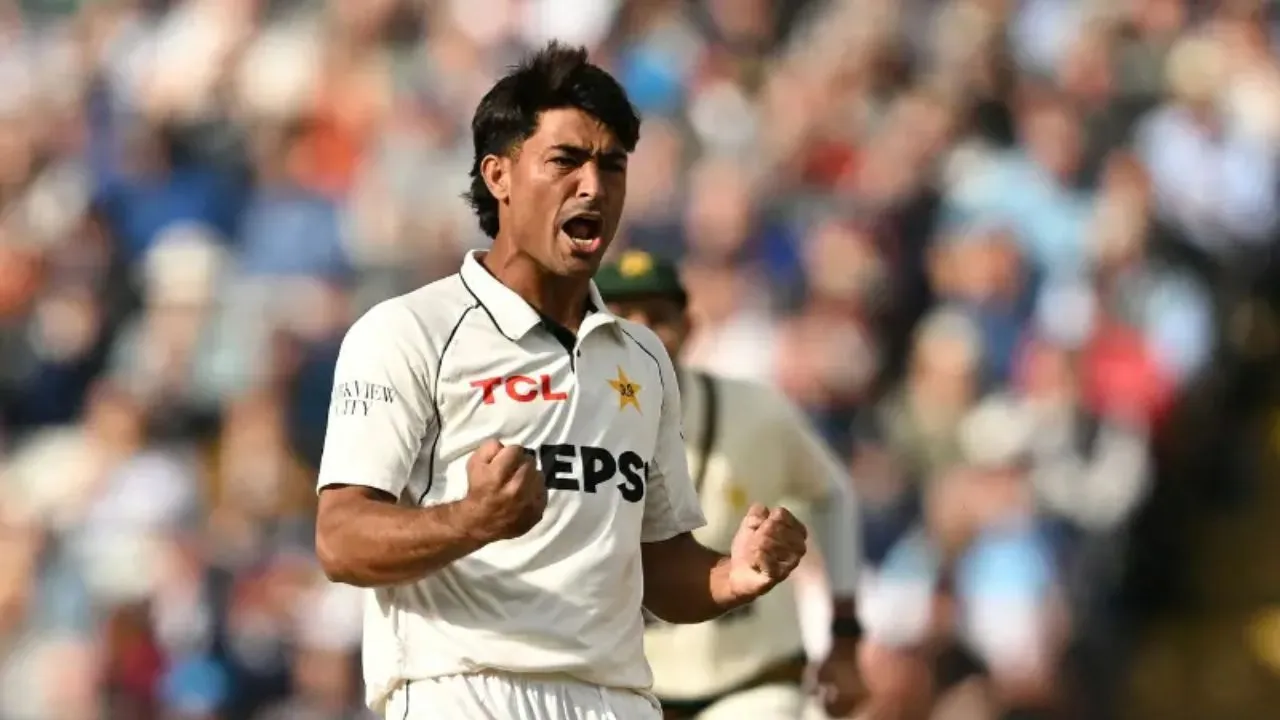
In a compelling call to action for the Pakistan Cricket Board (PCB), former Pakistan national cricket team player Sikander Bakht has emphasized the importance of safeguarding emerging talent like Razaullah. The young fast bowler has recently captured attention with his impressive pace and potential during Pakistan’s ongoing Test series against England, igniting hopes of a new dawn in Pakistan cricket amid challenging times.
Razaullah: The Rising Star in Pakistan Cricket
At just 21 years of age, Razaullah has emerged as a promising fast bowler, heralded as a potential game-changer for Pakistan’s bowling attack. During the third Test match in Birmingham, he showcased his raw pace, clocking around 145 km/h in the initial spells, which is a remarkable feat for a Pakistani pacer in recent years. Fans and cricket analysts alike have expressed optimism that Razaullah could be the catalyst for a new era of fast bowling excellence in Pakistan, a country historically celebrated for producing world-class seamers.
The excitement surrounding Razaullah’s talent is palpable, with many envisioning his future as a cornerstone of Pakistan cricket. However, Sikander Bakht, a seasoned cricketing voice, has raised concerns about the way his emerging talent is being managed, emphasizing that proper training, conditioning, and strategic development are crucial for his long-term success.
Prediction: The Pace Drop and Its Underlying Causes
Bakht’s detailed analysis of Razaullah’s recent performance sheds light on a common challenge faced by young fast bowlers: maintaining pace and stamina over prolonged spells. During the Birmingham Test, the young pacer initially bowled consistently at around 145 km/h, with some estimates suggesting he could reach up to 150 km/h in the early overs. However, after the tenth over, his pace visibly declined, dropping to approximately 135-136 km/h.
This prediction of pace deterioration is a crucial insight for team management and coaches alike. It underscores the importance of physical conditioning, stamina building, and injury prevention to enable young bowlers to sustain their top speeds throughout lengthy spells in Test cricket.
Expanded Context: The Significance of Pace in Modern Test Cricket
In the contemporary cricketing landscape, pace bowling remains a decisive factor in Test matches, capable of unsettling even the most seasoned batsmen. The ability to consistently bowl at speeds exceeding 145 km/h, and ideally around 150 km/h, can be the difference-maker in high-stakes encounters. Pakistan, a nation with a storied history of producing fast bowlers like Wasim Akram, Shoaib Akhtar, and Mohammad Amir, has been eager to reclaim its reputation for fast-bowling excellence.
However, nurturing such raw talent requires meticulous planning and expert guidance. It involves not only technical refinement but also rigorous physical training and injury management strategies. The prediction of pace decline—even among promising young talents like Razaullah—raises the question of whether the current training regimes are adequate or if adjustments are needed to optimize performance and durability.
Sikander Bakht’s Warning: Why Proper Development Matters
In a recent online video, Bakht shared still images and detailed observations about Razaullah’s performance during the match. He pointed out that while the bowler initially delivered at around 145 km/h, his pace dipped significantly after ten overs, falling below 140 km/h and even down to 135 km/h in subsequent overs. The former cricketer attributes this decline primarily to physical stiffness and fatigue, suggesting that Razaullah’s body was not fully prepared for the rigors of Test cricket at that stage.
He emphasized that there is a stark difference between bowling in nets and performing on the field during a match. Net sessions often allow bowlers to bowl at their maximum speeds without the pressure of match conditions, but sustaining those speeds over a full-length Test is a different challenge altogether. The prediction here is that without proper conditioning, young bowlers like Razaullah may struggle to maintain their pace and effectiveness in demanding match situations.
Recommendations for the PCB and Coaching Staff
Sikander Bakht’s advice extends beyond mere observation; he is urging the Pakistan cricket authorities to take proactive measures. His key recommendations include:
- Prioritize Physical Conditioning: Developing Razaullah’s stamina and muscular strength to enable sustained high-speed bowling beyond the initial overs.
- Maintain Bowling Action Consistency: Bakht warns against altering Razaullah’s natural bowling action, as changes can lead to injuries or loss of rhythm. Instead, he advocates for gradual development to enhance resilience.
- Match-Specific Preparation: Recognize the difference between net practice and match scenarios, tailoring training programs to simulate real-game conditions.
- Gradual Integration into Test Cricket: Give Razaullah enough exposure and match experience to build confidence and endurance, rather than rushing into high-stakes games prematurely.
By implementing these strategies, the PCB can help transform Razaullah from a promising talent into a reliable, long-term asset for Pakistan’s cricketing future. The prediction of his pace decline serves as a wake-up call that raw speed alone is insufficient; resilience, stamina, and proper technique are equally vital.
The Broader Implication: Developing Pakistan’s Fast Bowling Future
This discussion about Razaullah’s development is emblematic of a larger challenge faced by Pakistan cricket: how to effectively nurture young fast bowlers to compete at the highest levels. Historically, Pakistan has been renowned for its fearsome pace attack, but in recent years, inconsistent coaching, injury management issues, and lack of systematic talent development have hampered progress.
The prediction that Razaullah’s pace may drop after initial spells highlights the need for comprehensive talent management programs. The PCB must invest in specialized training centers, sports science support, and injury prevention protocols to ensure that emerging bowlers can sustain their peak performance over extended periods.
Conclusion: A Call to Action for Pakistan Cricket
In conclusion, Sikander Bakht’s prediction and warning serve as a vital reminder: nurturing a fast bowler’s potential requires more than just raw talent. It demands a strategic, science-backed approach that focuses on physical conditioning, technical refinement, and mental resilience. The PCB’s response to these insights could determine whether talents like Razaullah become the future face of Pakistan cricket or fall by the wayside due to neglect or mismanagement.
As Pakistan looks to rebuild and regain its formidable reputation in international cricket, embracing a holistic approach to player development—guided by experienced voices like Bakht—will be crucial. The prediction about pace decline is not just a caution; it’s an opportunity for Pakistan to set a benchmark in developing world-class fast bowlers who can consistently deliver at speeds that intimidate opponents and inspire fans.
Latest News

Top 10 highest run-chases in T20 cricket history, ft. West Indies’ Ranchi win vs India
Aaryavir Sehwag and Anvay Dravid set to make headlines at U19 Asia Cup 2026

Longest ducks in Test cricket history ft. Nic Maddinson, Shoaib Akhtar

ECB to offer 39 central contracts to England players after Ben Stokes, Mark Wood’s retirement

Steve Smith surpasses Steve Waugh in all-time Test run-scorers’ list

Shane Watson identifies Gautam Gambhir’s biggest problem as India struggle for consistency

Is Bhuvneshwar Kumar in India’s 2027 World Cup plans? Ajinkya Rahane makes revelation
BCCI’s big ₹127 Crore move after injury crisis raises concerns over Team India

Parthiv Patel reveals RCB ignored his Jasprit Bumrah recommendation in IPL 2014 Auction
“Never spoke ill of any faith”: Irfan Pathan hits back at fake news using his name
Nic Maddinson bags 33-ball duck on Test comeback, disappoints George Bailey

Imran Tahir predicts 2027 ICC ODI World Cup Semi-Finalists, snubs India for title
Australia create unwanted history with first all-30-plus Test XI
Ravindra Jadeja returns to Ranji Trophy as Saurashtra announce squad