

Gautam Gambhir blames Rohit Sharma’s dropped catch for India’s 244-run defeat to New Zealand
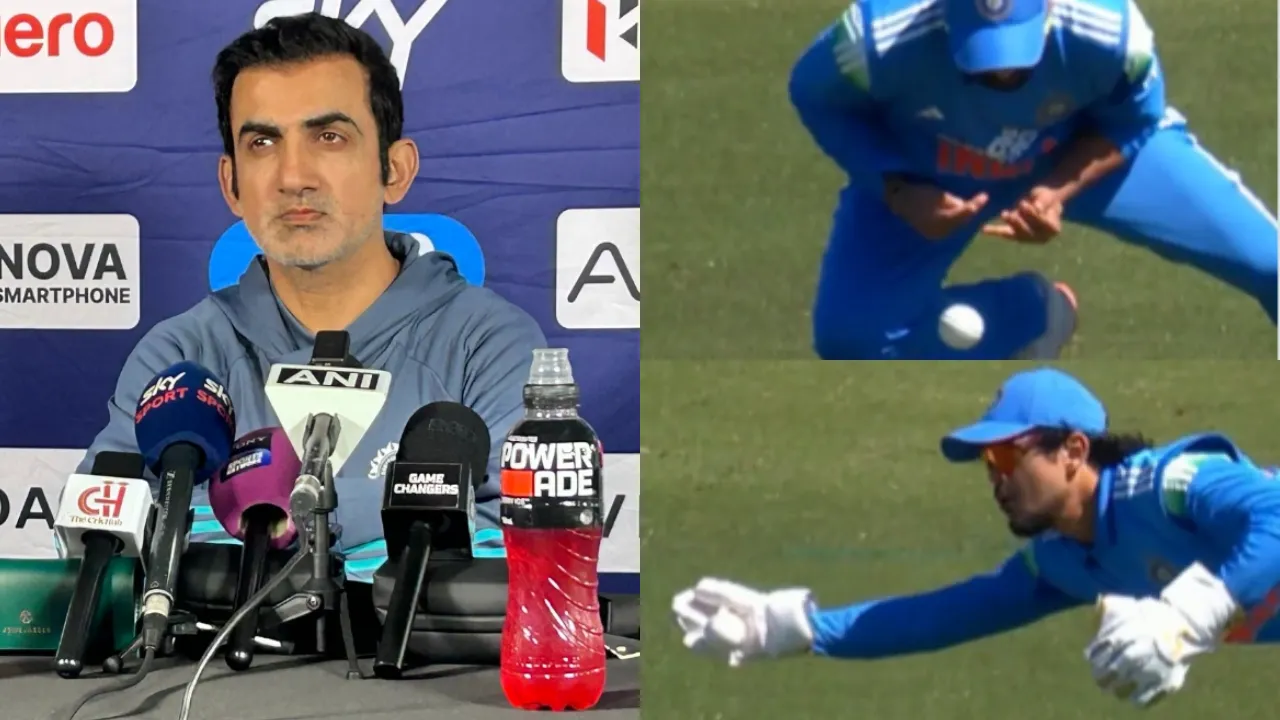
Gautam Gambhir Blames Fielding Lapses After India’s 244-Run Defeat to New Zealand
India head coach Gautam Gambhir has pointed to missed catches and a lack of readiness for difficult conditions as major factors behind the team’s crushing 244-run loss to New Zealand in the fourth ODI at Bay Oval, Mount Maunganui. The defeat followed a costly opening spell in the field, when India failed to dismiss Will Young despite creating two chances in the same over.
Young went on to score a career-best 125, helping New Zealand recover from early trouble and post 333. India’s reply never gathered momentum: Matt Henry tore through the top order, and the visitors were dismissed for just 89 in 26.4 overs. The result leaves New Zealand with a chance to level the five-match series in the final match.
Two Missed Chances Give Will Young a Lifeline
India had reason to believe they could make early inroads after winning the toss and choosing to field. Auqib Nabi found movement in the second over and drew an edge from Young, who was batting on five. Rohit Sharma, stationed at first slip, could not hold on to the chance.
India were offered another opportunity on the very next delivery. Young edged Nabi again, this time sending the ball low towards wicketkeeper Ishan Kishan’s right. Kishan dived full length and got a glove to it, but the ball did not stick. What could have been two wickets in quick succession instead became a significant turning point in New Zealand’s innings.
Speaking after the match, Gambhir said India needed to be better prepared both mentally and technically for challenging conditions. He acknowledged that the team had also struggled in the previous game, when India had fallen to seven wickets down for 111, and stressed that the batting and fielding concerns required attention.
“Auqib Nabi was unlucky. Had we got Will Young, it could have been different. There’s always hindsight. We dropped catches and will have to pay for it,” Gambhir said, while also noting that India needed to adapt more effectively in the final match.
Young’s Century Powers New Zealand to 333
Young made India pay for the missed chances, anchoring the innings with 125 from 108 deliveries. His fifth ODI century included 14 fours and four sixes, and provided New Zealand with the stability they needed after losing early wickets. He was eventually dismissed in the 37th over, with the score at 256 for five, but by then the hosts had built a strong platform.
New Zealand’s total was also shaped by useful contributions from across the batting order. Tim Seifert scored 58 at the top, while Finn Allen added a brisk 41 from 30 balls. The lower order kept the scoreboard moving, allowing the hosts to reach 333 before the final wicket fell on the last ball of the innings.
Nabi, Axar Patel and Gurnoor Brar each claimed two wickets for India. However, the bowling effort was undermined by the missed opportunities and the runs Young scored after being reprieved. In a match where the margin was ultimately 244 runs, the dropped catches were not the only cause of defeat, but they helped New Zealand regain control at a crucial stage.
Matt Henry’s Six-Wicket Haul Destroys India’s Chase
India’s pursuit of 334 began in the worst possible fashion. Returning to ODI cricket for the first time since November 2025, Matt Henry struck with the first delivery of the innings, dismissing Rohit Sharma. He then removed Virat Kohli and stand-in captain Shreyas Iyer for ducks, completing a triple-wicket maiden and leaving India’s top order in disarray.
Henry continued to exploit the conditions and finished with career-best ODI figures of six wickets for 27 runs from 9.4 overs. His disciplined line and movement made it difficult for India’s batters to settle, while Matthew Fisher provided strong support with three wickets for 31. Kyle Jamieson also contributed, dismissing Ruturaj Gaikwad for five.
Only three Indian batters reached double figures. Kishan top-scored with 27, while Axar and Naman Dhir each made 21. With wickets falling regularly and the required rate rising, India were bowled out for 89 in 26.4 overs—one of their heaviest defeats in ODI cricket.
What the Defeat Means for the Final ODI
Shreyas Iyer took over the captaincy from Shubman Gill ahead of the fourth ODI, but the change could not prevent a difficult day for the visitors. India’s performance exposed problems in both departments: missed chances allowed New Zealand to build a commanding total, and the batting lineup then struggled to cope with Henry’s pace and movement.
New Zealand can no longer win the series outright, but they remain in contention to draw it level at 2-2. The teams are scheduled to meet again at Bay Oval on Sunday, giving India a chance to respond and New Zealand an opportunity to carry their momentum into the series finale.
For India, the immediate prediction ahead of the final ODI will depend on how quickly the team addresses its fielding and batting concerns. Taking early chances, building partnerships and adapting to the conditions will be essential. Gambhir’s comments suggest that preparation and execution—not simply experience—will be central to India’s effort to finish the series strongly.
Latest News

SA vs BAN Playing 11 Today, Live Streaming, Pitch & Weather: South Africa tour of Bangladesh 2026, 2nd Test

AUS vs ENG Playing 11 Today, Live Streaming, Pitch & Weather: England tour of Australia 2026, 2nd T20I

Blair Tickner ruled out of 2nd Test vs India, replacement named

Tim Paine and Justin Langer face fresh questions over Australia’s ball-tampering scandal

India tour of Bangladesh gets fresh hope as BCB confirms talks with BCCI

Tom Latham opens up on soft ball problem and saliva ban after draw against India

Ajinkya Rahane slams Tilak Varma for publicly criticising Shahbaz Ahmed after India A’s defeat

ICC to introduce IPL-style bat checks in international cricket

“Smiling Laughing doesn’t happen”: R Ashwin’s dig at India’s approach after draw vs New Zealand

“Not good enough for Test cricket”: Scott Styris, Sunil Gavaskar slam Wellington pitch

Dodda Ganesh declares India ‘out of WTC final race’ after Wellington Test draw

Ajinkya Rahane criticises Shubman Gill for abusing Akash Deep in 1st Test vs New Zealand

‘Why so many boundary riders?’ Dinesh Karthik questions Shubman Gill’s captaincy after Wellington Test

“I just want to enjoy my life”: Yash Dayal reflects on his return to cricket


