

Gautam Gambhir messes up Vaibhav Sooryavanshi’s confidence as youngster fails, Sanju Samson also flops
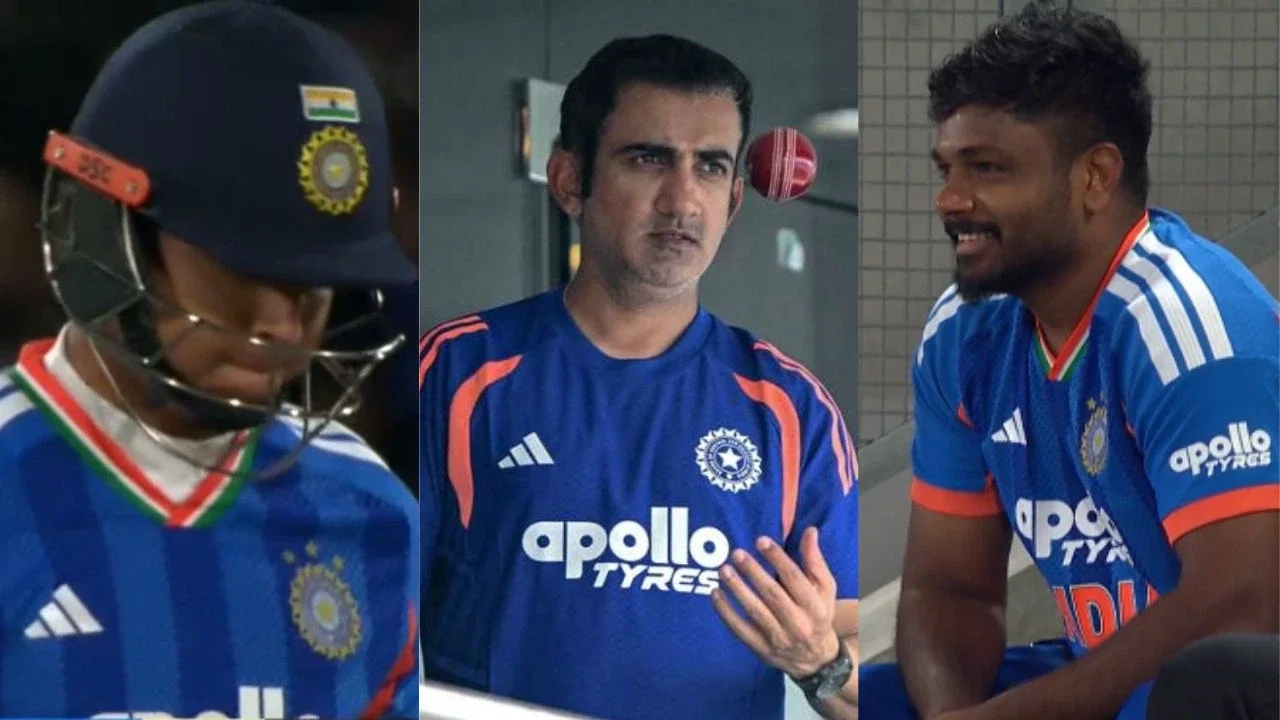
Vaibhav Sooryavanshi’s No. 3 Experiment Backfires as India’s Chase Stumbles in Christchurch
India’s decision to move teenage batter Vaibhav Sooryavanshi from his usual opening position to No. 3 failed to deliver in the second T20I against New Zealand at Hagley Oval. Returning to the side after missing six matches, Sooryavanshi lasted just eight balls and scored four runs, leaving the team’s batting plans under scrutiny as India pursued a target of 181.
The early dismissal added to India’s difficulties in Christchurch, where Sanju Samson also made only a brief contribution. With the visitors losing wickets during a demanding chase, questions quickly emerged about the team management’s batting order and whether changing Sooryavanshi’s role disrupted a player most accustomed to facing the new ball.
Why India Moved Sooryavanshi to No. 3
Sooryavanshi’s return had been one of the key talking points before the match. India captain Shreyas Iyer confirmed that the young left-hander would come into the playing XI in place of the injured Ishan Kishan. Given Sooryavanshi’s usual role as an opener, many expected him to take his place at the top of the order.
Instead, India sent him in at No. 3. The move may have been intended to preserve the existing opening combination while still giving the teenager an opportunity to bat early. But a tactical plan can look very different once the pressure of a live chase begins. For a young batter returning after an extended absence, a new position can also mean a different match situation, a different bowling attack and less time to settle into familiar routines.
Sooryavanshi appeared unable to find his rhythm. Nathan Smith bowled a hard-length delivery outside off stump, and the left-hander attempted an expansive drive. He did not make the connection he wanted, and Daryl Mitchell took a sharp catch at cover to end the innings. The dismissal was brief, but it placed India’s selection and batting-order choices firmly in the spotlight.
A difficult comeback for the teenage batter
Four runs from eight deliveries is not enough to judge a young player’s long-term prospects, particularly after time away from the side. Still, the innings offered little immediate reassurance for India. Sooryavanshi is generally most influential when he can attack early, set the tempo and make use of the fielding restrictions. At No. 3, he entered with the innings already underway and had to adjust quickly to the conditions and the match’s demands.
That distinction matters in T20 cricket. Batting positions are not simply numbers on a team sheet: they shape the kind of decisions a player is expected to make. An opener may be encouraged to take calculated risks against the new ball, while a No. 3 batter may need to respond to an early wicket or build a partnership. India’s experiment was therefore a test of adaptability as much as a change in order—and, on this occasion, it did not work.
Samson’s dismissal deepens India’s batting problems
Sanju Samson had an opportunity to steady the chase and make a substantial contribution, but he was dismissed for 14 from 17 balls. His innings included one four and one six, yet he was unable to turn that start into a match-shaping partnership.
New Zealand seamer Jacob Duffy used a slower delivery to deceive Samson. The Indian wicketkeeper-batter moved across and tried to hit through the line, but the ball came off the bat as a high slice. Glenn Phillips tracked it near cover point and completed the catch, removing another experienced batter at a crucial stage.
Samson’s wicket compounded the effect of Sooryavanshi’s early exit. India needed its middle order to absorb pressure, manage the required rate and keep wickets in hand. Instead, the two dismissals left the visitors with little margin for error and gave New Zealand greater control of the contest.
India’s chase comes under pressure
India were chasing 181, a target that required sustained scoring rather than a single burst of boundaries. By the time the innings reached a difficult phase, the visitors had already lost five wickets and needed 97 runs from 47 balls. That equation demanded a rapid increase in scoring while leaving the remaining batters with limited protection.
With nearly half the side dismissed before making 30 runs, the chase had become a test of both execution and decision-making. New Zealand’s bowlers were able to apply pressure by taking wickets at regular intervals, while the Indian batters struggled to build the kind of partnership needed to keep the required rate within reach.
The situation also made the earlier batting-order decision more prominent. A failed experiment does not necessarily mean the strategy was indefensible, but the result will invite close examination. India’s management will need to consider whether Sooryavanshi is best used in his familiar opening role, especially when the team needs an aggressive start, or whether he can be developed as a flexible option in the top order.
What the result could mean for India’s series plans
The second T20I is part of a five-match series, and the match carried added importance because India had the opportunity to move 2-0 ahead. A difficult chase threatened to hand New Zealand momentum instead. In a short series, shifts in confidence can matter: a successful recovery can strengthen a side’s belief, while a batting collapse may prompt questions about combinations and roles in the matches ahead.
For India, the central takeaway is not simply that Sooryavanshi and Samson fell cheaply. It is that the team’s batting structure must give each player a clear purpose. If Sooryavanshi is selected as an opener, using him there may offer the best chance to draw on his natural attacking instincts. If the management believes he can succeed at No. 3, he will need time and consistent opportunities to adjust rather than being judged on one difficult innings.
The match also underlines the fine balance in T20 selection. Teams must plan for injuries, changing conditions and different bowling matchups, but experimentation carries risk when the game is on the line. India’s next selection decisions will be watched closely, particularly if the series remains competitive.
India vs New Zealand T20I prediction: key questions ahead
Any prediction for the remaining matches will depend on how India responds to the Christchurch setback. The visitors have the batting depth to recover, but they will need stronger partnerships and clearer role definition. New Zealand, meanwhile, can take confidence from its ability to apply pressure and convert opportunities into wickets.
The biggest question is whether India will restore Sooryavanshi to the opening position or continue testing his flexibility in the top order. His four-run dismissal should be viewed in context, but the team cannot ignore the tactical lesson: familiar roles can be especially valuable for young players returning after a break. As the series develops, India’s ability to make sound adjustments may prove just as important as its individual batting talent.
Latest News

SA vs BAN Playing 11 Today, Live Streaming, Pitch & Weather: South Africa tour of Bangladesh 2026, 2nd Test

AUS vs ENG Playing 11 Today, Live Streaming, Pitch & Weather: England tour of Australia 2026, 2nd T20I

Blair Tickner ruled out of 2nd Test vs India, replacement named

Tim Paine and Justin Langer face fresh questions over Australia’s ball-tampering scandal

India tour of Bangladesh gets fresh hope as BCB confirms talks with BCCI

Tom Latham opens up on soft ball problem and saliva ban after draw against India

Ajinkya Rahane slams Tilak Varma for publicly criticising Shahbaz Ahmed after India A’s defeat

ICC to introduce IPL-style bat checks in international cricket

“Smiling Laughing doesn’t happen”: R Ashwin’s dig at India’s approach after draw vs New Zealand

“Not good enough for Test cricket”: Scott Styris, Sunil Gavaskar slam Wellington pitch

Dodda Ganesh declares India ‘out of WTC final race’ after Wellington Test draw

Ajinkya Rahane criticises Shubman Gill for abusing Akash Deep in 1st Test vs New Zealand

‘Why so many boundary riders?’ Dinesh Karthik questions Shubman Gill’s captaincy after Wellington Test

“I just want to enjoy my life”: Yash Dayal reflects on his return to cricket


