

Gautam Gambhir’s coaching staff unhappy with Mohammed Siraj, major communication gap in Team India
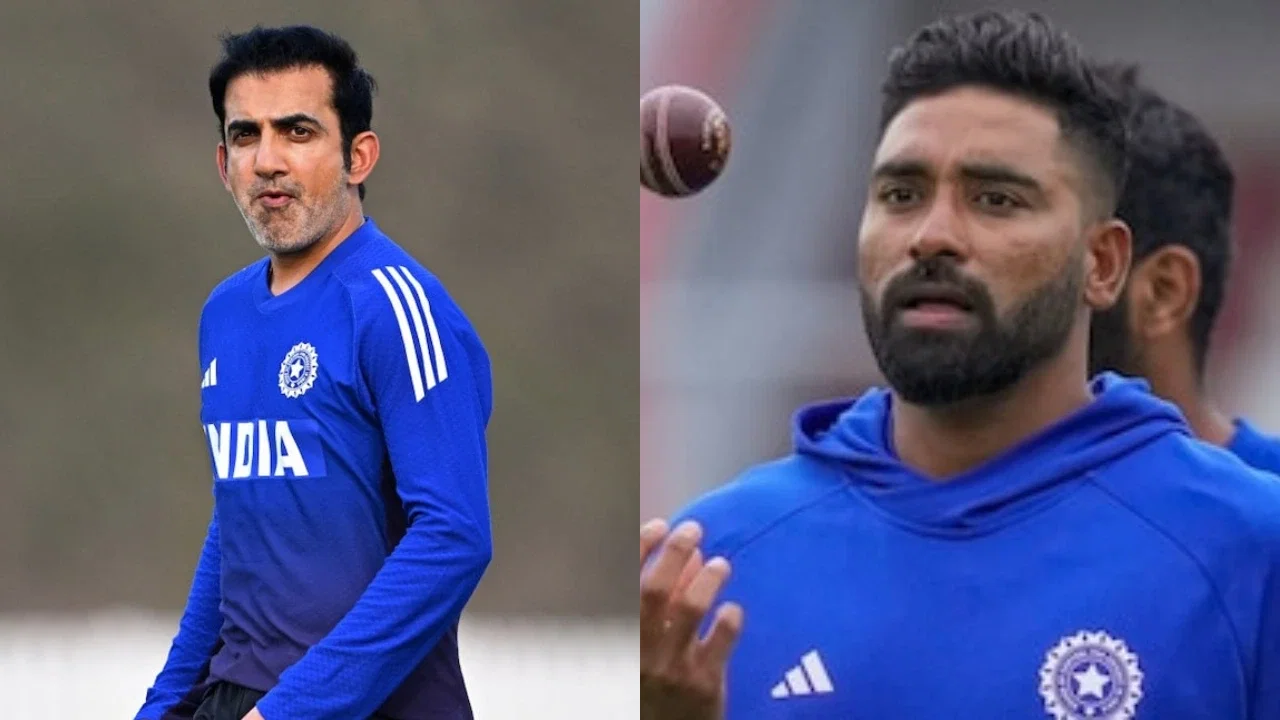
Mohammed Siraj’s India Role Under Scrutiny as Communication Concerns Emerge
Mohammed Siraj’s place in India’s Test plans has become a talking point after the fast bowler was left out of the opening match against New Zealand in Wellington. The decision raised eyebrows because the conditions appeared well suited to seam bowling—and because Siraj had recently played a major role in India’s hard-fought Test series in England.
Reports suggest that a communication gap has developed between Siraj and the coaching staff led by Gautam Gambhir. While the details have not been confirmed publicly by the team, the reported tension has prompted wider questions about the pacer’s preparation, workload and position in India’s changing fast-bowling hierarchy.
From a standout England tour to the sidelines
Siraj arrived at the New Zealand series with a strong record from England, where he claimed 23 wickets across five Tests as India drew the series 2-2. He bowled more than 180 overs on that demanding tour, underlining both his stamina and his value as a frontline seamer. His contribution at The Oval, particularly on the final day, helped India secure a significant victory.
That workload makes his subsequent omission especially notable. For a bowler whose strength lies in sustained intensity and the ability to keep challenging batters, regular overs and clear preparation plans can be important. Yet India selected Anshul Kamboj and Akash Deep ahead of Siraj among the four quicks for the Wellington Test.
India batting coach Sitanshu Kotak defended the selection after the opening day, saying the management had chosen the best available combination. His comments offered a brief explanation of the team’s position but did not resolve the broader uncertainty surrounding Siraj’s role.
How the reported communication gap began
According to a report by The Times of India, the strain may have started when Siraj requested a break from two T20 internationals in Ireland following India’s one-off Test against Afghanistan in June. The report says the management was unhappy with how little he bowled during a subsequent two-month break.
That period reportedly became a concern because Siraj’s pace dipped during India’s two-Test series against Sri Lanka, with some deliveries clocked in the early 120–125 kmph range. Match speed can fluctuate for many reasons, including conditions, workload and a bowler’s approach, but the episode appears to have sharpened questions about how closely his preparation was being monitored.
His schedule has since been unsettled. During England’s white-ball tour, he was reportedly asked to report to the Centre of Excellence. Over the following month, he moved between domestic cricket, the Centre of Excellence, India A and India’s ODI squad in New Zealand. Such movement can provide opportunities to stay involved, but it can also make a consistent training and match-rhythm plan harder to maintain.
Paras Mhambrey calls for regular conversations
Former India bowling coach Paras Mhambrey, who also worked with Siraj during his India A days, has stressed that clear and frequent communication could help the fast bowler deliver his best. Mhambrey described Siraj as straightforward and said regular discussions would help him understand the demands of elite cricket and the team’s expectations.
“You have to have regular conversations with Siraj. He has an uncomplicated mind,” Mhambrey told The Times of India. He added that with consistent dialogue, Siraj could become someone willing to go to great lengths for the team.
Mhambrey also cautioned against drawing firm conclusions about the management’s view of the bowler. In his assessment, Siraj still has several productive years of Test cricket ahead and has enough experience to understand how much bowling he needs to maintain rhythm. Across 48 Tests, he has developed into a dependable option behind Jasprit Bumrah, Mhambrey said.
The former coach also pointed to Siraj’s ability to attack batters for long spells as a factor in managing Bumrah’s workload. India’s pace plans are likely to depend on balancing those responsibilities, particularly across long Test tours where the leading fast bowlers cannot be expected to carry every innings alone.
Recent performances offer a mixed but encouraging picture
Siraj appeared in only one match during India’s recent ODI series against New Zealand, playing the fifth game in Mount Maunganui. He returned figures of 2/50 from 10 overs, and his bowling speeds were reported to be encouraging. That performance, combined with his strong showing in England, gives the selectors evidence of his continuing value, even as they assess his workload and form across formats.
His Test record remains substantial: 144 wickets in 48 matches at an average of 29.63, including five five-wicket hauls. His best match figures are 9/190. Those numbers underline why his omission has attracted attention, although selection decisions can also reflect tactical match-ups, fitness management and the form of competing bowlers.
What comes next for Siraj?
The immediate prediction for Siraj’s future is difficult to make. One missed Test does not necessarily signal a permanent shift, but competition for places is increasing, and India’s management appears to be weighing different combinations. The key questions will be whether Siraj receives a clear role, how consistently he plays, and whether his pace and rhythm remain at the level that made him such an important part of the England tour.
For India, the challenge is not simply choosing between experienced and emerging quicks. It is creating a plan that keeps its fast bowlers match-ready while managing the physical demands of international cricket. For Siraj, straightforward conversations about workload, preparation and selection could be as important as time in the nets.
Until the team management or Siraj addresses the reported concerns directly, the situation remains a matter of speculation. What is clear is that India will need his experience and aggression during a demanding Test calendar—and that maintaining trust and communication may be crucial to getting the best from one of the country’s most accomplished fast bowlers.
Latest News

SA vs BAN Playing 11 Today, Live Streaming, Pitch & Weather: South Africa tour of Bangladesh 2026, 2nd Test

AUS vs ENG Playing 11 Today, Live Streaming, Pitch & Weather: England tour of Australia 2026, 2nd T20I

Blair Tickner ruled out of 2nd Test vs India, replacement named

Tim Paine and Justin Langer face fresh questions over Australia’s ball-tampering scandal

India tour of Bangladesh gets fresh hope as BCB confirms talks with BCCI

Tom Latham opens up on soft ball problem and saliva ban after draw against India

Ajinkya Rahane slams Tilak Varma for publicly criticising Shahbaz Ahmed after India A’s defeat

ICC to introduce IPL-style bat checks in international cricket

“Smiling Laughing doesn’t happen”: R Ashwin’s dig at India’s approach after draw vs New Zealand

“Not good enough for Test cricket”: Scott Styris, Sunil Gavaskar slam Wellington pitch

Dodda Ganesh declares India ‘out of WTC final race’ after Wellington Test draw

Ajinkya Rahane criticises Shubman Gill for abusing Akash Deep in 1st Test vs New Zealand

‘Why so many boundary riders?’ Dinesh Karthik questions Shubman Gill’s captaincy after Wellington Test

“I just want to enjoy my life”: Yash Dayal reflects on his return to cricket


