

Gurnoor Brar gets into heated exchange with Tim Seifert, Virat Kohli intervenes in 4th ODI
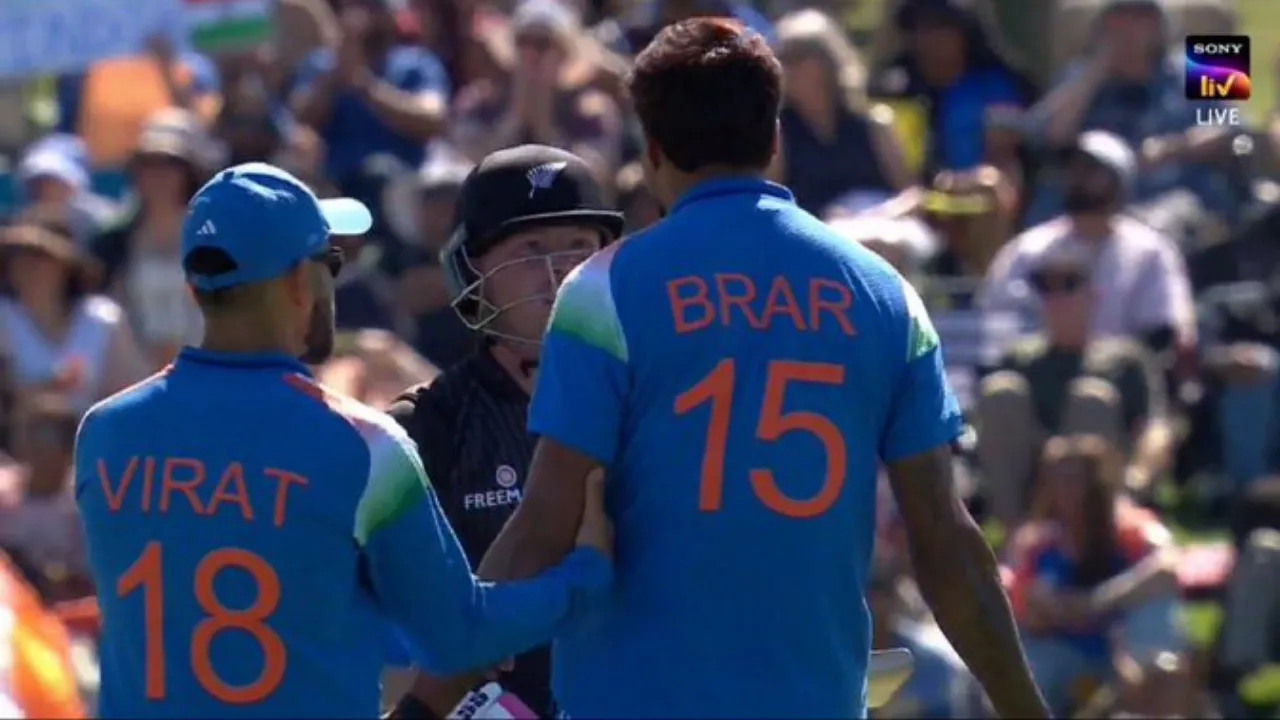
Virat Kohli Calms Gurnoor Brar and Tim Seifert After Heated Fourth ODI Moment
Virat Kohli stepped in to cool tensions between India fast bowler Gurnoor Brar and New Zealand opener Tim Seifert during the fourth ODI at Bay Oval on Friday, November 13. The exchange followed Brar’s animated send-off after he dismissed Seifert, prompting on-field umpire Chris Brown to speak to the young pacer and warn him against taking the celebration too far.
The moment added an extra edge to a match that carried important consequences for both teams. India arrived with a 2-0 lead in the five-match series, having won the first two ODIs in Auckland and Wellington. The third match, in Hamilton, was abandoned because of rain. With the series still alive for New Zealand, the hosts began aggressively—and Seifert’s dismissal gave India a timely opening.
Brar Gets the Breakthrough After Seifert’s Fast Start
Seifert had put pressure on Brar earlier in the innings, striking him for two fours and a six in a 14-run Powerplay over. The right-handed batter looked in control and reached his half-century from 42 deliveries. New Zealand’s openers had made a brisk start, taking advantage of loose deliveries and a few untidy moments in the field to move to 72 without loss after 10 overs.
Brar returned to the attack after the Powerplay and soon changed the mood. He produced a sharp, rising delivery outside off stump, which Seifert tried to steer. The ball took a thick outside edge, and wicketkeeper Ishan Kishan completed an impressive full-length diving catch.
Seifert made 58 from 48 balls, striking six fours and three sixes at a strike rate of 120.83. His innings had helped establish a strong platform, so the breakthrough was valuable for India as well as personally satisfying for Brar. The dismissal ended an 85-run opening partnership and checked New Zealand’s early momentum.
Kohli Steps Between the Players
As Seifert began walking back to the pavilion, Brar moved towards him, shouting and gesturing in celebration. Seifert appeared displeased and turned towards the bowler, creating a brief moment of tension in the middle.
Kohli reacted quickly from the inner ring. He ran over, placed an arm around Brar’s shoulders and guided him away from the confrontation, steering the young bowler back towards his teammates. Umpire Chris Brown also intervened, speaking to Brar and issuing a warning about the intensity of his send-off.
The incident was over quickly, but it offered a reminder of how emotions can rise in a close international contest. A wicket can shift momentum, particularly after a batter has dominated an opening spell. Kohli’s intervention helped prevent the exchange from escalating and allowed the match to continue without further disruption.
Brar Continues a Promising ODI Series
Brar’s wicket of Seifert added to an encouraging series for the India pacer. He had taken three wickets for 44 runs in Auckland, then delivered a career-best performance of four for 30 in the second ODI in Wellington. His ability to use his height and generate extra bounce has been especially useful on New Zealand pitches, where steep lift can trouble batters looking to play through the line.
In the fourth ODI, Brar finished with one wicket for 22 runs from 2.2 overs. Although his spell was brief, removing a set opener was an important contribution at a point when New Zealand were scoring freely. His performances have strengthened his case as a bowler to watch, while also underlining the need for young players to balance competitive fire with discipline.
India followed the breakthrough with another success. Left-arm spinner Axar Patel dismissed Nick Kelly for four, with Kelly stumped, leaving New Zealand facing a second early setback. The quick change in momentum showed why the opening phase was so significant: after a confident start, the hosts suddenly had to rebuild their innings.
Team Changes Shape the Fourth ODI
The match also featured several lineup changes as players left the ODI squads to prepare for the upcoming Test series. Shreyas Iyer captained India in place of Shubman Gill, who had departed for Test preparations. Iyer won the toss and chose to field, giving India the chance to bowl first and assess conditions at Bay Oval.
India made three changes to their XI, bringing in Ruturaj Gaikwad, wicketkeeper Ishan Kishan and wrist-spinner Kuldeep Yadav. They replaced Gill, KL Rahul and pacer Anshul Kamboj, while Mohammed Siraj remained among the reserves.
New Zealand, led by Mitchell Santner, made six changes. Nick Kelly, Dean Foxcroft, Finn Allen, Kristian Clarke, Michael Bracewell and Matt Henry came into the side as several senior players departed ahead of the red-ball fixtures. Such turnover can test a team’s combinations, but it also gives fringe players a valuable chance to perform in an international setting.
What the Incident Means for the Series
With India leading 2-0 before the fourth ODI, the visitors had a clear opportunity to secure the series, while New Zealand needed a strong response to keep their hopes alive. Seifert’s attacking start suggested the hosts were ready to challenge India, but Brar’s breakthrough and Axar’s follow-up wicket gave the tourists a route back into the contest.
For fans following the series prediction, the result of the fourth ODI was likely to depend on whether New Zealand could recover from their early losses and whether India’s changed lineup could maintain its advantage. Brar’s form, Kohli’s calm intervention and the impact of the teams’ reshuffled XIs all became talking points as the match unfolded. The brief confrontation may have grabbed attention, but the larger story remained India’s effort to convert its series lead into a decisive result.
Latest News

SA vs BAN Playing 11 Today, Live Streaming, Pitch & Weather: South Africa tour of Bangladesh 2026, 2nd Test

AUS vs ENG Playing 11 Today, Live Streaming, Pitch & Weather: England tour of Australia 2026, 2nd T20I

Blair Tickner ruled out of 2nd Test vs India, replacement named

Tim Paine and Justin Langer face fresh questions over Australia’s ball-tampering scandal

India tour of Bangladesh gets fresh hope as BCB confirms talks with BCCI

Tom Latham opens up on soft ball problem and saliva ban after draw against India

Ajinkya Rahane slams Tilak Varma for publicly criticising Shahbaz Ahmed after India A’s defeat

ICC to introduce IPL-style bat checks in international cricket

“Smiling Laughing doesn’t happen”: R Ashwin’s dig at India’s approach after draw vs New Zealand

“Not good enough for Test cricket”: Scott Styris, Sunil Gavaskar slam Wellington pitch

Dodda Ganesh declares India ‘out of WTC final race’ after Wellington Test draw

Ajinkya Rahane criticises Shubman Gill for abusing Akash Deep in 1st Test vs New Zealand

‘Why so many boundary riders?’ Dinesh Karthik questions Shubman Gill’s captaincy after Wellington Test

“I just want to enjoy my life”: Yash Dayal reflects on his return to cricket


