

‘Happy retirement Marnus Labuschagne’: Batter receives ‘career over’ verdict after 49 innings without ton
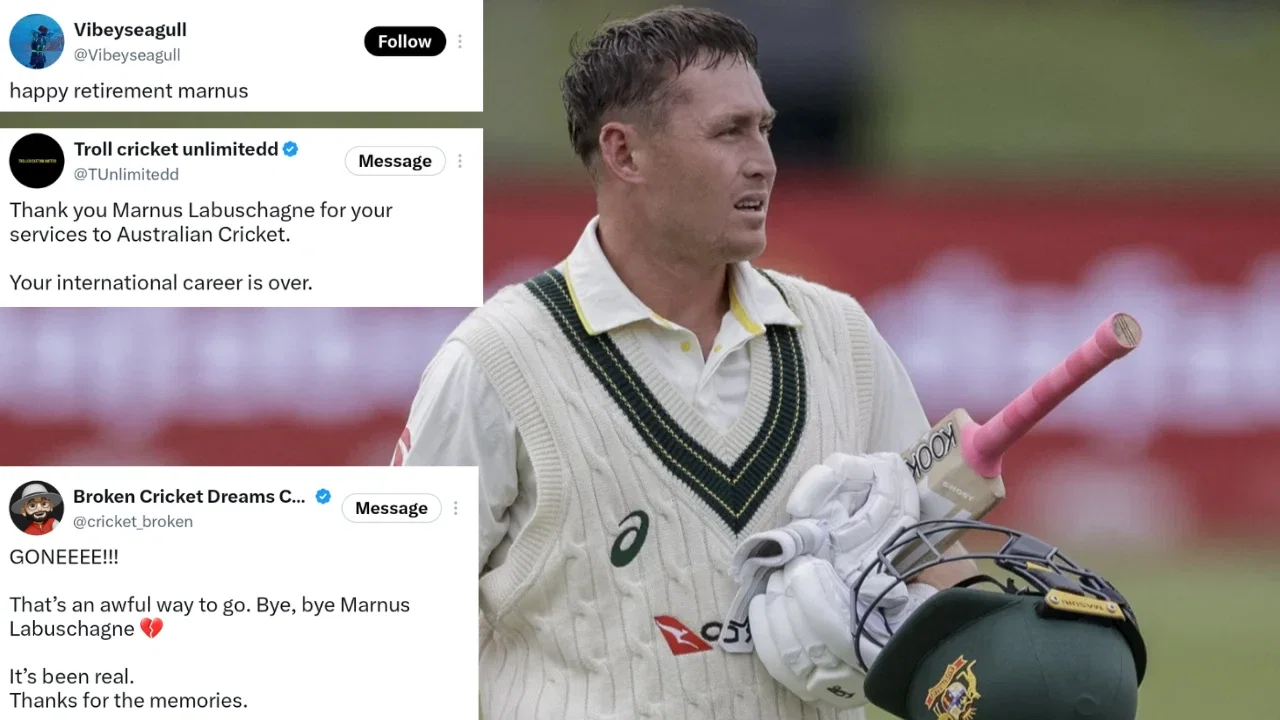
South Africa vs Australia: Marnus Labuschagne’s Struggles Intensify in Cape Town Test Decider
Australia’s Marnus Labuschagne endured another difficult moment in the deciding Test against South Africa, falling for just four runs on the final day in Cape Town. Kagiso Rabada removed the batter in the opening over of Australia’s second innings, adding fresh pressure to questions about Labuschagne’s form and his place in the side.
The series was level at 1-1 heading into the third and final match, making every wicket especially significant. Australia began the contest with a commanding 214-run victory in the first Test. South Africa responded in the second, with a superb performance from captain Temba Bavuma and determined support from Marco Jansen helping the Proteas turn the match around and win by an innings.
With a target of 290 to chase in Cape Town, Australia needed a composed start. Instead, Labuschagne’s early dismissal gave South Africa an immediate opening and intensified the spotlight on a batter whose recent Test returns have fallen well short of expectations.
Rabada strikes as Labuschagne falls for four
Labuschagne faced only three deliveries in the second innings, hitting one boundary before Rabada found the breakthrough. The South African quick delivered a ball from around the fifth-stump line that moved back sharply off the pitch. Having already committed to leaving it, Labuschagne was struck on the back pad.
The on-field umpire raised his finger for lbw. Labuschagne did not offer a shot, and a review confirmed the decision would stand as umpire’s call. The dismissal was a brief but telling episode: Australia had lost one of its most experienced top-order batters before the innings could settle.
His second-innings score followed a five-ball duck in Australia’s first innings. Across the series, Labuschagne’s highest score was 39, and he finished with 131 runs in total. Those figures are a stark contrast to the standards he established earlier in his Test career, when he became one of Australia’s most reliable run-scorers.
A long century drought puts selection under scrutiny
Labuschagne’s latest failure has added to a prolonged run without a Test century. His most recent hundred came at Old Trafford in Manchester in July 2023. By the time of the Cape Town match, he had gone 49 Test innings without reaching three figures, surpassing Alick Bannerman’s previous mark of 47 innings for the longest century drought by an Australian top-four batter.
The statistic does not, by itself, capture the full picture of a player’s contribution. Test batters can provide value through partnerships, difficult conditions and time at the crease, even when a century is elusive. But a lengthy drought combined with low scores in a series decider is likely to sharpen discussion among selectors, supporters and analysts about whether Labuschagne needs a break from the side.
His record in the current series has been particularly disappointing given that he reportedly scored a hundred in a warm-up match before the Tests began. That preparation suggested he might be ready for the challenge, but he was unable to carry the form into the matches that mattered. The contrast highlights the difference between finding rhythm in a practice fixture and delivering under the pressure of a high-stakes international contest.
Could this be Labuschagne’s final Test for Australia?
Whether Labuschagne has played his last Test remains uncertain. A single series rarely determines a player’s entire future, and Australia’s selectors will weigh more than just the latest scorecard. They may consider his previous record, technical approach, confidence, fitness, the conditions in upcoming matches and the alternatives available in the batting order.
Still, the case for a change becomes harder to dismiss when a senior batter continues to produce short innings. Labuschagne has received backing from the selection panel and captain Pat Cummins during his difficult spell, but that support will inevitably be tested if the lean run continues. Australia may opt to give him another opportunity, or they could use the next series to introduce a different option in the top order.
Any prediction about his future should therefore be treated cautiously. The Cape Town dismissal is a significant setback, but selection decisions are usually made after reviewing a broader body of evidence—not solely in response to a single innings or a wave of social-media reaction. His response to this difficult period, both technically and mentally, may be just as important as the numbers themselves.
Fans react to another early dismissal
Labuschagne’s latest failure quickly prompted sharp reactions online. Some fans joked that he should retire, while others questioned whether this was the last time they would see him in Australia’s Test whites. Several posts focused on the speed of his dismissal, with one noting that he had faced only eight deliveries across the match.
There was also a more sympathetic response. Some supporters argued that the batter had enjoyed better fortune earlier in his career and that the current slump did not reflect his true ability. That divide captures the tension surrounding a high-profile player in poor form: frustration with repeated failures exists alongside recognition that a sustained record of success cannot be erased by a difficult stretch.
Social-media commentary can amplify the pressure around an underperforming player, but it is not a reliable guide to what selectors will do next. The more meaningful indicators will be Australia’s team selection, Labuschagne’s role in the squad and whether he can make technical adjustments before his next opportunity.
What Labuschagne’s slump means for Australia
Australia’s batting order depends on more than individual talent. It needs players who can absorb pressure, build partnerships and give the middle order a stable platform. Labuschagne has performed those roles successfully in the past, which is one reason his current form has attracted so much attention. When a top-order batter falls early, the pressure shifts immediately to the players who follow.
For South Africa, Rabada’s breakthrough was a valuable start to the chase. Removing Labuschagne in the first over gave the hosts momentum and put Australia’s pursuit of 290 under early strain. In a series decided by contrasting performances—the Australians’ dominance in the opener and South Africa’s innings victory in the second—small moments such as an opening-over wicket can have an outsized impact.
Labuschagne now faces a defining period in his Test career. His past achievements offer a reason for patience, but the extended century drought and modest returns in this series make the selection debate unavoidable. Whether Australia retain him or look for a replacement, the next chapter will depend on how the team balances loyalty to a proven performer with the need for runs in the present.
Latest News

SA vs BAN Playing 11 Today, Live Streaming, Pitch & Weather: South Africa tour of Bangladesh 2026, 2nd Test

AUS vs ENG Playing 11 Today, Live Streaming, Pitch & Weather: England tour of Australia 2026, 2nd T20I

Blair Tickner ruled out of 2nd Test vs India, replacement named

Tim Paine and Justin Langer face fresh questions over Australia’s ball-tampering scandal

India tour of Bangladesh gets fresh hope as BCB confirms talks with BCCI

Tom Latham opens up on soft ball problem and saliva ban after draw against India

Ajinkya Rahane slams Tilak Varma for publicly criticising Shahbaz Ahmed after India A’s defeat

ICC to introduce IPL-style bat checks in international cricket

“Smiling Laughing doesn’t happen”: R Ashwin’s dig at India’s approach after draw vs New Zealand

“Not good enough for Test cricket”: Scott Styris, Sunil Gavaskar slam Wellington pitch

Dodda Ganesh declares India ‘out of WTC final race’ after Wellington Test draw

Ajinkya Rahane criticises Shubman Gill for abusing Akash Deep in 1st Test vs New Zealand

‘Why so many boundary riders?’ Dinesh Karthik questions Shubman Gill’s captaincy after Wellington Test

“I just want to enjoy my life”: Yash Dayal reflects on his return to cricket


