

Harbhajan Singh mocks Glenn Phillips as ‘performative fielder’
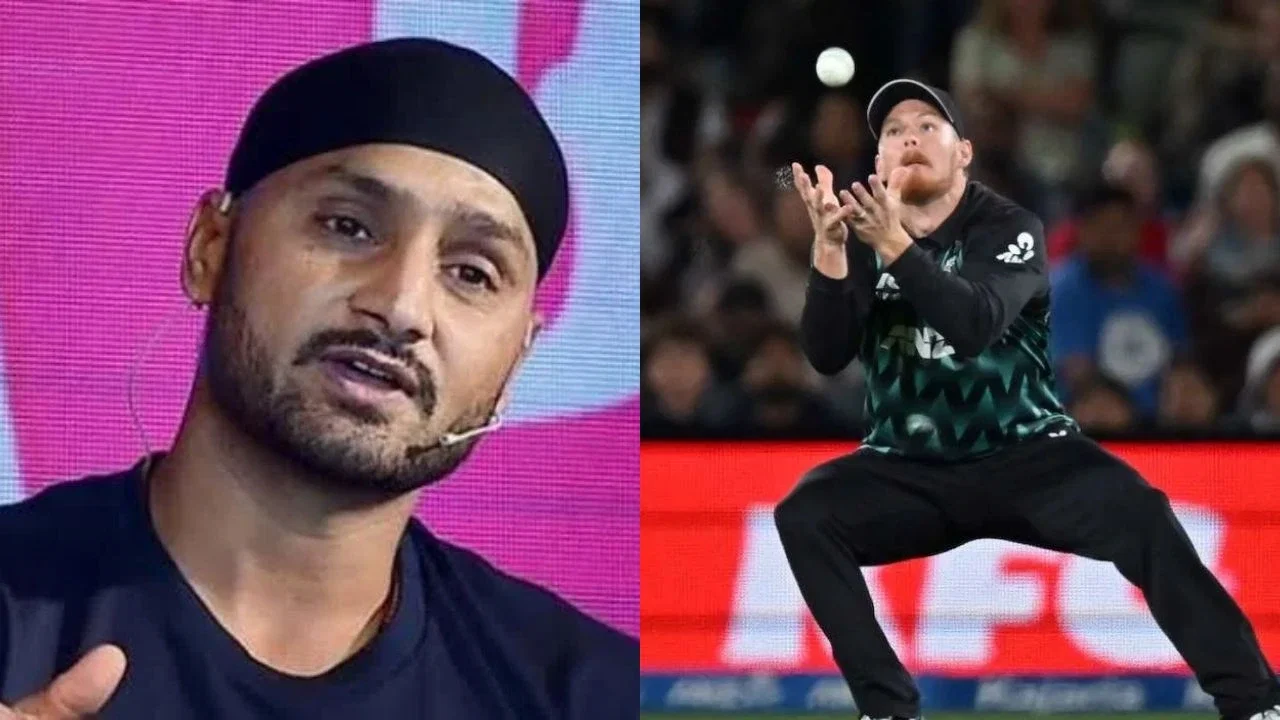
Harbhajan Singh Backs Simon Doull’s Criticism of Glenn Phillips’ Diving Catch Attempt
Former India spinner Harbhajan Singh has weighed in on the debate surrounding Glenn Phillips’ unsuccessful diving effort during the third T20I between India and New Zealand in Wellington. The athletic attempt, made while India were chasing a target of 199, failed to stop Abhishek Sharma’s aerial shot—and prompted commentator Simon Doull to question whether the dive was necessary.
Harbhajan later reposted a social media post that echoed Doull’s criticism, bringing fresh attention to a brief fielding moment in a match otherwise dominated by India’s powerful batting. The discussion has also raised a familiar question in modern cricket: when does an ambitious piece of fielding help a team, and when might a safer option be more sensible?
What Happened During Phillips’ Attempt?
The incident took place at 9.5 overs at Hnry Stadium, with India building momentum in their pursuit of New Zealand’s total. Facing Kyle Jamieson, Abhishek Sharma struck the ball into the air towards the mid-wicket region. Phillips moved across the field and launched himself to his left in an attempt to intercept it.
He could not reach the ball, which cleared his outstretched hand and continued to the boundary. Phillips is widely recognised for his speed and athleticism in the field, and the effort reflected his willingness to try to save runs. But because the ball travelled past him, the dive became a talking point rather than a highlight.
Doull questioned the decision during the broadcast, suggesting Phillips had time to take a more controlled route towards the boundary. He argued that the fielder was positioned far enough in from the rope to run around and attempt to stop the ball without committing to a full-length dive.
Harbhajan appeared to agree with that assessment by reposting a message on X that described Phillips as a “performative” fielder and said the attempt was unnecessary. The post also noted that commentators had questioned the decision. Harbhajan’s repost did not add a separate explanation, but it was widely interpreted as support for the criticism.
Skill, Risk and Fielding Decisions
Phillips’ effort illustrates the fine margins involved in T20 fielding. A diving stop can prevent a boundary, create a run-out opportunity or lift a side’s energy. However, committing too early can leave a fielder unable to adjust if the ball travels beyond their reach. The right choice depends on the shot’s height, speed and angle, as well as the fielder’s distance from the boundary and the position of teammates.
There is also a difference between an attempt that looks spectacular and one that offers the best chance of saving runs. In this case, Doull’s criticism focused on the available alternative: staying upright and trying to intercept the ball closer to the rope. Phillips’ supporters, meanwhile, could argue that fielders are often encouraged to attack the ball and that a split-second decision is difficult to judge from a broadcast replay.
The episode is unlikely to define Phillips’ reputation as a fielder, but it has added an unexpected subplot to a match remembered chiefly for India’s extraordinary run chase.
Abhishek Sharma Leads India’s Record-Breaking Chase
India’s victory was powered by another outstanding innings from Abhishek, who smashed 113 runs from just 38 deliveries. His aggressive approach set the tone early, putting New Zealand under pressure before the hosts could settle into a defensive plan. Vaibhav Sooryavanshi provided equally rapid support, scoring 45 off 19 balls as the opening pair added 133 runs in only 43 deliveries.
That stand transformed a target of 199 into a chase that India controlled from the outset. India reached 199 for four in just 13.2 overs, winning by six wickets with 40 balls remaining. The result underlined the value of a fast start in T20 cricket: a large total can quickly become vulnerable when the opening batters score freely and force the fielding side to spread its resources.
India’s chase was reported as the second-fastest successful pursuit of a target of 190 or more by balls remaining. Estonia hold the record after chasing 192 against Cyprus in Episkopi in 2024 with 42 balls to spare. India also bettered their previous best successful chase against a full-member nation, which came against New Zealand in Raipur earlier in 2026. India had reached a target of 209 in that match with 28 balls remaining.
For fans searching for a prediction about India’s T20 prospects, the performance offered plenty of encouragement—but one innings should not be treated as a guarantee of future results. Abhishek’s form, the opening partnership and the team’s ability to handle different conditions will all be important indicators in upcoming matches.
Santner Reflects on New Zealand’s Defeat
New Zealand captain Mitchell Santner acknowledged how difficult it was to contain India once the batters found their rhythm. He pointed to the experience of seeing similar power-hitting in the IPL and said the challenge was evident again in Wellington.
Santner also felt New Zealand had put themselves in a position to post a competitive score. He highlighted the partnership between Daryl Mitchell and Bevon Jacobs, saying it had helped the hosts track towards a total of around 200—an imposing score on a pitch that appeared suited to stroke-making.
However, India’s bowlers limited New Zealand’s progress in the closing stages, with Santner crediting their execution, particularly their yorkers. Those deliveries can be difficult to score from at the end of an innings, especially when batters are looking to clear the boundary. The captain also noted the impact of dew, which can make it harder for bowlers to grip the ball and control their lengths.
Powerplay Pressure Shaped the Contest
Santner described the powerplay as a crucial phase and said India had demonstrated how to make the most of it. The opening overs allowed Abhishek and Sooryavanshi to seize control, while New Zealand’s bowlers were left searching for a way to slow the scoring without leaving gaps in the field.
Ultimately, the match combined a remarkable batting display with a smaller but lively debate about fielding judgment. Phillips’ dive sparked discussion about risk and decision-making, while India’s emphatic chase showed how quickly a T20 contest can shift when an opening pair builds momentum. For New Zealand, the challenge will be to turn Santner’s assessment into sharper plans; for India, the focus will be on sustaining the form that made this chase so decisive.
Latest News

SA vs BAN Playing 11 Today, Live Streaming, Pitch & Weather: South Africa tour of Bangladesh 2026, 2nd Test

AUS vs ENG Playing 11 Today, Live Streaming, Pitch & Weather: England tour of Australia 2026, 2nd T20I

Blair Tickner ruled out of 2nd Test vs India, replacement named

Tim Paine and Justin Langer face fresh questions over Australia’s ball-tampering scandal

India tour of Bangladesh gets fresh hope as BCB confirms talks with BCCI

Tom Latham opens up on soft ball problem and saliva ban after draw against India

Ajinkya Rahane slams Tilak Varma for publicly criticising Shahbaz Ahmed after India A’s defeat

ICC to introduce IPL-style bat checks in international cricket

“Smiling Laughing doesn’t happen”: R Ashwin’s dig at India’s approach after draw vs New Zealand

“Not good enough for Test cricket”: Scott Styris, Sunil Gavaskar slam Wellington pitch

Dodda Ganesh declares India ‘out of WTC final race’ after Wellington Test draw

Ajinkya Rahane criticises Shubman Gill for abusing Akash Deep in 1st Test vs New Zealand

‘Why so many boundary riders?’ Dinesh Karthik questions Shubman Gill’s captaincy after Wellington Test

“I just want to enjoy my life”: Yash Dayal reflects on his return to cricket


