Haroon Rasheed blames Imran Khan for Pakistan Cricket’s decline
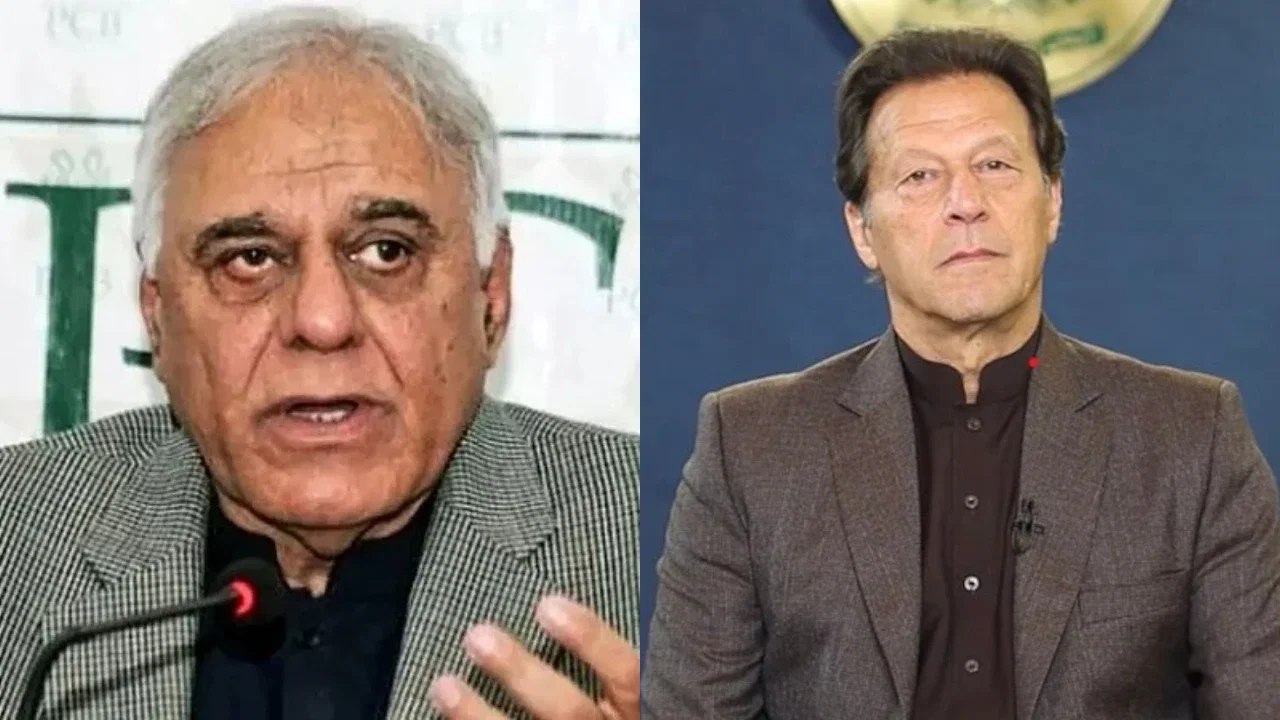
Understanding the Downturn: Pakistan Cricket’s Decline and the Role of Domestic Structure Changes
Pakistan’s cricketing landscape has faced a series of challenges over recent years, with the national team struggling to recapture its former glory. Notably, the team has failed to progress beyond the semi-finals in their last four ICC events, raising serious questions about the sustainability of Pakistan’s cricket development programs. As fans, analysts, and cricketing authorities seek answers, one of the most prominent voices, former Pakistan chief selector and coach Haroon Rasheed, has pointed fingers at a critical turning point in the country’s cricket history—the drastic overhaul of the domestic cricket system during the tenure of former Prime Minister Imran Khan.
The Roots of Pakistan’s Cricketing Challenges
Historically, Pakistan has been renowned for its talented pool of cricketers, often producing world-class players who have excelled on the international stage. However, the recent downturn has led many to question whether the domestic system adequately nurtures young talent and maintains a competitive environment essential for producing international stars.
Haroon Rasheed, a respected figure in Pakistan cricket and a former selector, firmly believes that the significant changes implemented during Imran Khan’s administration marked a turning point that negatively impacted the country’s cricketing standards. According to Rasheed, these modifications disrupted the traditional pathways for player development, leading to a decline in the quality and consistency of Pakistan’s cricket talent pool.
Imran Khan’s Initiative: A Bold but Controversial Shift
Imran Khan, a legendary all-rounder who famously captained Pakistan to its first-ever ODI World Cup victory in 1992, transitioned into politics after retiring from cricket. In 2018, his political party secured a majority, and he assumed the role of Prime Minister. One of his key initiatives was to reform Pakistan’s domestic cricket structure, with the goal of aligning it more closely with successful systems abroad, particularly Australia’s.
The central reform involved reducing the number of first-class teams from approximately 10-16 to just six, a move intended to concentrate talent and resources into fewer, stronger teams. The rationale was that a smaller, more competitive domestic environment would elevate the overall standard of cricket and prepare players for international challenges more effectively. However, Rasheed argues that this approach was overly ambitious and lacked a phased implementation, which ultimately hampered the development pipeline.
The Rejected Hybrid Model: Inside the Decision-Making Process
As part of a cricket task force tasked with evaluating Pakistan’s domestic cricket setup, Haroon Rasheed and his colleagues proposed a hybrid model designed to strike a balance between quality and inclusivity. This model aimed to maintain a manageable number of teams—around eight—while preserving the participation of departmental teams, a vital feature of Pakistan cricket that has historically fostered employment and competition at the grassroots level.
According to Rasheed, the plan was prepared with careful consideration, emphasizing a gradual transition towards the new structure. Unfortunately, during a pivotal meeting, Imran Khan rejected this hybrid approach outright, insisting on a drastic reduction to just five or six teams. Rasheed recounts that efforts were made to convince the Prime Minister of the benefits of a phased implementation, but ultimately, the decision was finalized without the compromise of a gradual shift.
“Imran wanted a quick change, and we had to respect his decision,” Rasheed explained. “But in doing so, we may have sacrificed the robustness and inclusivity needed for sustainable cricket growth.”
The Consequences of Rapid Structural Reforms
Since these changes, many experts and former players have observed a decline in the depth and competitiveness of Pakistan’s domestic cricket. The reduction in teams led to fewer opportunities for emerging players to gain experience at the first-class level, which is often the critical stepping stone to international cricket. Additionally, the centralization of power within the Pakistan Cricket Board (PCB) has limited regional and departmental influence, further constraining the development of a diverse talent pipeline.
Comparison with India: The Power of a Robust Domestic System
Haroon Rasheed emphasized the stark contrast between Pakistan and India’s cricketing success, attributing much of India’s sustained excellence to its resilient domestic cricket framework. Despite the rise of the Indian Premier League (IPL), a lucrative franchise-based T20 competition, India continues to prioritize traditional tournaments such as the Ranji Trophy, Duleep Trophy, Syed Mushtaq Ali Trophy, and Vijay Hazare Trophy.
These tournaments, organized by state cricket associations, provide vital opportunities for players to showcase their talent in a competitive environment that mirrors international standards. The independence and decentralization of these associations foster a healthy ecosystem where club-level cricket flourishes, and emerging players can develop their skills across various formats and levels.
“The success of Indian cricket isn’t solely because of the IPL,” Rasheed points out. “It’s also because of a strong, well-structured domestic system that continually produces new talent. Pakistan needs to decentralize power from the PCB, empower regional associations, and rebuild a comprehensive grassroots infrastructure.”
Prediction: What Lies Ahead for Pakistan Cricket?
Looking forward, a key prediction is that unless Pakistan undertakes a comprehensive overhaul of its domestic cricket landscape—restoring regional and departmental competitions, decentralizing authority, and adopting a phased approach to structural reforms—the national team may continue to face stagnation or decline on the international stage.
Cricket analysts suggest that the future success of Pakistan cricket hinges on a balanced domestic system that fosters competition, innovation, and player development. The focus should shift from quick fixes to sustainable growth, with an emphasis on nurturing young talent through a variety of competitive platforms.
In addition, the role of leadership and governance within the PCB will be crucial. Emulating the Indian model, Pakistan’s cricket authorities must prioritize the creation of a vibrant domestic ecosystem that complements the glamour of international cricket and the commercial appeal of leagues like the PSL.
Final Thoughts: Learning from Past Mistakes
Pakistan’s cricketing journey has seen many peaks and valleys. The current phase underscores the importance of strategic planning and patience in reforming sporting structures. Haroon Rasheed’s insights serve as a reminder that meaningful change requires consensus, careful planning, and a willingness to adapt based on lessons learned from successful cricketing nations.
As prediction models suggest, the future of Pakistan cricket will depend heavily on whether the country can rebuild its domestic foundations, invest in grassroots development, and foster a competitive environment that nurtures international-quality talent. Only then can Pakistan hope to reclaim its rightful place among the world’s cricketing elite.
Latest News
Top 10 highest run-chases in T20 cricket history, ft. West Indies’ Ranchi win vs India
Aaryavir Sehwag and Anvay Dravid set to make headlines at U19 Asia Cup 2026
Longest ducks in Test cricket history ft. Nic Maddinson, Shoaib Akhtar
ECB to offer 39 central contracts to England players after Ben Stokes, Mark Wood’s retirement
Steve Smith surpasses Steve Waugh in all-time Test run-scorers’ list

Shane Watson identifies Gautam Gambhir’s biggest problem as India struggle for consistency
Is Bhuvneshwar Kumar in India’s 2027 World Cup plans? Ajinkya Rahane makes revelation
BCCI’s big ₹127 Crore move after injury crisis raises concerns over Team India
Parthiv Patel reveals RCB ignored his Jasprit Bumrah recommendation in IPL 2014 Auction
“Never spoke ill of any faith”: Irfan Pathan hits back at fake news using his name
Nic Maddinson bags 33-ball duck on Test comeback, disappoints George Bailey
Imran Tahir predicts 2027 ICC ODI World Cup Semi-Finalists, snubs India for title
Australia create unwanted history with first all-30-plus Test XI
Ravindra Jadeja returns to Ranji Trophy as Saurashtra announce squad