

ICC set to introduce new rules for franchise leagues, MLC and ILT20 could face big blow
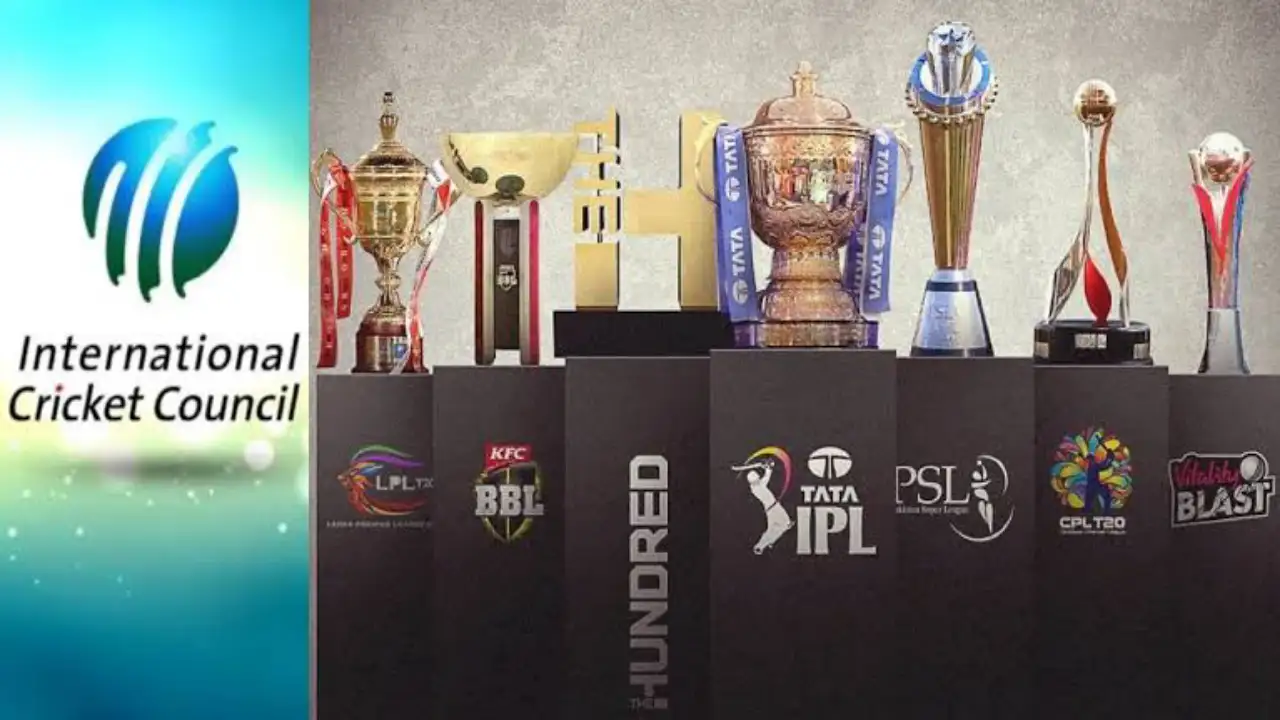
ICC Considers Common Rules for Franchise Cricket Leagues
The rapid growth of franchise cricket has created a crowded global calendar, with competitions now operating across several continents and under different playing conditions. The International Cricket Council (ICC) is considering whether leading leagues should follow a more consistent set of regulations, including possible limits on overseas players, tighter oversight of league approvals and restrictions on certain sponsors.
The proposals could have a significant impact on competitions such as Major League Cricket (MLC) in the United States and the UAE’s International League T20 (ILT20), both of which rely heavily on international stars. Any changes would need to balance the commercial appeal of these leagues with the long-term development of local players and the interests of cricket’s national governing bodies.
ICC Review Group Examines Franchise Leagues
In July, the ICC established a review group to assess the expanding franchise-league landscape. The group has reportedly presented several recommendations to senior officials, who are expected to discuss them at an ICC meeting in Bali. The proposals remain under consideration; no final decision has been announced.
According to an ESPNcricinfo report, the recommendations include setting a maximum number of overseas players in a team’s playing XI, expanding the ICC’s authority to review and audit league sanctions, limiting sponsorship from betting companies or their surrogates, and introducing a fee for sanctioning a competition.
These ideas reflect a wider question facing cricket’s administrators: how can the sport support new investment and international growth while ensuring that leagues operate within a fair, transparent framework? A common rulebook could make competitions easier to regulate, but it may also require some leagues to rethink the team structures that currently attract viewers and investors.
Why Overseas-Player Limits Could Matter
Franchise leagues differ considerably in how they use international talent. Established competitions such as the Indian Premier League (IPL) and Australia’s Big Bash League (BBL) generally combine overseas stars with a strong emphasis on domestic players. This approach helps leagues build local talent pipelines and gives national players regular opportunities in high-profile matches.
Other tournaments have adopted a more international model. MLC and ILT20 feature a substantial number of overseas players, helping them bring globally recognised names to newer cricket markets. For emerging competitions, signing established stars can be an effective way to build awareness, attract sponsors and introduce audiences to the format.
The reported proposal to cap overseas players in an XI could therefore affect leagues differently. A shared limit might encourage more local selection and create additional opportunities for domestic cricketers. At the same time, a sudden reduction in foreign-player places could make it harder for newer competitions to maintain their current level of star power.
ILT20 and MLC Could Face Major Adjustments
Under the rules described in the original report, ILT20 permits up to nine overseas players in a playing XI, including one player from an ICC Associate Member. MLC allows up to six overseas players in its XI. If the ICC adopts a lower common ceiling, both competitions could be required to change their team combinations.
For ILT20, a tighter limit would represent a particularly substantial shift. The league’s international line-ups have helped it attract attention in a market where the domestic player pool is still developing. MLC also uses international talent to raise the competition’s profile as cricket seeks to grow in the United States, a country with a large sporting audience but a comparatively young professional cricket system.
More places for regional players could support development in both markets. Regular exposure to elite competition can help local cricketers improve their skills, strengthen domestic pathways and make national teams more competitive over time. However, development takes patience. Local players may need sustained investment in coaching, facilities and domestic tournaments before they can replace the experience and recognition that overseas professionals currently bring.
Commercial Appeal and Local Development Must Be Balanced
The debate is not simply about the number of foreign players. Franchise leagues depend on a mix of sporting quality, entertainment value, broadcast reach and commercial partnerships. International stars can draw audiences from their home countries and give new competitions a recognisable identity. Owners and investors may therefore be concerned if regulations reduce the number of marquee players they can field.
At the same time, a league that relies too heavily on imported talent may struggle to create a lasting local following. Giving homegrown players meaningful roles can help build a stronger connection with regional fans and provide a clearer pathway from grassroots cricket to the professional game. The challenge for administrators is to avoid treating these goals as opposites: well-designed roster rules could preserve international appeal while steadily expanding opportunities for domestic players.
Any change would also need to account for the different stages of development across cricket markets. A mature competition with a deep domestic player pool may be able to operate under a strict overseas cap more easily than a newer league still building its local infrastructure. A phased approach, or rules that recognise different league circumstances, could be among the options considered if the ICC moves forward.
Governance, Sanctions and Sponsorship Under Review
The proposed overseas-player limit is only one part of the review. Greater ICC authority to examine or audit league sanctions could strengthen oversight and clarify how competitions are approved. A sanction is important because it helps establish that a league is recognised within cricket’s regulatory system. More consistent checks could improve transparency, although organisers may seek clear guidance on the process, costs and standards involved.
The reported proposal to charge a sanctioning fee could also affect league finances, particularly for newer competitions. Meanwhile, restrictions on betting-related sponsors would raise questions about how cricket can protect the sport’s reputation while accounting for the commercial realities of different markets. The details would matter: administrators would need to define what counts as a betting company’s surrogate and how any restrictions would apply across jurisdictions.
What Happens Next?
The Bali meeting is expected to provide an opportunity for ICC officials to discuss the review group’s recommendations, but discussion does not necessarily mean immediate implementation. The council would need to weigh the potential benefits against the practical and financial consequences for leagues, players, broadcasters and investors.
For now, the future rules remain uncertain. If the ICC endorses a common framework, MLC and ILT20 could face significant changes to their overseas-player policies, while other leagues may need to review their own regulations. The eventual outcome could shape how franchise cricket balances global star power with local development—and influence the next phase of the sport’s international expansion.
As officials consider the proposals, fans and stakeholders will be watching for clarity on the most consequential prediction in the debate: whether a shared rulebook can create a fairer franchise system without weakening the appeal that has helped these leagues grow.
Latest News

SA vs BAN Playing 11 Today, Live Streaming, Pitch & Weather: South Africa tour of Bangladesh 2026, 2nd Test

AUS vs ENG Playing 11 Today, Live Streaming, Pitch & Weather: England tour of Australia 2026, 2nd T20I

Blair Tickner ruled out of 2nd Test vs India, replacement named

Tim Paine and Justin Langer face fresh questions over Australia’s ball-tampering scandal

India tour of Bangladesh gets fresh hope as BCB confirms talks with BCCI

Tom Latham opens up on soft ball problem and saliva ban after draw against India

Ajinkya Rahane slams Tilak Varma for publicly criticising Shahbaz Ahmed after India A’s defeat

ICC to introduce IPL-style bat checks in international cricket

“Smiling Laughing doesn’t happen”: R Ashwin’s dig at India’s approach after draw vs New Zealand

“Not good enough for Test cricket”: Scott Styris, Sunil Gavaskar slam Wellington pitch

Dodda Ganesh declares India ‘out of WTC final race’ after Wellington Test draw

Ajinkya Rahane criticises Shubman Gill for abusing Akash Deep in 1st Test vs New Zealand

‘Why so many boundary riders?’ Dinesh Karthik questions Shubman Gill’s captaincy after Wellington Test

“I just want to enjoy my life”: Yash Dayal reflects on his return to cricket


