

India create history, become first team to smash 400 sixes in a calendar year
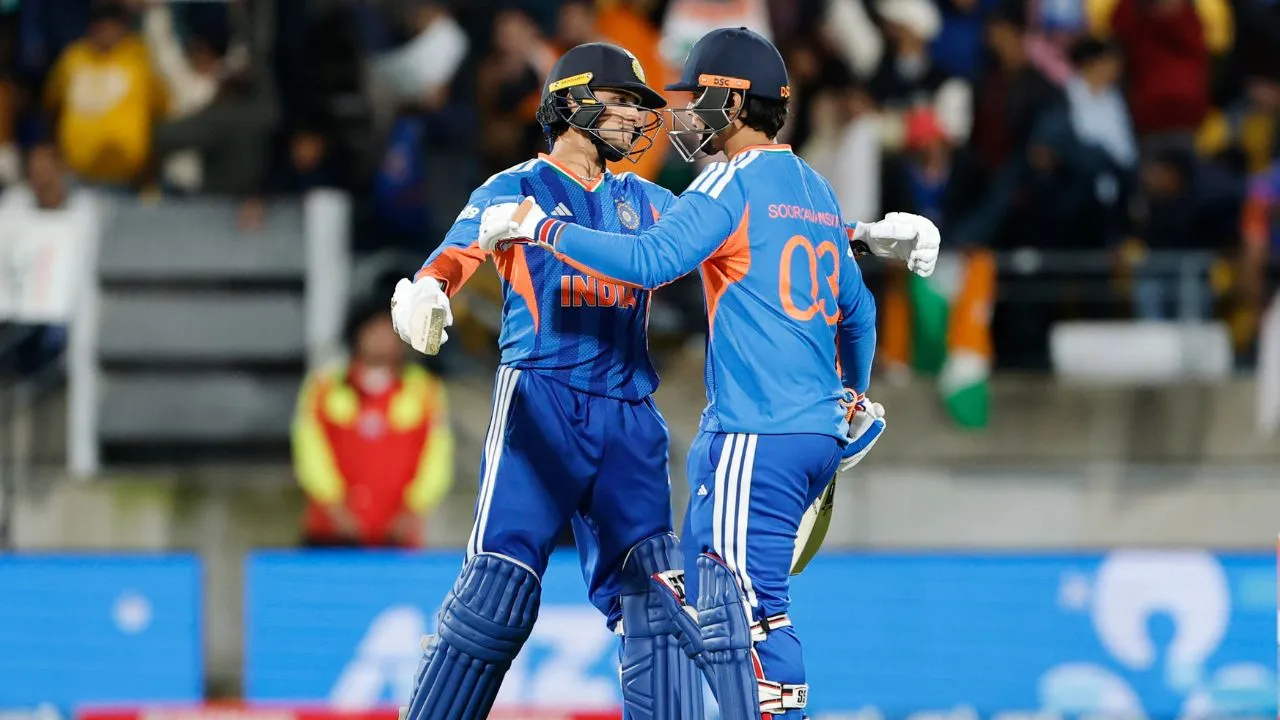
India Set a Historic T20I Six-Hitting Record in 2026
India’s reputation as one of the most explosive teams in T20 cricket gained another striking chapter during the fifth match of their series in New Zealand. The Men in Blue reached 400 sixes in 40 T20Is during the 2026 calendar year, becoming the first team to hit that many maximums in a single year. The milestone reflects the growing power and confidence of India’s batting lineup—and offers a compelling talking point for fans assessing the team’s form ahead of future tournaments.
India had already secured the five-match series after winning the first three games. Although New Zealand claimed the fourth match, the series had provided plenty of evidence of India’s attacking intent. The record was reached in the final fixture, a match that still carried individual milestones and momentum at stake despite the series outcome being decided.
India’s 400-Six Milestone: The Numbers Behind the Record
India’s six-hitting figures are especially impressive because they have come across a demanding international schedule. Reaching 400 maximums in just 40 T20Is means the team has averaged 10 sixes per match—an extraordinary rate that illustrates how aggressively India have approached the shortest format.
New Zealand have been on the receiving end of a substantial share of that power. Of India’s 400 sixes in 2026, 142 have been struck against the Black Caps, the most India have hit against a single opponent in a calendar year. That total highlights the high-scoring nature of the series and the difficulty New Zealand’s bowlers have faced in containing India’s top order.
Abhishek Sharma has been a major contributor, hitting 34 sixes against New Zealand during the year. Ishan Kishan has added 25. Their figures underline the impact of India’s aggressive left-handed batting, while the presence of players such as Sanju Samson and Shreyas Iyer gives the lineup further options to attack across different phases of an innings.
Why India’s Six-Hitting Approach Matters
In T20 cricket, boundary-hitting can change a match in a matter of overs. A team that consistently clears the rope can recover quickly from a slow start, put pressure on bowlers, and force captains to adjust their fields. India’s record suggests that their power is not limited to one standout batter: several players can take responsibility for lifting the scoring rate.
The approach also brings risk. Aggressive batting can lead to clusters of wickets, particularly when a side loses early top-order players. That trade-off was visible in the fifth T20I, where India’s remarkable six-hitting year was followed by a mid-innings slowdown after a promising partnership ended.
Ishan Kishan and Shreyas Iyer Rebuild After Early Wickets
New Zealand captain Mitchell Santner won the toss and chose to bowl, putting India in to bat. India made two changes, bringing Bhuvneshwar Kumar back into the side and giving Varun Chakravarthy an opportunity in the series for the first time.
India’s innings began poorly. Abhishek Sharma and Sanju Samson were dismissed early, leaving the visitors in need of a substantial partnership. Kishan responded with an assertive innings, joining captain Shreyas Iyer to add 93 runs from 43 deliveries. Their stand restored momentum and demonstrated how quickly India can shift the pressure back onto the bowling side.
Kishan made 61 from 32 balls, striking five sixes and five fours. His innings combined power with timely boundary placement, helping India move from early trouble to a competitive position. Iyer supported him with a counterattacking half-century, keeping the scoring rate high and ensuring New Zealand could not settle into a defensive rhythm.
The partnership ended when both batters were dismissed within a short period. India then struggled to maintain the same pace, as New Zealand’s bowlers took regular wickets and prevented the lower middle order from building another major stand. Naman Dhir’s contribution of 33 helped steady the innings, and India finished on 191 for eight from 20 overs.
New Zealand’s Chase and Varun Chakravarthy’s Key Breakthrough
New Zealand’s reply began with an early setback when Finn Allen was dismissed. Tim Seifert, however, gave the hosts a lift after a quiet series. A dropped catch by Naman Dhir offered Seifert an important reprieve, and he looked increasingly dangerous as New Zealand attempted to keep pace with the target.
India needed a breakthrough as the partnership began to develop, and Varun Chakravarthy delivered one by dismissing Daryl Mitchell. The wicket was significant because Mitchell’s presence threatened to give New Zealand control of the chase. Chakravarthy’s intervention brought India back into the contest and showed why a mystery spinner can be valuable even on a surface where batters are looking to attack.
The match also offered an interesting contrast: India’s batting had produced a historic six-hitting landmark, but the contest was still shaped by the familiar T20 details of fielding, partnerships and timely wickets. A dropped chance had helped Seifert, while Chakravarthy’s dismissal of Mitchell gave India a chance to regain control.
What the Record Could Mean for India’s T20I Future
India’s 400-six achievement is more than a headline statistic. It points to a batting group built to score quickly and apply pressure from the outset. With players such as Abhishek Sharma and Ishan Kishan capable of clearing the boundary regularly, India have the firepower to post imposing totals or chase demanding targets.
For supporters following the team’s next fixtures, the key question is whether India can pair that attacking strength with greater consistency through the middle overs. The fifth T20I showed both sides of the equation: a powerful recovery through Kishan and Iyer, followed by a loss of momentum once they were out. Turning explosive starts into complete innings will be central to India’s continued success.
Prediction: If India’s top order maintains its current boundary-hitting form and the middle order improves its ability to rebuild after quick wickets, the team will remain one of the most dangerous sides in T20 cricket. The 400-six milestone sets a remarkable benchmark, but sustaining that impact across different conditions will be the real test.
Latest News

SA vs BAN Playing 11 Today, Live Streaming, Pitch & Weather: South Africa tour of Bangladesh 2026, 2nd Test

AUS vs ENG Playing 11 Today, Live Streaming, Pitch & Weather: England tour of Australia 2026, 2nd T20I

Blair Tickner ruled out of 2nd Test vs India, replacement named

Tim Paine and Justin Langer face fresh questions over Australia’s ball-tampering scandal

India tour of Bangladesh gets fresh hope as BCB confirms talks with BCCI

Tom Latham opens up on soft ball problem and saliva ban after draw against India

Ajinkya Rahane slams Tilak Varma for publicly criticising Shahbaz Ahmed after India A’s defeat

ICC to introduce IPL-style bat checks in international cricket

“Smiling Laughing doesn’t happen”: R Ashwin’s dig at India’s approach after draw vs New Zealand

“Not good enough for Test cricket”: Scott Styris, Sunil Gavaskar slam Wellington pitch

Dodda Ganesh declares India ‘out of WTC final race’ after Wellington Test draw

Ajinkya Rahane criticises Shubman Gill for abusing Akash Deep in 1st Test vs New Zealand

‘Why so many boundary riders?’ Dinesh Karthik questions Shubman Gill’s captaincy after Wellington Test

“I just want to enjoy my life”: Yash Dayal reflects on his return to cricket


