

India create world record: Abhishek Sharma, Vaibhav Sooryavanshi slam fastest 100, biggest powerplay score
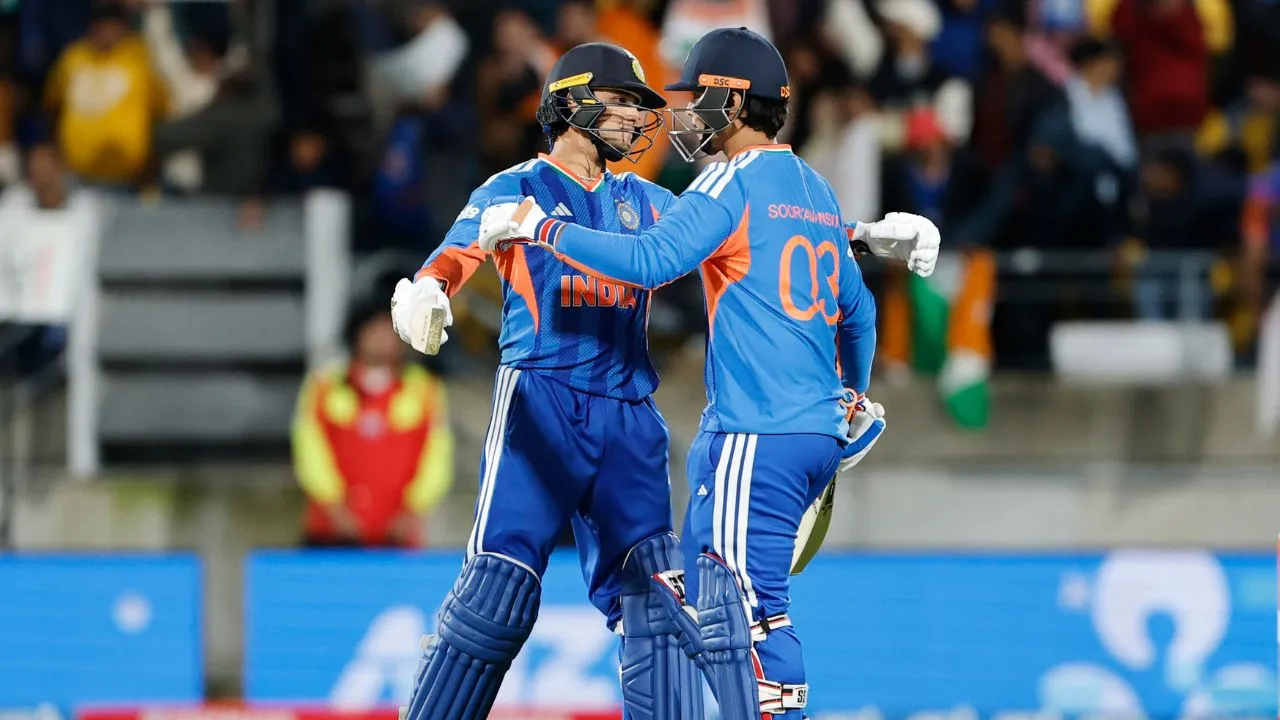
India Rewrite T20I Record Books in Wellington as Explosive Chase Puts New Zealand Under Pressure
India produced a remarkable batting display in the third T20I against New Zealand at Wellington’s Hnry Stadium, racing to the fastest team century recorded by a Full Member nation in men’s T20 internationals. Chasing a target of 200, the Indian openers attacked from the outset, turning a competitive total into a daunting assignment for the hosts.
The result also carried major significance for the five-match series. India had won the first two games, and another victory in Wellington would secure the series with two matches still to play. The Men in Blue entered the chase with confidence after hunting down 226 in the opening match and edging a thriller in the second. Their third performance raised the stakes further, as a record-breaking powerplay put them firmly ahead of the required run rate.
India Reach 100 in Just Five Overs
India’s team century arrived after only five overs, surpassing South Africa’s previous Full Member record of 5.3 overs. The benchmark had been set against the West Indies at Centurion in 2023. In Wellington, Abhishek Sharma and Vaibhav Sooryavanshi went even faster, putting New Zealand’s bowlers under immediate pressure with a stream of boundaries and sixes.
The pair also recorded a stunning 118 without loss in the powerplay, the highest powerplay total in men’s T20I cricket. Their approach was simple but effective: punish anything loose, keep the fielding side moving, and refuse to let the bowlers settle into a rhythm. Sooryavanshi supplied early fireworks, while Abhishek maintained the assault and appeared increasingly comfortable as the innings developed.
Fastest team 100 in men’s T20Is
India’s five-over milestone moved ahead of several remarkable performances from around the world. The previous record-holders and other rapid team centuries include:
- 5 overs: India vs New Zealand, Wellington, 2026
- 5.2 overs: Romania vs Serbia, Sofia, 2021
- 5.3 overs: South Africa vs West Indies, Centurion, 2023
- 5.3 overs: Australia vs Scotland, Edinburgh, 2024
- 5.5 overs: Zimbabwe vs Gambia, Nairobi, 2024
- 5.5 overs: England vs South Africa, Old Trafford, 2025
The powerplay scoring record made the innings just as striking. India’s 118/0 topped Romania’s 116/0 against Serbia in 2021, while Australia’s 113/1 against Scotland and South Africa’s 102/0 against the West Indies also featured among the highest totals in the first six overs.
Abhishek Sharma Leads India’s Charge
Abhishek was central to the chase, combining clean timing with the confidence to attack New Zealand’s pace and spin. His innings kept the scoreboard moving even as the required rate fell sharply. At the point described in the match update, he was closing in on a century and had helped build a 133-run opening partnership in fewer than seven overs.
Sooryavanshi’s contribution was equally explosive. He made 45 from 21 deliveries, striking four sixes and four fours before his innings ended. His aggressive start gave Abhishek room to continue attacking, and the pair’s contrasting contributions made the partnership especially difficult for New Zealand to contain.
India reached 162/1 after nine overs, leaving only 37 runs to get. With the chase progressing far ahead of the asking rate, the visitors were positioned to complete a major run chase and seal the series. The scale of the start meant the match had quickly shifted from a contest about whether India could win to one about how soon—and by what margin—the result might be decided.
Daryl Mitchell Gives New Zealand a Competitive Total
New Zealand had been asked to bat first and finished on 199, a total that would ordinarily offer a strong platform in a T20 international. The hosts lost Tim Seifert early, but Daryl Mitchell steadied the innings and then accelerated, scoring 89 from 52 balls. His innings gave New Zealand the stability and late momentum they needed after the early setback.
Finn Allen added 40, while Bevon Jacobs contributed 39, helping the home side build a total close to 200. Mitchell’s knock was the standout effort, combining patience with power as he took responsibility for keeping the innings on track. Yet even a substantial score proved vulnerable once India’s openers began scoring at an extraordinary rate.
What the Record-Breaking Start Means
India’s performance in Wellington highlighted the growing importance of aggressive powerplay batting in modern T20 cricket. A rapid start can do more than improve the run rate: it can disrupt bowling plans, force captains to alter field settings early, and leave a chasing side with greater freedom later in the innings. New Zealand’s bowlers were left searching for a response while India’s batters continued to dictate the tempo.
For supporters following the series, the match also offered a clear prediction of the challenge facing New Zealand in the remaining games: the hosts will need to find a way to slow India’s top order before the chase becomes one-sided. India, meanwhile, will take confidence from a batting unit capable of converting a demanding target into a record-setting pursuit.
The third T20I was therefore more than a fast-scoring chase. It was a statement of intent from India, built on a historic powerplay and a commanding opening partnership. New Zealand’s 199, led by Mitchell’s impressive 89, was a respectable total—but India’s response showed how quickly a strong score can be overwhelmed when two batters find their rhythm at the same time.
Latest News

SA vs BAN Playing 11 Today, Live Streaming, Pitch & Weather: South Africa tour of Bangladesh 2026, 2nd Test

AUS vs ENG Playing 11 Today, Live Streaming, Pitch & Weather: England tour of Australia 2026, 2nd T20I

Blair Tickner ruled out of 2nd Test vs India, replacement named

Tim Paine and Justin Langer face fresh questions over Australia’s ball-tampering scandal

India tour of Bangladesh gets fresh hope as BCB confirms talks with BCCI

Tom Latham opens up on soft ball problem and saliva ban after draw against India

Ajinkya Rahane slams Tilak Varma for publicly criticising Shahbaz Ahmed after India A’s defeat

ICC to introduce IPL-style bat checks in international cricket

“Smiling Laughing doesn’t happen”: R Ashwin’s dig at India’s approach after draw vs New Zealand

“Not good enough for Test cricket”: Scott Styris, Sunil Gavaskar slam Wellington pitch

Dodda Ganesh declares India ‘out of WTC final race’ after Wellington Test draw

Ajinkya Rahane criticises Shubman Gill for abusing Akash Deep in 1st Test vs New Zealand

‘Why so many boundary riders?’ Dinesh Karthik questions Shubman Gill’s captaincy after Wellington Test

“I just want to enjoy my life”: Yash Dayal reflects on his return to cricket


