

India get knocked out after double humiliation at Hong Kong Sixes 2026, Pakistan survive…
India’s Hong Kong Sixes 2026 Campaign Ends in Cup Setback
India’s hopes of lifting the main trophy at the Hong Kong Sixes 2026 have ended after the Krunal Pandya-led side lost both of its Pool C matches. Defeats to Pakistan and the United Arab Emirates (UAE) sent India to the lower-tier Bowl competition, leaving the team with a difficult route to finish its campaign on a positive note.
The results made Pool C one of the tournament’s most dramatic groups. The UAE emerged as its surprise leader, beating both India and Pakistan, while Pakistan recovered from an opening defeat to secure second place. For India, the two losses exposed how quickly fortunes can change in the fast-paced six-a-side format, where a handful of overs—and a few powerful shots—can decide a match.
UAE Top Pool C After Two Impressive Wins
The UAE delivered the standout performance of the group stage. Its campaign began with a last-ball, one-wicket victory over Pakistan, a tense finish that gave the side an early boost. The team then followed up by defeating India to claim first place in Pool C with four points and a reported net run rate of 3.269.
That second result was particularly emphatic. India posted 94, but the UAE chased down the target in just 4.2 overs, winning by six wickets. The rapid pursuit underlined the importance of aggressive batting in the Hong Kong Sixes: with short innings and limited time to settle, teams must attack from the outset while still choosing their scoring opportunities carefully.
The UAE’s two victories also changed the shape of the knockout picture. Rather than the expected heavyweight contest between India and Pakistan for group control, the UAE finished on top and took momentum into the next stage.
Pakistan Bounce Back After Opening-Day Scare
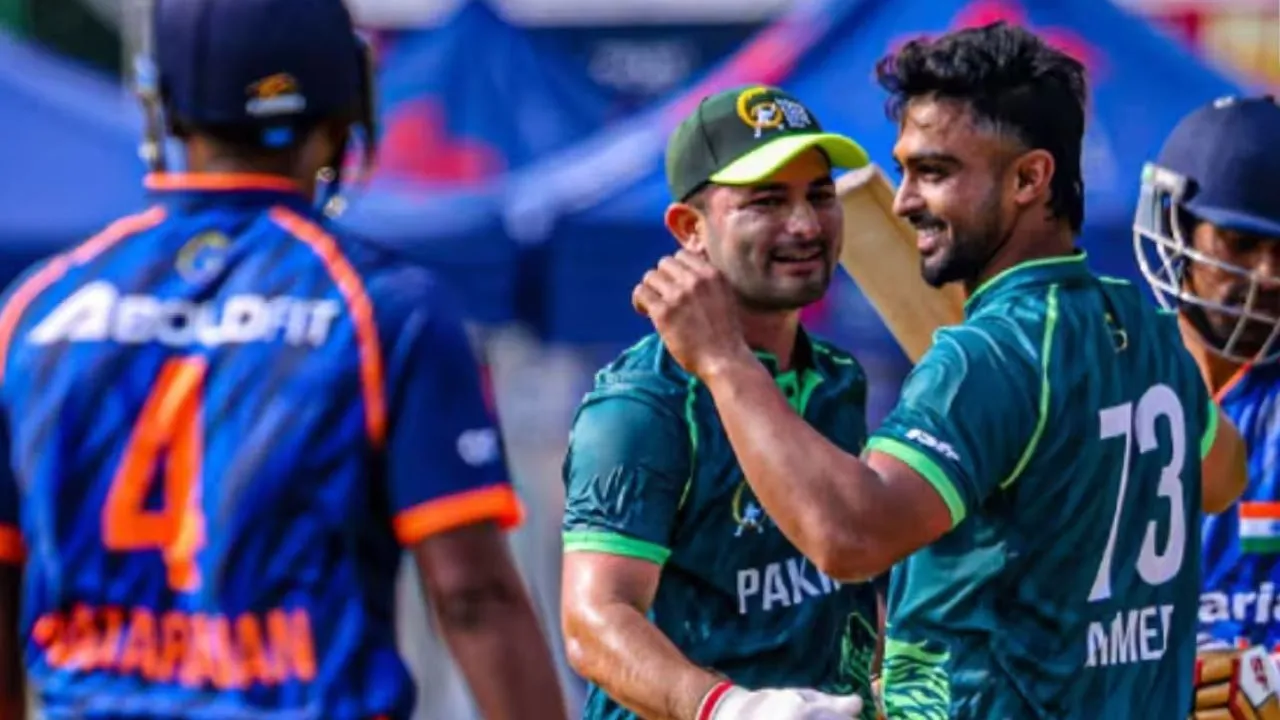
Pakistan’s route through the group was less straightforward. After losing to the UAE by one wicket on the final ball, the side needed a response against India—and delivered one with a four-wicket win, reaching its target with 13 balls to spare.
Captain Abbas Afridi provided the match’s most eye-catching moment. In the opening over, he struck five consecutive sixes against India captain Krunal Pandya, putting immediate pressure on the Indian bowlers and energising Pakistan’s innings. In a format built around explosive scoring, such a sequence can shift a contest before the opposition has time to recover.
Pakistan’s win secured second place in Pool C and a place in the Plate semi-finals, despite its defeat to the UAE. The team was scheduled to face Hong Kong China in Plate Semi-final 2 at Mission Road Ground in Mong Kok on Saturday, October 31.
India Sent to the Bowl Competition
India’s loss to Pakistan was followed by another difficult outing against the UAE. The team could not defend its total of 94, and the speed of the UAE chase left little room for a late comeback. With no points from two matches, India finished at the bottom of Pool C and missed out on the main Cup Championship race.
The result is a significant setback for a squad led by Krunal Pandya, particularly given the format’s emphasis on adaptability. Six-a-side cricket rewards fearless stroke play, but it also demands quick decisions in the field, sharp execution with the ball and the ability to respond immediately after an opponent takes control. India will need to address all three areas if it is to make a strong finish in the Bowl competition.
India was scheduled to meet England in Bowl Semi-final 2, also at Mission Road Ground on October 31. The lower-tier contest offered the team a chance to reset after a disappointing group stage, though the main-title opportunity was already gone. Match schedules and team details can change, so readers following the latest Hong Kong Sixes 2026 prediction and results should check official tournament updates for confirmation.
Rahul Tripathi Provides an Early Breakthrough Against England
India made an encouraging start in the Bowl semi-final after winning the toss and choosing to bowl. Rahul Tripathi struck early, dismissing England captain and wicketkeeper John Simpson for seven runs from three balls. The breakthrough gave India an immediate lift and offered a reminder that a quick wicket can be just as valuable as a burst of boundaries in this short format.
India’s listed six-player group included Nitish Rana, Rahul Tripathi, Rahul Tewatia, Shashank Singh, Krunal Pandya and Kulwant Khejroliya. England’s announced squad featured Martin Andersson, Simpson, Fynn Hudson-Prentice, Luke Hollman, Jack Carson, Nathan Gilchrist, Dan Mousley and Ed Barnard.
For India, the key question was whether that early success could be turned into sustained pressure. England had a deep group of batting options, while India needed disciplined overs and effective fielding to prevent a quick recovery. In a match where momentum can swing rapidly, the opening dismissal was a promising start—but not a guarantee of control.
What India’s Results Mean for the Tournament
India’s exit from the Cup race reshaped the competition and gave the UAE the group-stage spotlight. Pakistan, meanwhile, demonstrated the value of recovering quickly from a setback, turning its opening loss into a place in the Plate knockout round. The contrasting campaigns show how little margin for error exists in the Hong Kong Sixes.
For Indian supporters, the immediate focus shifted from a title challenge to the Bowl semi-final and the possibility of ending the event with a win. A strong response against England could provide useful momentum, but the group-stage results remain a clear reminder that reputation alone is not enough in a compressed tournament. In six-a-side cricket, execution, composure and adaptability often matter more than pre-match prediction.
Latest News

SA vs BAN Playing 11 Today, Live Streaming, Pitch & Weather: South Africa tour of Bangladesh 2026, 2nd Test

AUS vs ENG Playing 11 Today, Live Streaming, Pitch & Weather: England tour of Australia 2026, 2nd T20I

Blair Tickner ruled out of 2nd Test vs India, replacement named

Tim Paine and Justin Langer face fresh questions over Australia’s ball-tampering scandal

India tour of Bangladesh gets fresh hope as BCB confirms talks with BCCI

Tom Latham opens up on soft ball problem and saliva ban after draw against India

Ajinkya Rahane slams Tilak Varma for publicly criticising Shahbaz Ahmed after India A’s defeat

ICC to introduce IPL-style bat checks in international cricket

“Smiling Laughing doesn’t happen”: R Ashwin’s dig at India’s approach after draw vs New Zealand

“Not good enough for Test cricket”: Scott Styris, Sunil Gavaskar slam Wellington pitch

Dodda Ganesh declares India ‘out of WTC final race’ after Wellington Test draw

Ajinkya Rahane criticises Shubman Gill for abusing Akash Deep in 1st Test vs New Zealand

‘Why so many boundary riders?’ Dinesh Karthik questions Shubman Gill’s captaincy after Wellington Test

“I just want to enjoy my life”: Yash Dayal reflects on his return to cricket


