‘It’s obviously disappointing’: Nic Maddinson reacts to Usman Khawaja’s Sandpapergate claims
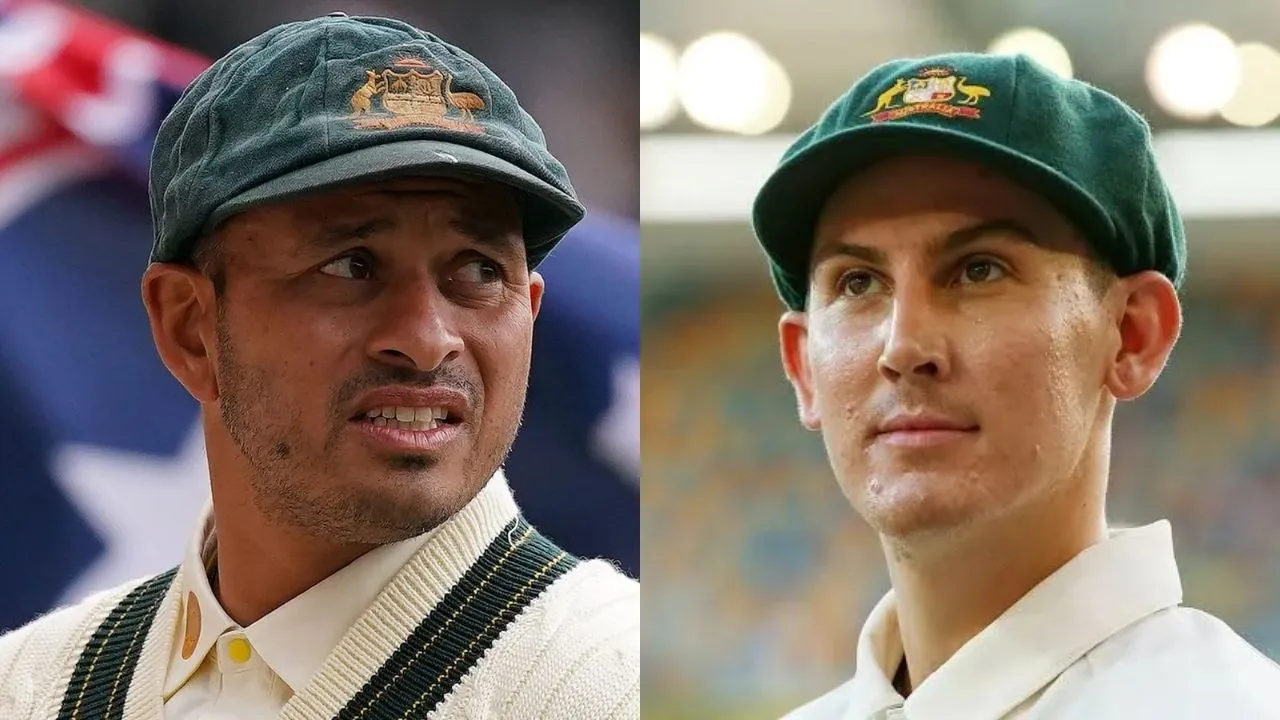
Sandpaper Gate Returns to the Spotlight as Nic Maddinson Questions Usman Khawaja’s Timing
The 2018 Sandpaper Gate scandal has resurfaced in Australian cricket conversations after former opener Usman Khawaja made fresh claims about how widely the ball-tampering plan was known within the team. His comments have drawn criticism from New South Wales captain Nic Maddinson, who questioned why the issue had returned to public debate just as Khawaja prepared to release his autobiography, Sabr.
The controversy has also produced an unexpected response from David Warner, one of the players most directly affected by the scandal. While several former Australian cricketers have criticised Khawaja’s remarks, Warner has publicly supported his former opening partner. The renewed debate follows Australia’s recent 2–1 Test series defeat to South Africa, where the events of 2018 remained part of the conversation both on and off the field.
Nic Maddinson Calls the Renewed Debate “Disappointing”
Speaking to 10Sport Australia, Maddinson said he was disappointed to see the scandal revisited, particularly because the renewed discussion could reopen a painful period for the players involved. He also suggested that the timing of Khawaja’s comments may be connected to the release of his book.
“It’s obviously disappointing that it keeps coming up, but it’s that time of year, isn’t it, where Christmas comes along and people have books to sell, so things come out,” Maddinson said. He added that revisiting the affair does little to help the three players whose careers and reputations were most directly affected.
Maddinson’s remarks reflect a broader concern among some Australian cricket figures: that a scandal which led to substantial sporting and personal consequences should not be repeatedly revived without careful consideration of its impact. At the same time, Khawaja’s supporters may argue that examining the episode is important if it helps clarify how the team culture and decision-making failed.
What Usman Khawaja Said About Sandpaper Gate
Khawaja was part of Australia’s squad during the 2018 tour of South Africa, when Cameron Bancroft was caught using sandpaper to alter the condition of the ball during a Test match. The incident quickly became one of the most damaging scandals in modern Australian cricket.
In his recent comments, Khawaja challenged the idea that responsibility rested only with Bancroft, then captain Steve Smith and vice-captain David Warner. He suggested that knowledge of the plan extended further within the team, including among other players and members of the coaching staff. That claim has renewed questions about who knew what, when they knew it, and whether the original response fully accounted for the wider environment surrounding the incident.
The distinction between direct involvement and broader awareness is central to the current debate. The original disciplinary action focused on the three players identified in the investigation, while Khawaja’s account raises a wider question about collective responsibility. His claims have not erased the established findings of the inquiry, but they have prompted renewed discussion about whether the full story was ever publicly understood.
The Consequences of the 2018 Ball-Tampering Scandal
Cricket Australia imposed 12-month suspensions on Smith and Warner and a nine-month ban on Bancroft. Smith stepped down as captain, Warner lost his leadership position, and head coach Darren Lehmann resigned shortly after the scandal broke. The episode damaged Australia’s international reputation and led to extensive scrutiny of the team’s culture and conduct.
The consequences continued long after the bans ended. Smith, Warner and Bancroft each faced the challenge of returning to international cricket under intense public attention. The affair also became a lasting reference point in discussions about sportsmanship, leadership and the pressures placed on elite teams to win.
That history helps explain why new claims can provoke such strong reactions. For those involved, the scandal is not simply a chapter in cricket history; it is an event that affected careers, relationships with supporters and the way Australian cricket was viewed around the world.
South Africa Tour Shows the Scandal Has Not Disappeared
Maddinson also reflected on Australia’s recent South Africa series, saying the crowds were not as hostile as some had expected. However, he noted that reminders of Sandpaper Gate remained part of everyday life during the tour, with comments from members of the public at airports and in other settings.
“Having a great series in South Africa, yeah, obviously the crowds weren’t as hostile maybe as what people expected,” Maddinson said. “But that stuff’s still there every day at airports and the general public making comments here and there.” He suggested that such attention can wear players down over time, making the return of the controversy particularly difficult for those involved.
His comments underline how a major sporting scandal can outlast formal sanctions. Even when a team moves on to new tours and new competitions, public memory can keep the episode alive. The latest debate has therefore arrived at a sensitive moment, with Australia entering an important stretch of its cricket calendar.
Maddinson’s Own Test Return
The South Africa series was also an opportunity for Maddinson to make an impact after his surprise return to the Australian team. His results, however, were modest: he reached double figures only once across four innings. A strong domestic season could be important if he hopes to strengthen his case for future selection.
For Maddinson, the immediate challenge is likely to be turning that international opportunity into consistent performances at home. His comments on Khawaja’s revelations may attract attention, but his batting form will ultimately be the clearest measure of his prospects in the national side.
Why the Sandpaper Gate Prediction Debate Matters
The renewed attention around Sandpaper Gate is unlikely to produce a simple resolution. Khawaja’s account has reopened questions about team knowledge and accountability, while Maddinson’s criticism highlights the emotional cost of repeatedly revisiting the scandal. Warner’s support for Khawaja adds another dimension, showing that views among those closest to the events are not uniform.
Any prediction about how the dispute will develop depends on whether further details emerge and how the players respond. Khawaja’s book may provide additional context, while former teammates and officials could offer their own recollections. Whatever happens next, the episode is a reminder that accountability in sport involves more than identifying individual rule-breakers: it also means examining the systems, leadership and culture that allow misconduct to occur.
For Australian cricket, the challenge is to discuss the past honestly without reducing the people involved to a single moment in their careers. The Sandpaper Gate scandal remains a defining event, and Khawaja’s comments have ensured that questions about responsibility, transparency and the team environment are once again firmly in the public eye.
Latest News
Towhid Hridoy enters record books with historic 324-run performance against West Indies
“We’ve got to dig deeper again”: Ian Healy breaks silence on Usman Khawaja’s claims

WTC points table after Bangladesh vs West Indies 2nd Test, 2026
‘It’s obviously disappointing’: Nic Maddinson reacts to Usman Khawaja’s Sandpapergate claims

Akif Javed ruled out of Asia Cup Rising Stars, Ali Raza named replacement

England Test, England Lions squads for South Africa tour announced, Brydon Carse, Jacob Bethell return, Shoaib Bashir dropped

India’s Women’s Test, ODI, T20I squads for South Africa tour officially announced, Jemimah Rodrigues returns
“I liked looking at the mirror” – Kane Williamson on conversation with Virat Kohli before retirement
Scott Boland contradicts Usman Khawaja over ball tampering in Victorian cricket

Lance Morris suffers fresh injury setback hours after cricket comeback

Mike Hesson set to continue as Pakistan Test head coach until end of current WTC cycle
Mushfiqur Rahim creates world record, becomes first Bangladeshi to reach 7,000 Test runs
“A lot of coaches are scared”: Ryan ten Doeschate reveals how he approached Virat Kohli over batting struggles

‘We don’t want to rush’: Bangladesh provide official update on Nahid Rana’s return