“We’ve got to dig deeper again”: Ian Healy breaks silence on Usman Khawaja’s claims
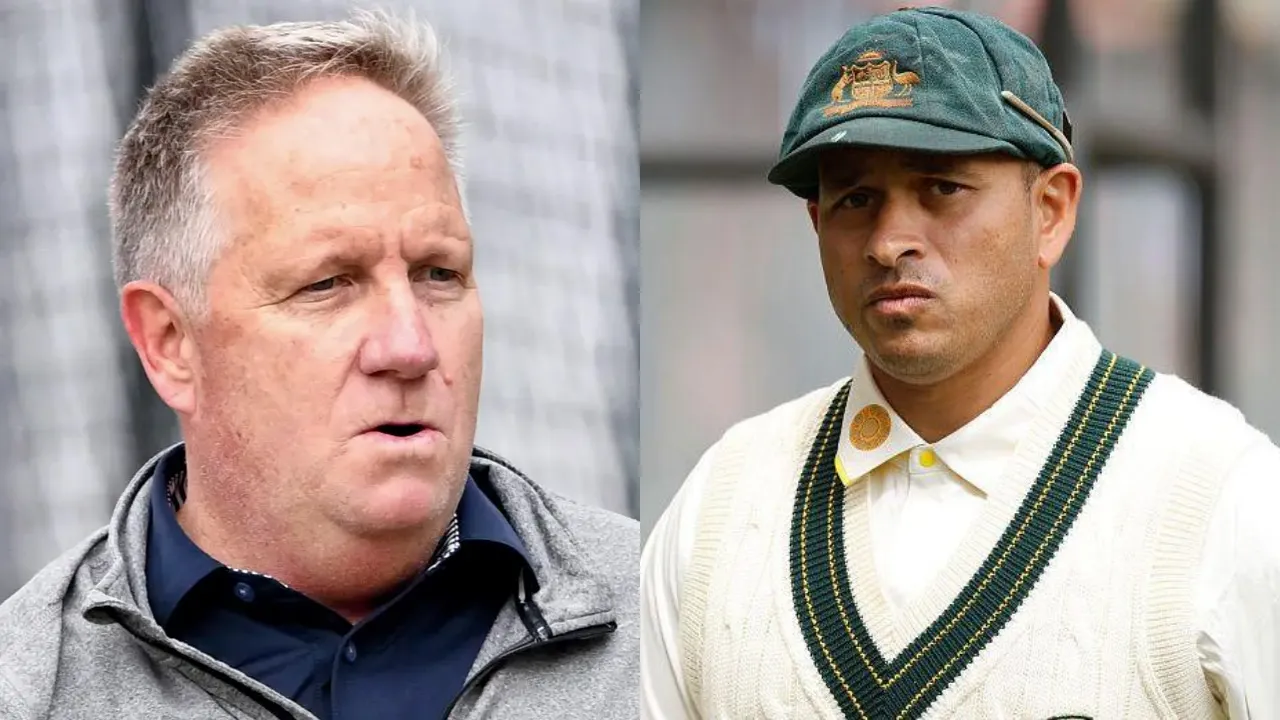
Usman Khawaja’s Sandpapergate Claims Reopen Questions About Who Knew
Fresh claims about Australia’s 2018 ball-tampering scandal have reignited debate over how much the team knew before Cameron Bancroft was caught using sandpaper during the Cape Town Test. Former wicketkeeper Ian Healy says Mitchell Starc previously told him that Australia’s bowlers were unaware of the plan. Usman Khawaja, however, has alleged in his memoir Sabr that the entire touring party knew about it.
The conflicting accounts have brought one of Australian cricket’s most damaging episodes back into focus. They also raise a difficult question that has lingered since the scandal: was the original investigation thorough enough to establish who knew what, and when?
Healy Says Starc Told Him the Bowlers “Didn’t Know”
Healy said he had long believed the bowlers were not aware of the plan to alter the ball. That view, he explained, was shaped in part by a conversation with Starc, his nephew-in-law. Khawaja’s account has now prompted him to reconsider whether the matter was fully resolved.
“I have had it said to me by my nephew-in-law, Mitch Starc, that, ‘We didn’t know’. I’ve always thought no-one knew. Does this now need proving? Maybe we’ve got to dig deeper again,” Healy said.
Healy’s comments do not establish that the bowlers knew about the plan. Instead, they underline the gap between Starc’s reported account and Khawaja’s broader claim. The renewed debate is less about a settled finding than about whether the different versions can be reconciled—and whether new scrutiny is warranted.
What Khawaja Says in Sabr
In his memoir, Khawaja alleges that knowledge of the ball-tampering plan extended beyond the players who were directly involved. He claims the entire Australian touring party knew about the plan during the 2018 Cape Town Test. He also says sandpaper was used in the following Test against South Africa in Port Elizabeth.
Those claims are significant because they challenge the understanding that emerged after the Cape Town incident: that the wrongdoing was confined to a small group. Khawaja’s account presents a much wider picture, though his allegations should be distinguished from the findings and sanctions issued at the time.
In Cape Town, television cameras captured Bancroft applying sandpaper to the ball. The footage led to an investigation by Cricket Australia and widespread criticism of the team’s conduct. Steve Smith, then captain, and David Warner, the vice-captain, received 12-month suspensions. Bancroft was banned for nine months. Smith and Warner were also subject to leadership-related sanctions.
David Warner Backs Khawaja and Criticises the Inquiry
Warner has publicly supported Khawaja, calling his former opening partner’s account accurate and questioning the way the investigation was handled. Warner argued that Khawaja should not be dismissed simply because he has chosen to discuss the episode years later in a memoir.
“It’s been eight years since I spoke on this topic. And Uzzie, I throw my full support behind you,” Warner said. “What you’ve said is 100 percent accurate.” He added that the story belonged to Khawaja and questioned why the timing of its publication had become a point of criticism.
Warner also challenged the process used to gather evidence. He said Khawaja was not interviewed as part of the inquiry and questioned whether an investigation could be considered comprehensive if a player with relevant knowledge had not been asked for his account. Warner described the interview process as rushed and poorly handled.
His comments add another perspective to the controversy, but they do not independently verify every detail in Khawaja’s memoir. Instead, they intensify calls for a clearer explanation of what the investigation examined, who was interviewed and how its conclusions were reached.
Why the Bowlers’ Earlier Statement Matters
The latest claims also conflict with a public statement made by Australia’s bowlers in 2021, when they denied having prior knowledge of the ball-tampering plan. That denial is central to the current debate: Khawaja’s allegation suggests broader awareness, while Healy’s account of Starc’s comments reflects the bowlers’ position.
There is an important distinction between a player knowing that a plan existed, being present when it was discussed and taking part in the act itself. Public discussion can blur those categories, but they matter when assessing individual responsibility. Any renewed examination would need to consider the precise wording of the accounts, the timing of conversations and whether supporting evidence exists.
For now, the claims remain competing accounts of events that took place eight years ago. Without a new independent review or further corroborating evidence, the latest statements are unlikely to settle the question on their own.
A Scandal That Still Shapes Australian Cricket
Sandpapergate was more than a breach of cricket’s rules. It damaged the reputation of the Australian men’s team, prompted leadership changes and forced Cricket Australia to confront questions about culture and accountability. The bans imposed on Smith, Warner and Bancroft became among the most visible consequences of the episode.
Cricket Australia lifted Warner’s leadership ban in October 2024, six and a half years after the scandal. Its removal marked a significant formal change, but it did not erase the debate over the investigation or the wider team environment at the time.
Khawaja’s memoir has therefore reopened more than a historical argument. It has renewed discussion about transparency, the responsibilities of teammates and the standards expected of elite sporting teams. The episode also illustrates how a major cricket scandal can remain unresolved in public memory even after official penalties have been served.
What Happens Next?
Healy’s call to “dig deeper” reflects the uncertainty surrounding the latest revelations. A fresh review could clarify whether the accounts can be reconciled, although any credible process would need to assess evidence rather than rely solely on public statements. It would also need to distinguish established facts—such as Bancroft’s on-field actions and the resulting sanctions—from allegations about the extent of prior knowledge.
For supporters following the story, the key question is not simply who is telling the truth. It is whether the available evidence can provide a fuller account of how the plan was discussed, what the team knew and whether the original inquiry adequately addressed those issues. Until that happens, Sandpapergate is likely to remain a source of debate—and a cautionary chapter in Australian cricket’s history.
Latest News
Towhid Hridoy enters record books with historic 324-run performance against West Indies
“We’ve got to dig deeper again”: Ian Healy breaks silence on Usman Khawaja’s claims
WTC points table after Bangladesh vs West Indies 2nd Test, 2026
‘It’s obviously disappointing’: Nic Maddinson reacts to Usman Khawaja’s Sandpapergate claims
Akif Javed ruled out of Asia Cup Rising Stars, Ali Raza named replacement

England Test, England Lions squads for South Africa tour announced, Brydon Carse, Jacob Bethell return, Shoaib Bashir dropped

India’s Women’s Test, ODI, T20I squads for South Africa tour officially announced, Jemimah Rodrigues returns
“I liked looking at the mirror” – Kane Williamson on conversation with Virat Kohli before retirement
Scott Boland contradicts Usman Khawaja over ball tampering in Victorian cricket

Lance Morris suffers fresh injury setback hours after cricket comeback
Mike Hesson set to continue as Pakistan Test head coach until end of current WTC cycle
Mushfiqur Rahim creates world record, becomes first Bangladeshi to reach 7,000 Test runs
“A lot of coaches are scared”: Ryan ten Doeschate reveals how he approached Virat Kohli over batting struggles
‘We don’t want to rush’: Bangladesh provide official update on Nahid Rana’s return