

Jason Gillespie breaks silence on Usman Khawaja’s claims, raises fresh questions over Sandpapergate scandal
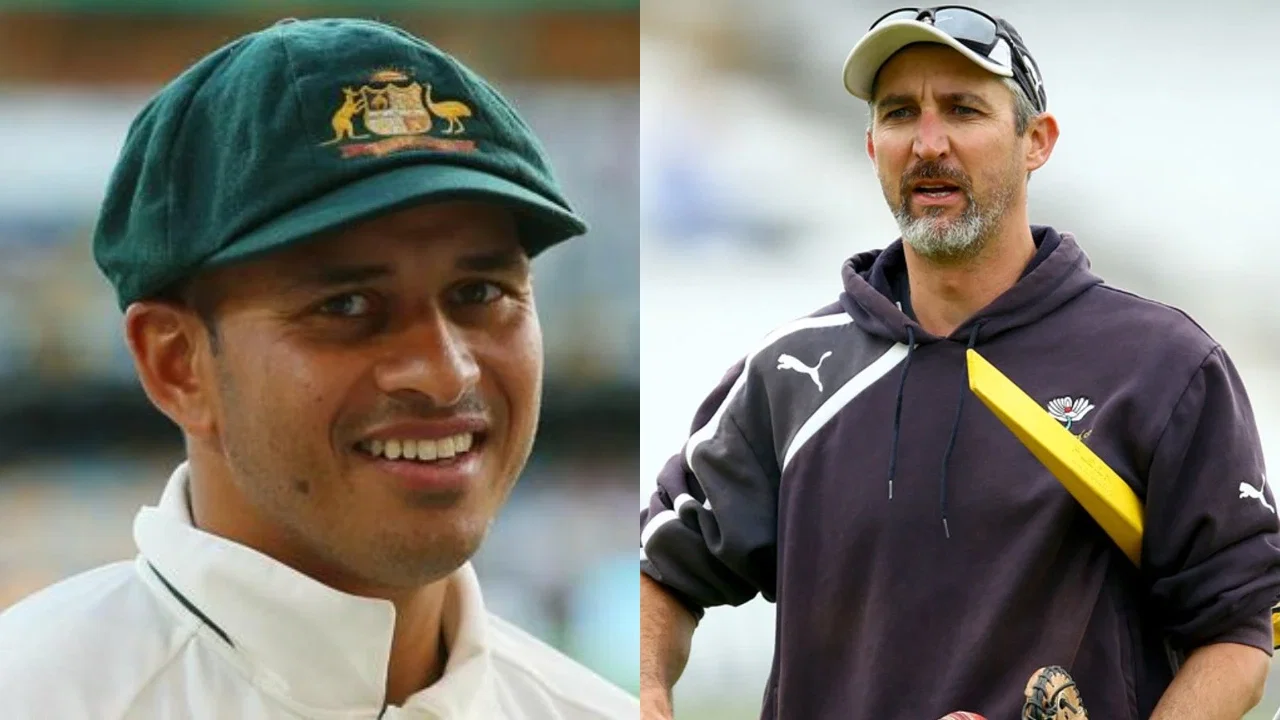
Jason Gillespie Says Usman Khawaja’s Sandpapergate Claims Raise Fresh Questions
Australia’s 2018 ball-tampering scandal has returned to the spotlight after Usman Khawaja made new claims about how widely the plan to alter the ball was known during the Cape Town Test against South Africa. Former Australia fast bowler Jason Gillespie has described Khawaja’s account as fascinating, particularly the suggestion that the whole team was urged to accept collective responsibility.
The latest comments have revived debate over one of cricket’s most damaging controversies. Known as Sandpapergate, the incident led to lengthy suspensions for Steve Smith, David Warner and Cameron Bancroft, and prompted questions about leadership, team culture and what other players knew. Khawaja’s account adds a new perspective—but it also leaves important details open to interpretation.
What Khawaja Has Said About the 2018 Ball-Tampering Scandal
Khawaja has claimed that the Cape Town Test was not the first occasion on which Australia used sandpaper to change the ball’s condition during the South Africa tour. He also said that knowledge of the practice extended beyond the three players most closely associated with the incident, suggesting that batters, bowlers and members of the support staff were aware of what was happening.
According to Khawaja, he addressed the squad in the dressing room after the scandal broke and called for the group to take collective responsibility. He has said that everyone was present during that meeting. If accurate, the account raises questions about how the team responded internally and whether the episode was understood at the time as a wider failure rather than the actions of a few individuals.
Those claims differ from the public understanding that took shape after the investigation, when Smith, Warner and Bancroft were treated as the central figures. Smith and Warner received 12-month suspensions, while Bancroft was banned for nine months. Khawaja’s remarks do not, by themselves, establish who knew what or when, but they have renewed interest in the full sequence of events.
Gillespie Calls the Dressing-Room Account “Fascinating”
Gillespie said he was struck by Khawaja’s description of the team meeting and the appeal for collective accountability. Speaking in a video shared by ABC Sport, the former Australia quick said the claim that the entire squad was in the room made the account especially noteworthy.
“Bit of a bombshell this morning, waking up and reading about it,” Gillespie said, referring to the fresh revelations. He added that he found it “really fascinating” that Khawaja had reportedly addressed the team and said they needed to take responsibility together.
Gillespie’s reaction reflects the significance of the distinction between individual responsibility and a broader team culture. In elite sport, players may share a dressing room and work closely with coaches and support staff, but that does not automatically mean everyone has the same knowledge or involvement. Establishing the difference requires careful evidence, not assumption.
Questions About the Ball and the Umpires’ Inspection
Gillespie also questioned how the match officials assessed the ball during the Cape Town Test. He noted that the umpires inspected it at the time and reportedly said they could not see clear evidence of tampering. That detail has long appeared puzzling alongside the televised footage of Bancroft using sandpaper on the ball.
The former fast bowler said bowlers had also indicated that they did not notice obvious signs that the ball had been altered. The apparent gap between what officials could identify during their inspection and what viewers later saw on camera remains one of the episode’s most discussed aspects.
However, the two observations are not necessarily contradictory. An inspection may fail to reveal visible marks even when an act has been captured from a particular camera angle, and the condition of a ball can be difficult to judge without clear physical evidence. Gillespie’s comments underline why the incident continues to invite scrutiny, rather than offering a definitive explanation of what officials could or could not detect.
Why Sandpapergate Is Back in the News
Major sporting controversies often return when a participant offers a new recollection years later. Khawaja’s claims have prompted renewed discussion because they touch on questions that go beyond the ball itself: who was aware of the plan, whether responsibility was shared, and how the team handled the aftermath behind closed doors.
For Australian cricket, the scandal became a watershed moment. The suspensions affected key players and forced the sport to confront issues of conduct and leadership. The incident also shaped public perceptions of the national team, while the punishments and subsequent scrutiny made Sandpapergate a lasting reference point in conversations about the spirit of the game.
Any further assessment of Khawaja’s account would depend on corroborating details, including the timing and context of the alleged meeting and what participants understood at the time. His comments are a significant addition to the public discussion, but they should not be mistaken for a formal finding about the involvement of every player or staff member.
Gillespie Predicts the Debate Will Continue
Gillespie believes the controversy is unlikely to disappear soon. He pointed to the unresolved questions surrounding the inspection, the players’ accounts and the footage, saying there was still “so much more to unpack.” His prediction is that Khawaja’s revelations will keep the story alive as former teammates, commentators and cricket followers revisit the events of 2018.
For now, the renewed debate centres on the contrast between the original disciplinary action against three players and Khawaja’s claim that the wider squad was asked to share responsibility. Gillespie’s response captures the uncertainty surrounding that account: it is compelling, but it also raises questions that the public record may not fully answer.
Nearly eight years after the Cape Town Test, Sandpapergate remains more than a story about a piece of sandpaper. It is an ongoing discussion about accountability, evidence and how teams respond when trust in the game is shaken. Khawaja’s comments have reopened that conversation—and, as Gillespie suggests, there may still be more to learn.
Latest News

SA vs BAN Playing 11 Today, Live Streaming, Pitch & Weather: South Africa tour of Bangladesh 2026, 2nd Test

AUS vs ENG Playing 11 Today, Live Streaming, Pitch & Weather: England tour of Australia 2026, 2nd T20I

Blair Tickner ruled out of 2nd Test vs India, replacement named

Tim Paine and Justin Langer face fresh questions over Australia’s ball-tampering scandal

India tour of Bangladesh gets fresh hope as BCB confirms talks with BCCI

Tom Latham opens up on soft ball problem and saliva ban after draw against India

Ajinkya Rahane slams Tilak Varma for publicly criticising Shahbaz Ahmed after India A’s defeat

ICC to introduce IPL-style bat checks in international cricket

“Smiling Laughing doesn’t happen”: R Ashwin’s dig at India’s approach after draw vs New Zealand

“Not good enough for Test cricket”: Scott Styris, Sunil Gavaskar slam Wellington pitch

Dodda Ganesh declares India ‘out of WTC final race’ after Wellington Test draw

Ajinkya Rahane criticises Shubman Gill for abusing Akash Deep in 1st Test vs New Zealand

‘Why so many boundary riders?’ Dinesh Karthik questions Shubman Gill’s captaincy after Wellington Test

“I just want to enjoy my life”: Yash Dayal reflects on his return to cricket


