Joe Root equals embarrassing world record with seven LBW dismissals
Joe Root’s Frustrating Run Continues: Prediction, Analysis, and Insights from the Lord’s Test Against Pakistan
The ongoing England-Pakistan Test series at Lord’s has proven to be a challenging chapter for England’s batting maestro, Joe Root. Despite his reputation as one of the finest batsmen of his generation, Root has encountered a series of setbacks, with a particularly troublesome pattern emerging against the leg-before-wicket (LBW) mode of dismissal. His latest performance in the Lord’s Test has reignited discussions about his form, the tactics of opposition bowlers, and what the future holds for the seasoned batter amid predictions of possible adjustments and strategic shifts.
Root’s Struggles with LBW: A Rising Concern in 2026
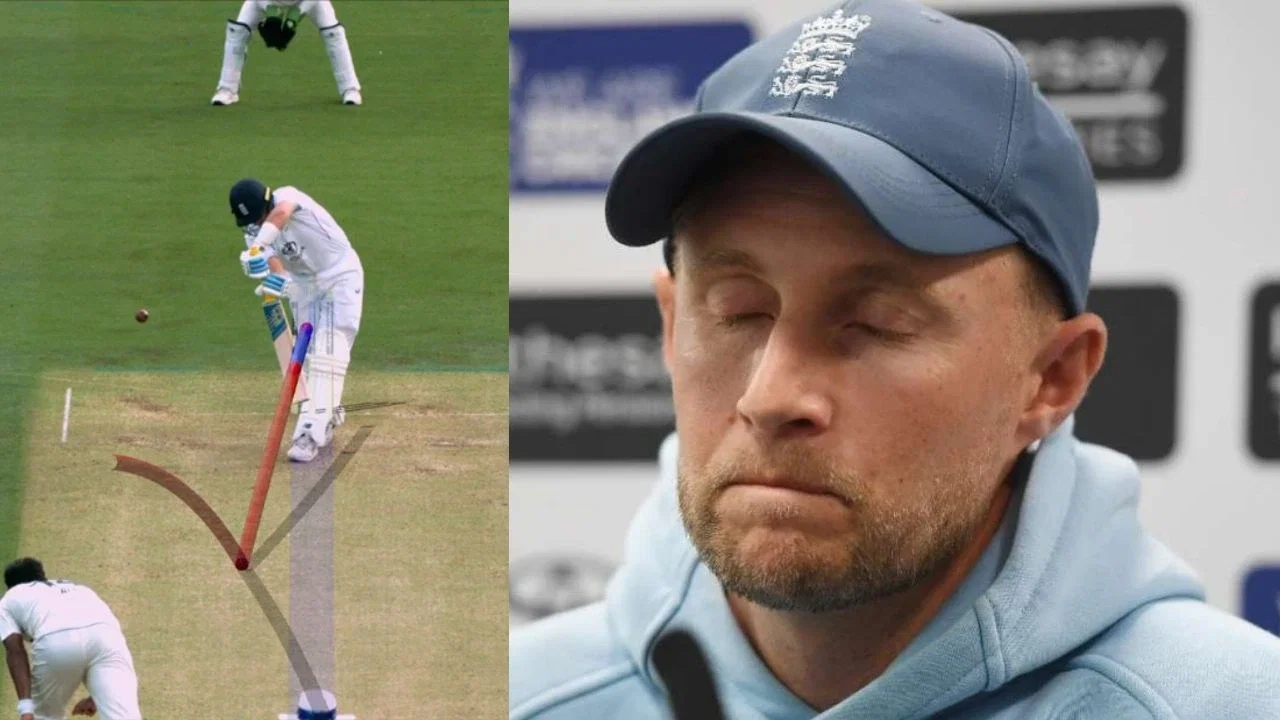
In a match filled with tension and strategic battles, Joe Root’s dismissals by LBW have stood out as a significant storyline. During the Lord’s Test against Pakistan, Root was dismissed LBW in both innings — first by Mohammad Abbas and subsequently by Mohammad Ali. These dismissals marked a troubling trend, with Root now having been dismissed LBW in seven of his last nine Test innings during England’s 2026 summer campaign. This pattern has not only raised eyebrows but also set a record, as he matches the highest number of LBW dismissals by a batter in a single Test season.
To put this into perspective, Root’s recent record mirrors a period from nearly a decade ago. During England’s 2016-17 tour of Bangladesh and India, he also faced seven LBW dismissals in just nine innings, highlighting that this mode of dismissal has historically been a weak point, albeit one that has resurfaced with alarming frequency this season.
The Lord’s Test Breakdown: A Closer Look at the Dismissals
Root’s first innings at Lord’s was brief and somewhat unlucky. Facing Mohammad Abbas, he scored only four runs off 13 balls before falling LBW. The ball, delivered on a consistent, nagging length, seamed back into Root and struck just above his knee roll. The decision was not reviewed, and England found themselves in early trouble at 36/3. The pattern of vulnerability persisted into the second innings, with Root scoring 24 off 37 balls, hunting for boundaries, yet once again falling victim to a nip-backer delivered by Mohammad Ali.
Ali’s delivery was particularly troubling—an inswinger that seared into Root’s front pad while he was half-forward, leaving little room for defense. Despite initially considering a review, Root’s decision to review was confirmed by ball-tracking to be hitting the stumps, resulting in his second dismissal of the match. These repeated LBW dismissals underscore a recurring technical challenge, especially against bowlers who exploit the low bounce and the natural movement of the pitch at Lord’s.
Prediction and Future Outlook: Can Root Overcome the LBW Challenge?
As cricket analysts and fans analyze the series, a key question emerges: What is the prediction for Joe Root’s future performances, and can he adapt to counter this persistent weakness? Root’s technical struggles with the nip-backer and the low bounce are well-documented, and experts suggest that strategic adjustments may be necessary. The prediction among cricket pundits is that if Root can modify his forward press, improve his footwork, and remain vigilant against deliveries that swing back into his pads, he could reduce the frequency of LBW dismissals.
Moreover, coaching staff and cricket strategists are likely to emphasize video analysis and batting technique refinement. The goal is to help Root better read those inswingers early and adjust his shot selection accordingly. With his vast experience and cricketing intelligence, the prediction remains optimistic that he can overcome this phase—though it requires deliberate effort and adaptation.
Comparison with Past Seasons: A Pattern of Resilience and Reflection
Looking back at Root’s career, his ability to bounce back from setbacks is notable. The 2016-17 season, where he also faced a similar number of LBW dismissals, was followed by periods of improved form and crucial contributions. This historical context fuels hope that current struggles are temporary and can be addressed through technical adjustments and mental resilience.
Currently, the statistics suggest a need for strategic recalibration. The prediction is that Root, with his innate skill and cricketing IQ, will analyze these setbacks, learn from them, and come back stronger in upcoming series. His ability to adapt to the bowling attacks, especially against the rising prominence of bowlers like Mohammad Ali and Abbas, will be critical in shaping the remainder of his international career.
Expert Opinions: Nasser Hussain’s Perspective and Strategic Insights
Former England captain Nasser Hussain has weighed in on Root’s current predicament, emphasizing that not all dismissals are purely a reflection of poor technique. Hussain highlighted that the ball preceding the dismissals, which moved away from Root, forced him into a vulnerable position. The subsequent inswinger, or nip-backer, exploited this vulnerability, making the dismissals less about technical flaws and more about strategic bowling tactics.
Hussain also praised England’s overall bowling performance, noting the skillful lengths bowled by James Anderson and the pace and variation brought by Jofra Archer. According to Hussain, England’s bowlers are creating the right conditions to challenge Pakistan’s batting lineup, which relies heavily on a few key players. This strategic pressure, combined with Root’s technical challenges, creates a complex picture for the English team moving forward.
Implications for the Series and the Prediction for Future Matches
The current pattern of dismissals indicates that bowlers are increasingly targeting Root’s pads, especially with deliveries that swing back into him. The prediction is that opposition teams will continue this strategy, forcing Root to adapt or face further dismissals. For England, this scenario underscores the importance of technical adjustments and mental resilience.
Looking ahead, the prediction is that Root’s performances will depend heavily on his ability to identify the pattern of bowlers’ tactics and implement changes. If he can develop a more compact, watchful batting technique against the inswingers and nip-backs, he could reverse the trend and restore his batting average to more formidable levels. Conversely, if the pattern persists and he struggles to adapt, his role as England’s anchor could come under scrutiny in upcoming series.
Conclusion: A Test of Skill, Strategy, and Prediction
Joe Root’s recent struggles at Lord’s have sparked widespread discussion about his technical vulnerabilities and the tactical evolution needed to counter bowlers exploiting his weakness against LBW deliveries. The prediction for Root’s future hinges on his ability to adapt—leveraging his cricketing intelligence, refining his technique, and maintaining mental toughness. Historically, Root has demonstrated resilience and the capacity for adjustment, and many believe he will rise to meet these challenges.
As the series progresses, all eyes will be on Root’s response. Will he overcome this technical hurdle, or will the pattern of LBW dismissals continue to dominate headlines? The answer will not only influence his personal career trajectory but also shape England’s strategic approach in future international contests. One thing is certain: prediction in cricket is always dynamic, and the ability to adapt often determines the difference between failure and comeback victory.
Latest News
Sarfaraz Ahmed addresses PCB’s Lord’s Test boycott threat
Joe Root equals embarrassing world record with seven LBW dismissals
Babar Azam joins elite bowlers’ list as Test century drought extends

RTD vs BWV Dream11 Prediction Today Match, Dream11 Team Today, Fantasy Cricket Tips, Playing XI, Pitch Report, Injury Update- European T20 Cup 2026, Match 6

Ravichandran Ashwin questions Kuldeep Yadav’s omission after Sri Lanka escape with draw

Not Devdutt Padikkal! Shubman Gill’s favourite win India’s Impact Player of the Series

Anaya Bangar fires back at Marizanne Kapp over transgender cricket debate

PCB’s boycott threats: 3 times Pakistan threatened to pull out but played

Imam-ul-Haq suffers calf strain, doubtful for Lord’s Test batting

Pat Cummins, Usman Khawaja support Imran Khan amid PCB-Sky row
‘Unhappy’ BCCI may remove Vaibhav Sooryavanshi & others from Asian Games squad

Afghanistan-West Indies series likely to be postponed due to 2027 World Cup qualifiers
Marizanne Kapp slams Cricket Australia over Anaya Bangar’s women’s cricket clearance
Shubman Gill remains best No.4 Test batter despite underwhelming outing