Jordan Hermann creates World Record with 150 on ODI debut
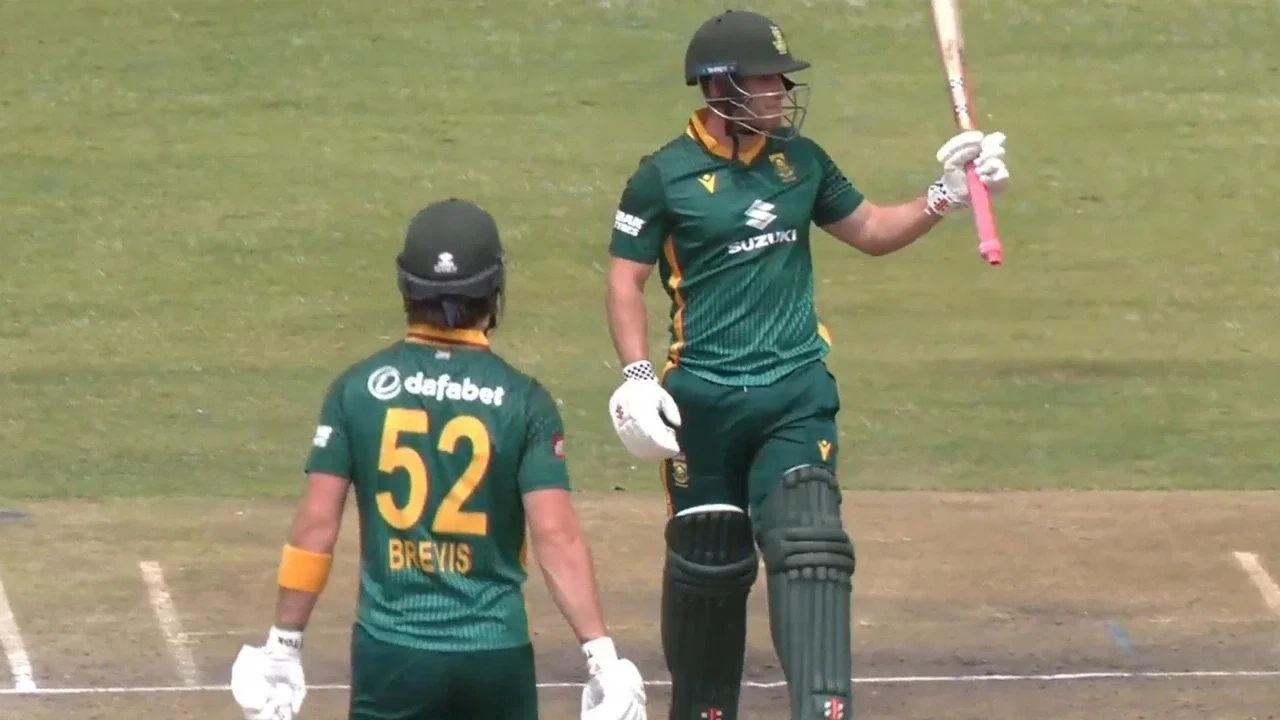
South Africa’s Rising Star: Jordan Hermann’s Historic ODI Debut and What It Means for Future Predictions
In a cricketing milestone that has captured the attention of fans and analysts worldwide, the South Africa national cricket team unveiled a new batting prodigy on Wednesday, September 9. Jordan Hermann, a talented left-handed batter, delivered a sensational debut performance against Namibia that not only set the stage for his promising career but also sparked broader discussions about the future of One Day International (ODI) cricket amid the rising dominance of T20 formats. This remarkable innings, combined with strategic team developments, offers a fascinating glimpse into the evolving landscape of international cricket and the prediction of its trajectory in the years ahead.
Jordan Hermann’s Record-Breaking Debut: A Historic Day for South Africa
Facing Namibia in a crucial ODI encounter, South Africa’s decision to open with Hermann and Tony de Zorzi proved to be a masterstroke. Namibia, having won the toss and elected to bowl, found themselves immediately under pressure from the very first ball. The opening partnership between Hermann and de Zorzi was nothing short of spectacular, accumulating an imposing 190 runs and setting a formidable foundation for the South African innings.
Jordan Hermann, only 23 years old, showcased a blend of calm composure and aggressive intent throughout his innings. His initial approach was measured, allowing him to settle into the crease before unleashing a barrage of powerful shots. Hermann’s patience paid off when he reached his maiden ODI century in just 101 balls, a remarkable feat for a debutant. The innings quickly escalated as he continued to dominate, eventually reaching an incredible 150 runs from just 126 balls. His innings was a display of skill and maturity, featuring 17 fours and three sixes, illustrating his excellent timing, controlled aggression, and smart shot selection.
Breaking Records and Making History
The significance of Hermann’s innings extends beyond personal achievement. His score of 150 runs on ODI debut now ranks as the joint-highest ever by a batsman making their first appearance in the format. Only Matthew Breetzke’s legendary 150 against New Zealand in Lahore in 2025 surpasses this feat, cementing Hermann’s place in cricket history. Other notable debut scores include Desmond Haynes with 148, Rahmanullah Gurbaz with 127, Mark Chapman with an unbeaten 124, and Colin Ingram with 124.
Ruben Trumpelmann of Namibia finally dismissed Hermann, who tried to accelerate over the off side but sliced the ball towards cover, where Louren Steenkamp executed a brilliant catch. Despite his departure, Hermann’s innings had already set the tone, propelling South Africa to a commanding total of 348/6. This massive score left Namibia with an insurmountable target and underscored Hermann’s impact on the game’s outcome.
The Rising Importance of Prediction in Cricket
This groundbreaking performance naturally leads to questions about the prediction of future performances and the trajectory of emerging talents like Hermann. Cricket analysts and fans are increasingly relying on data-driven predictions to assess players’ potential. Hermann’s debut suggests a bright future, but experts also highlight the importance of continued development, consistency, and adapting to different conditions. The prediction models used by cricket statisticians indicate that Hermann could become a mainstay in South Africa’s batting line-up, especially as the team prepares for the upcoming ICC ODI World Cup 2027.
Namibia’s Challenge and the Path to the 2027 World Cup
While Hermann made history, Namibia’s experience against a full-member team like South Africa provides invaluable exposure, despite the challenging outcome. With no recent ODI matches against full ICC members—last occurring 23 years ago—Namibia’s players are gaining rare and vital experience in international cricket’s highest tier. This series serves as a crucial stepping stone for Namibia as they aim to qualify for the 2027 ICC World Cup.
Currently fifth in the eight-team CWC League 2 standings, Namibia faces a tough road ahead. They need to beat teams like the USA and UAE later this year to secure a top-four finish and qualify directly for the World Cup. Failure to do so would mean battling through longer playoff routes, risking their ODI status and future participation in the global event. The prediction for Namibia’s progress hinges on their ability to leverage these opportunities and improve their performance under pressure.
South Africa’s Strategic Approach and Talent Development
Meanwhile, South Africa’s cricketing authorities are using this series not just to test their squad but to scout emerging talent for the long-term goal of maintaining dominance in international cricket. The ongoing ODI series against Namibia offers players like Connor Esterhuizen and Lhuan-dre Pretorius a platform to demonstrate their skills, especially as South Africa prepares for upcoming series against formidable opponents such as Bangladesh and England.
In the broader context, South Africa’s selection strategy reflects a focus on building a versatile and resilient team capable of excelling in diverse conditions. The team’s management is also keenly aware of the prediction that the landscape of international cricket is shifting rapidly, with T20 cricket gaining prominence and transforming player development and fan engagement. To stay ahead, South Africa is experimenting with new options, giving younger players opportunities to prove their mettle before the 2027 World Cup.
Future Predictions: The Impact of T20 Cricket on ODI Strategies
The rise of T20 cricket has significantly influenced how teams approach ODIs, with many experts predicting a fundamental shift in strategy and player skill sets. Ricky Ponting, the legendary Australian cricketer and coach, recently expressed concerns about the future of ODIs, suggesting that the shorter format’s popularity might overshadow traditional 50-over cricket. His prediction underscores an ongoing debate about whether ODIs will maintain their relevance or evolve into a format more akin to T20s, emphasizing quick scoring, aggressive batting, and innovative bowling tactics.
This prediction is supported by the increasing frequency of high-scoring matches and the emphasis on power-hitters in international line-ups. As teams adapt to this changing landscape, young talents like Jordan Hermann could become pivotal in shaping the future of ODI cricket. Their ability to combine traditional techniques with innovative shot-making aligns with the predicted evolution of the game, where versatility and adaptability are highly valued.
Conclusion: A New Era for South African Cricket and Global Predictions
Jordan Hermann’s historic debut has not only set new benchmarks but also ignited optimism about the future generation of South African cricketers. His performance exemplifies the potential for young players to make an immediate impact and reshape team strategies. Simultaneously, the ongoing series against Namibia offers critical insights into the development pathways for emerging cricket nations and the prediction of their future success in global tournaments.
As cricket’s landscape continues to evolve with the influence of T20 cricket and changing audience preferences, the prediction of how ODIs will fare remains a topic of intense discussion. Experts agree that adaptability, innovation, and talent development—exemplified by players like Hermann—will be vital in determining the sport’s future trajectory. Ultimately, this series and Hermann’s debut serve as a microcosm of a broader shift, heralding a new era for cricket where the prediction of future stars and strategies will shape the game’s next chapter.
Latest News

Ollie Robinson completes 100 Test wickets at 19.34, cleans up Saim Ayub for 0
Jasprit Bumrah-Harshit Rana selection: Ex-India star questions double standards
Watch: Babar Azam falls to Josh Tongue’s peach, bags another low score
Joe Root plays 169th Test, only Sachin Tendulkar and James Anderson ahead
Pakistan make awful Test history as top 5 fall for single figures vs England
Jordan Hermann creates World Record with 150 on ODI debut

BWV vs ADF Dream11 Prediction Today Match, Dream11 Team Today, Fantasy Cricket Tips, Playing XI, Pitch Report, Injury Update- European T20 Cup 2026, Match 20
RTD vs GLG Dream11 Prediction Today Match, Dream11 Team Today, Fantasy Cricket Tips, Playing XI, Pitch Report, Injury Update- European T20 Cup 2026, Match 19
Shreyas Iyer officially OUT of important ODI series

Connor Esterhuizen, Lhuan-dre Pretorius make great gains in ICC T20I Rankings after South Africa’s tri-series win

Ashish Nehra reveals truth about Rohit Sharma and Virat Kohli’s World Cup future

“Going to be played less” – Ricky Ponting predicts a tough future for ODIs amid T20 cricket’s rise
India A squads vs Australia A: Hardik Pandya returns, Rajat Patidar IN; CSK-RCB stars lead
Auqib Nabi snubbed from India A squad vs Australia A: Here’s why