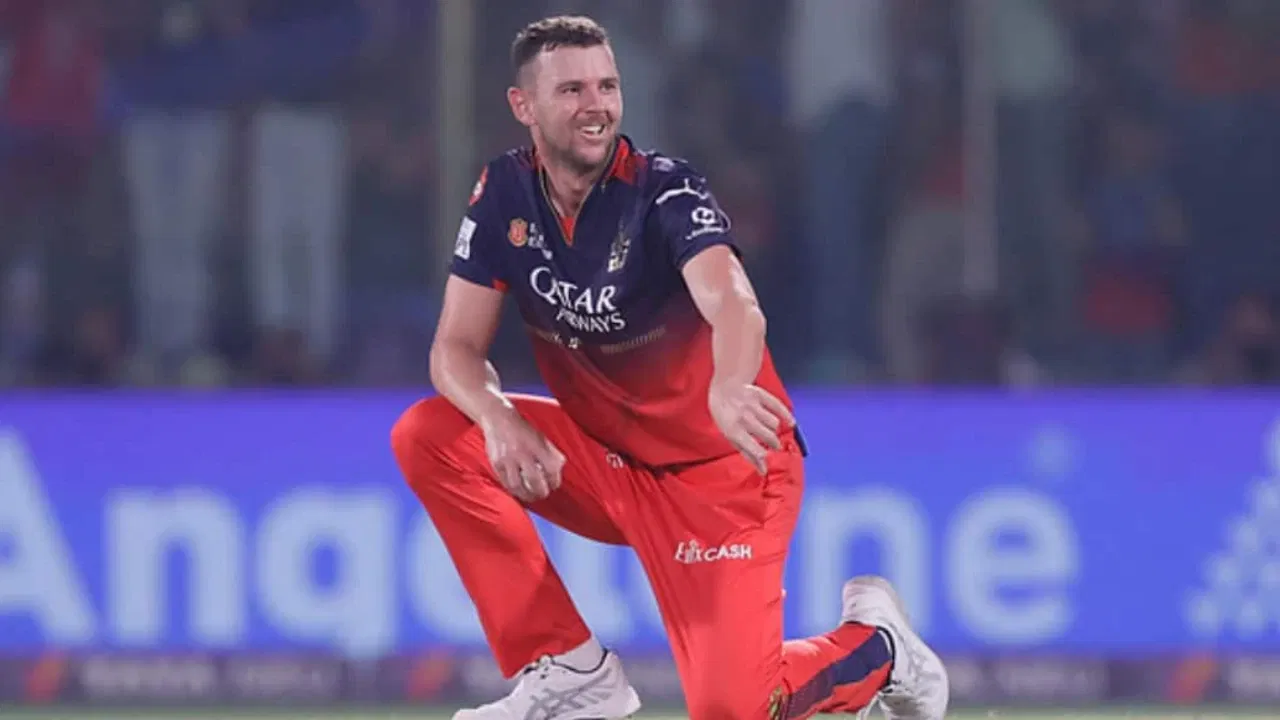
Josh Hazlewood ditches RCB, unlikely to return for IPL 2025
The Future of Josh Hazlewood in IPL 2025 and the Uncertainty Surrounding Australian and South African Players
As the Board of Control for Cricket in India (BCCI) gears up to restart the IPL 2025 after a one-week suspension due to the India-Pakistan conflict, there are growing doubts over the return of Royal Challengers Bengaluru (RCB) pacer Josh Hazlewood. The Australian speedster missed RCB’s last home game against Chennai Super Kings on May 3 due to a shoulder issue, and his participation in the upcoming clash against Lucknow Super Giants on May 9 was already uncertain before the tournament was temporarily halted.
Josh Hazlewood’s Fitness Concerns
Even if the IPL 2025 had continued without interruption, it was likely that Hazlewood would have missed the rest of the season. Managing his fitness has been a challenge for Hazlewood, who recently recovered from a calf injury and a side strain. These injuries had sidelined him from crucial international events earlier this year, including the Border-Gavaskar Trophy 2024-25, the Test series against Sri Lanka, and the ICC Champions Trophy 2025.
Despite these setbacks, Cricket Australia (CA) remains optimistic about Hazlewood’s fitness. The fast bowler is expected to be named in Australia’s Test squad, which is scheduled to have a preparation camp in England in early June ahead of the ICC World Test Championship final.
Uncertainty Over Australian and South African Players
As the IPL 2025 resumes, the availability of top Australian players like Pat Cummins, Mitchell Starc, and Travis Head remains uncertain. With the ICC World Test Championship final looming on June 11 at Lord’s, these players may prioritize rest and preparation over returning to India for the remainder of the IPL season.
Cummins and Head, who play for Sunrisers Hyderabad, are unlikely to return, considering their team’s position in the IPL 2025 playoff race. Starc, on the other hand, faces a dilemma as the Delhi Capitals are still in contention for the playoffs. However, a tiring journey from Dharamsala to Delhi and concerns over player safety may influence Starc’s decision.
Most New Zealand players have already returned home, but Mitchell Santner and Bevon Jacobs, who play for the Mumbai Indians, have chosen to stay back at the team’s request. Meanwhile, Cricket South Africa will decide whether its players can continue participating in the IPL 2025, with their current No Objection Certificates (NOCs) expiring on May 25.
With the priority on player safety and preparations for upcoming international fixtures, the decisions made by Australian and South African players regarding their IPL participation will have significant implications for both their respective teams and the tournament as a whole.
As cricket fans eagerly anticipate the return of IPL 2025 action, the uncertainty surrounding key players adds an extra layer of intrigue and suspense to the remainder of the season.
The Impact of Player Availability on IPL Team Strategies
The uncertainty surrounding the availability of key Australian and South African players due to international commitments poses a significant challenge for IPL teams. The absence of players like Hazlewood, Cummins, Starc, Head, and South African stars could disrupt team dynamics and force franchises to rethink their strategies for the remainder of the season.
Teams heavily rely on these international players for their bowling firepower, batting prowess, and all-around contributions. Their absence could create gaps in team compositions, affecting both the balance and effectiveness of the squads. Franchises will need to quickly adapt and find suitable replacements to fill the void left by these top performers.
The Role of IPL as a Talent Development Platform
The IPL has been instrumental in providing a platform for emerging talents from around the world to showcase their skills and learn from seasoned international players. With established stars potentially missing games, young Indian and other uncapped players will have an opportunity to step up and make a name for themselves on the big stage.
Franchises may look to their local talent pool to fill the gaps left by absent international stars, allowing promising players to gain valuable experience and exposure in high-pressure situations. This could lead to the discovery of new talents who could become future stars of the IPL and international cricket.
The Importance of Player Welfare and Workload Management
The decisions made by players regarding their IPL participation underscore the need for prioritizing player welfare and workload management in modern cricket. With packed international schedules and the demands of franchise T20 leagues, players must strike a balance to avoid burnout and injuries.
International cricket boards, franchise teams, and players themselves must collaborate to ensure that players’ well-being is safeguarded. Balancing the demands of domestic leagues like the IPL with international commitments requires careful planning and communication to prevent fatigue and injuries that could jeopardize players’ long-term careers.
The Global Nature of Cricket and Its Impact on IPL Dynamics
Cricket’s status as a global sport means that players from various countries participate in the IPL, adding diversity and richness to the tournament. The uncertainty surrounding the availability of Australian and South African players highlights the interconnected nature of cricket and the challenges faced by players juggling multiple commitments.
Franchises must navigate these complexities and adapt to changing circumstances as they strive to field competitive teams in the IPL. The global nature of cricket also underscores the need for collaboration between cricket boards, franchises, and players to ensure the smooth functioning of domestic leagues and international competitions.
Conclusion
As the IPL 2025 resumes after a brief hiatus, the uncertainty surrounding the availability of key players like Josh Hazlewood, Pat Cummins, Mitchell Starc, and South African stars adds an element of unpredictability to the tournament. Franchises will need to adjust their strategies, prioritize player welfare, and rely on emerging talents to fill the void left by absent international stars.
The decisions made by players regarding their IPL participation reflect the complex nature of modern cricket and the challenges faced by players balancing domestic leagues and international commitments. As fans eagerly await the return of IPL action, the evolving dynamics of player availability will shape the narrative of the tournament and highlight the resilience and adaptability of teams in the face of uncertainty.
Latest News
Top 10 highest run-chases in T20 cricket history, ft. West Indies’ Ranchi win vs India
Aaryavir Sehwag and Anvay Dravid set to make headlines at U19 Asia Cup 2026

Longest ducks in Test cricket history ft. Nic Maddinson, Shoaib Akhtar
ECB to offer 39 central contracts to England players after Ben Stokes, Mark Wood’s retirement
Steve Smith surpasses Steve Waugh in all-time Test run-scorers’ list

Shane Watson identifies Gautam Gambhir’s biggest problem as India struggle for consistency
Is Bhuvneshwar Kumar in India’s 2027 World Cup plans? Ajinkya Rahane makes revelation
BCCI’s big ₹127 Crore move after injury crisis raises concerns over Team India

Parthiv Patel reveals RCB ignored his Jasprit Bumrah recommendation in IPL 2014 Auction
“Never spoke ill of any faith”: Irfan Pathan hits back at fake news using his name
Nic Maddinson bags 33-ball duck on Test comeback, disappoints George Bailey
Imran Tahir predicts 2027 ICC ODI World Cup Semi-Finalists, snubs India for title
Australia create unwanted history with first all-30-plus Test XI
Ravindra Jadeja returns to Ranji Trophy as Saurashtra announce squad