

KL Rahul suffers bizarre hit-wicket dismissal after first-innings duck against New Zealand A
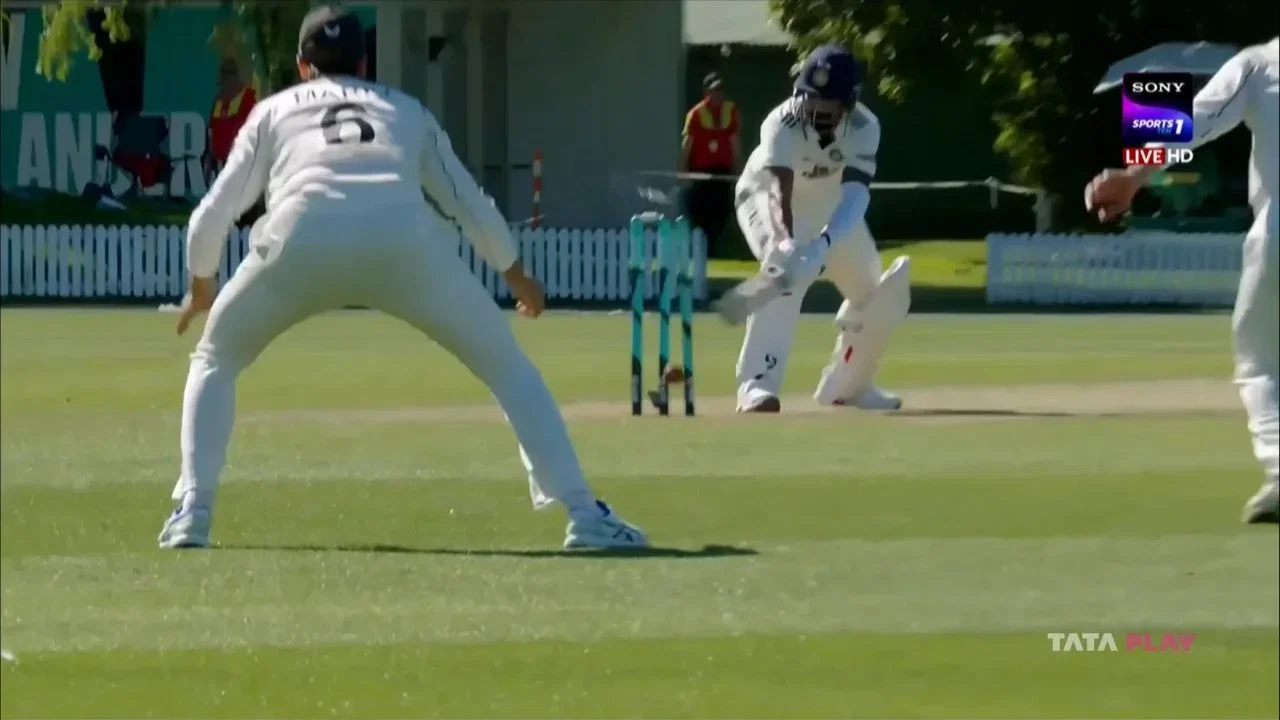
KL Rahul Suffers Bizarre Hit-Wicket Dismissal as India A Fall Behind New Zealand A
KL Rahul endured a difficult return to the crease in India A’s first unofficial Test against New Zealand A, recording scores of zero and four in a match that quickly turned against the visitors. His second-innings dismissal was particularly unusual: while trying to stop a slowly rolling ball, Rahul accidentally struck his own stumps and was given out hit wicket.
The incident came as India A attempted to recover from a first-innings collapse on a lively, green surface at Bert Sutcliffe Oval. New Zealand A had built a substantial lead, leaving Rahul and his teammates under pressure to produce a much stronger response. Instead, the opener’s brief stay ended in a rare and frustrating fashion.
How KL Rahul Was Dismissed Hit Wicket
Rahul’s dismissal occurred in the fifth over of India A’s second innings. New Zealand fast bowler Fraser Sheat delivered a good-length ball outside off stump, and Rahul leaned forward to defend it with soft hands. The ball dropped near his feet and began to roll slowly back towards the wicket.
As Rahul tried to prevent it from reaching the stumps, he moved his bat to stop the ball. In the process, however, he struck the off stump and dislodged the bails. The initial view made the dismissal look like a bowled wicket, but television replays showed that the ball was not travelling towards the stumps when Rahul knocked them over.
Rahul immediately gestured towards the umpire and non-striker Devdutt Padikkal, appearing to acknowledge what had happened. He left the field visibly disappointed after scoring four runs from 15 deliveries. Sheat had now dismissed him in both innings, making the match especially challenging for the India batter.
A difficult match against the new ball
Rahul’s first-innings dismissal came after he faced eight balls without scoring. Sheat bowled outside off stump, and the delivery moved away from the right-hander. Rahul attempted an expansive drive without getting sufficiently forward, edging the ball to wicketkeeper Mitchell Hay.
The two dismissals highlighted the pressure created by New Zealand A’s seam attack. On a surface offering movement and bounce, batters had to judge carefully which deliveries to play and which to leave. Rahul’s second-innings exit was unusual, but the first showed how a moment of uncertain footwork and shot selection can quickly become costly in demanding conditions.
India A Bowled Out for 113 on a Green Pitch
India A were dismissed for 113 in their first innings after struggling to cope with the conditions on the opening day. The green pitch gave the New Zealand A bowlers assistance, and they made the most of it by maintaining pressure and targeting the outside edge.
Simon Keene led the attack with five wickets for 24 runs, while Zak Gibson claimed three for 29. Their performances helped dismantle the visiting lineup and prevented India A from building the kind of partnerships needed to post a competitive total.
Yashasvi Jaiswal made 17 from 45 deliveries before edging Gibson to the slips. Padikkal provided a more substantial contribution, scoring 32 from 77 balls and spending close to two hours at the crease. Yash Rathod was the leading scorer, remaining unbeaten on 44 as wickets fell around him.
Rathod’s resistance offered India A a measure of hope, but the total left little margin for error. On a surface where the ball continued to move, New Zealand A’s batters had the chance to build a commanding advantage—and they took it.
New Zealand A Establish a 204-Run Lead
New Zealand A responded with 317 in their first innings, securing a lead of 204 runs. Openers Rhys Mariu and Curtis Heaphy gave the hosts an excellent platform, putting together a 132-run partnership for the first wicket. Mariu made 76 before Mukesh Choudhary ended the stand.
India A fought back through Auqib Nabi, who took two wickets in successive deliveries to disrupt the hosts’ progress. The visitors then continued to chip away at the lineup. Anshul Kamboj dismissed Heaphy and Matthew Boyle, while Akash Deep removed wicketkeeper Mitchell Hay.
However, New Zealand A found useful contributions lower down the order. Dean Foxcroft scored 51 before Washington Sundar dismissed him, and Kristian Clarke added 42 to help extend the home side’s total. Kamboj and Nabi finished with three wickets apiece, but New Zealand A’s depth ensured they still built a substantial first-innings cushion.
What the Match Means for India A and Rahul
For India A, the immediate challenge is to show greater discipline in their second innings and make New Zealand A work for any further breakthroughs. The first innings exposed how difficult batting can become when the ball moves, but the match also gives India’s players a valuable opportunity to practise decision-making under pressure.
Rahul’s low scores are likely to attract attention, especially given his experience at the highest level. Still, one difficult outing in an unofficial match should be viewed in context: conditions were challenging, and the New Zealand A attack bowled effectively. His performance will nevertheless renew discussion about form, technique and the competition for places in India’s Test batting group.
Any prediction about Rahul’s next performances should be cautious. A pair of low scores does not, by itself, determine a player’s longer-term prospects, but the remaining fixtures will give him and other India A batters an important chance to respond. Time at the crease, sound shot selection and an ability to leave deliveries outside off stump will be key areas to watch.
Upcoming Fixtures
The three-match unofficial Test series continues with the second game scheduled to begin on October 31, followed by the final match on November 7. The fixtures provide both sides with further opportunities to assess players and prepare them for future assignments.
After the India A series, the senior Indian team is scheduled to face New Zealand in a two-Test contest. The first Test is set to start in Wellington on November 19, with the second beginning in Christchurch on November 27. Performances in the A-team matches may therefore offer useful insight into form and readiness, although selection decisions will depend on a wider range of factors.
Latest News

SA vs BAN Playing 11 Today, Live Streaming, Pitch & Weather: South Africa tour of Bangladesh 2026, 2nd Test

AUS vs ENG Playing 11 Today, Live Streaming, Pitch & Weather: England tour of Australia 2026, 2nd T20I

Blair Tickner ruled out of 2nd Test vs India, replacement named

Tim Paine and Justin Langer face fresh questions over Australia’s ball-tampering scandal

India tour of Bangladesh gets fresh hope as BCB confirms talks with BCCI

Tom Latham opens up on soft ball problem and saliva ban after draw against India

Ajinkya Rahane slams Tilak Varma for publicly criticising Shahbaz Ahmed after India A’s defeat

ICC to introduce IPL-style bat checks in international cricket

“Smiling Laughing doesn’t happen”: R Ashwin’s dig at India’s approach after draw vs New Zealand

“Not good enough for Test cricket”: Scott Styris, Sunil Gavaskar slam Wellington pitch

Dodda Ganesh declares India ‘out of WTC final race’ after Wellington Test draw

Ajinkya Rahane criticises Shubman Gill for abusing Akash Deep in 1st Test vs New Zealand

‘Why so many boundary riders?’ Dinesh Karthik questions Shubman Gill’s captaincy after Wellington Test

“I just want to enjoy my life”: Yash Dayal reflects on his return to cricket


