List of Indian batters with most ODI ducks: Virat Kohli equals Sachin Tendulkar
India in Deep Trouble as Virat Kohli’s Duck Adds to Unwanted ODI Record
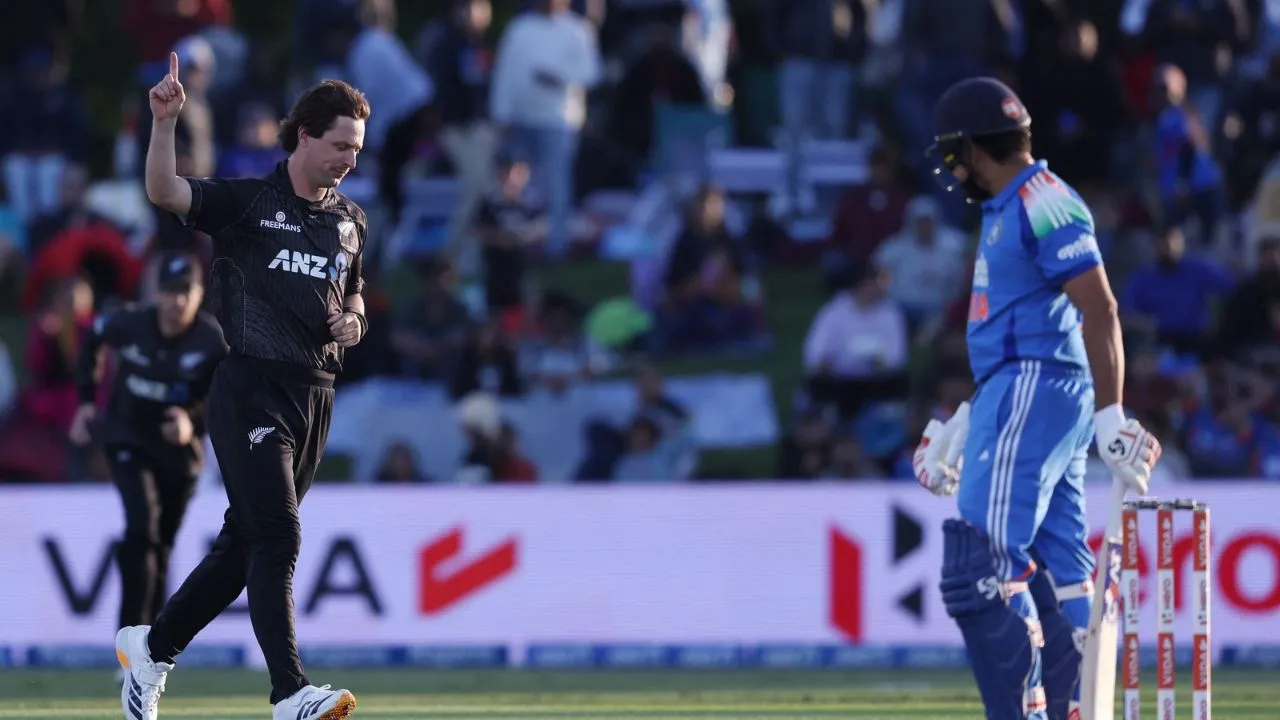
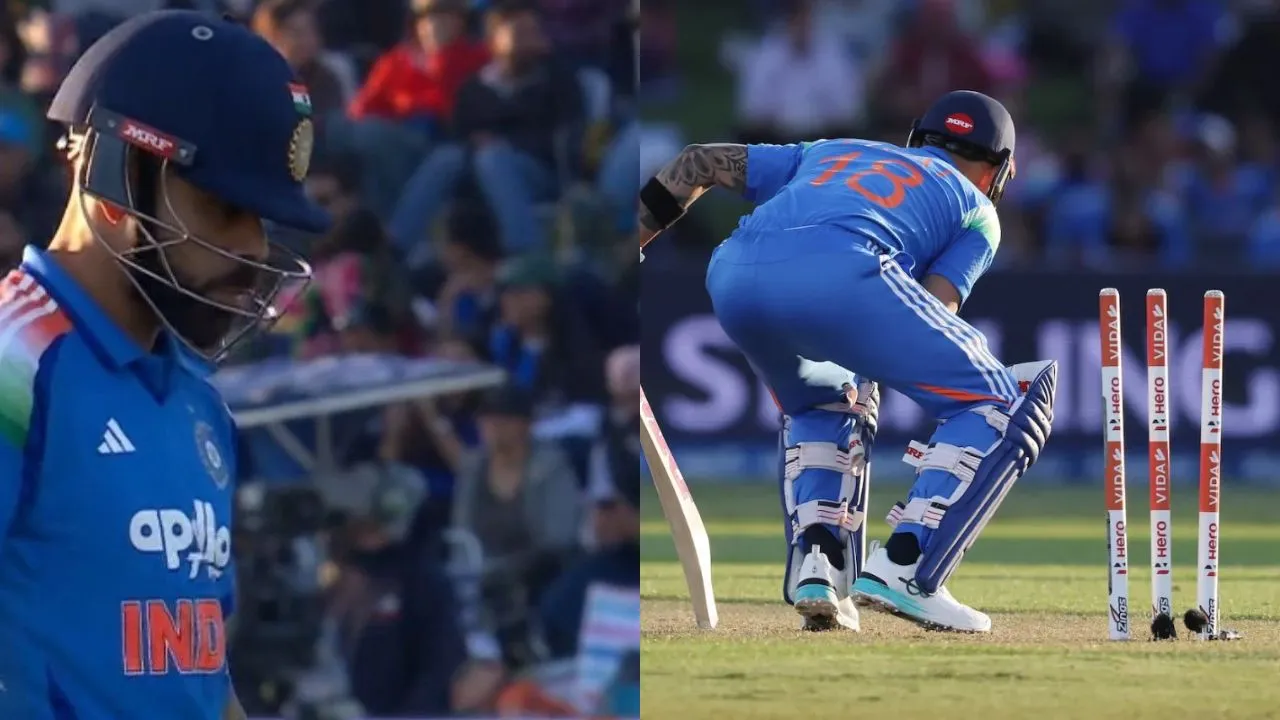
India’s chase of a challenging 334-run target against New Zealand has taken a dramatic turn at Bay Oval in Mount Maunganui. The visitors lost half their batting order for just 53 runs, leaving them facing a steep uphill battle in the fourth ODI. Among the early dismissals was Virat Kohli, who fell for a four-ball duck to Matt Henry and moved into an unwanted place in India’s one-day international record books.
New Zealand’s fast bowler set the tone with a remarkable opening over, dismissing Rohit Sharma, Kohli and Shreyas Iyer without a run on the board. The collapse put India under immediate pressure and shifted attention from the substantial target to the scale of the recovery required. With the match still in progress, the team’s immediate priority is to rebuild and avoid a heavy defeat.
Virat Kohli Equals Sachin Tendulkar’s ODI Duck Record
Kohli’s dismissal was his 20th duck in ODI cricket for India, bringing him level with Sachin Tendulkar for the most ducks by an Indian batter in the format. It is an unusual milestone for a player whose career has been defined by consistency, major run totals and match-winning innings. A further ODI duck would give Kohli the record outright.
The list includes several prominent names from Indian cricket. Javagal Srinath has 19 ODI ducks, while Rohit Sharma, Anil Kumble and Yuvraj Singh have each recorded 18. Harbhajan Singh follows with 17, and Sourav Ganguly has 16. The figures span different roles and eras, but Kohli’s position at the top is striking given his reputation as one of India’s most dependable top-order batters.
Kohli also features high on India’s list for ducks across international cricket. He has recorded 42, placing him behind Zaheer Khan, who leads the tally with 43. Ishant Sharma has 40, while Harbhajan Singh has 37. These totals include dismissals across formats, so they provide a broader measure than the ODI-only record.
A Rare First-Over Collapse Puts India Under Pressure
Henry’s opening over was the defining moment of India’s chase. He removed Rohit, Kohli and Iyer in quick succession, leaving the visitors at 0/3 and handing New Zealand an extraordinary start. Losing three top-order batters before the scoreboard had moved is a rare occurrence in ODI cricket and placed enormous pressure on the middle order.
Henry’s success came from disciplined pace bowling and the ability to exploit early movement. In a chase of 334, India needed a steady start to keep the required rate manageable. Instead, the early wickets forced the incoming batters to balance two competing demands: stabilising the innings while still finding a way to score quickly enough to stay in contention.
For New Zealand, the breakthrough also validated the value of a strong total. A score of 333 gave the bowlers room to attack, and Henry made the most of it. India’s remaining batters would need to build substantial partnerships to make the contest close, rather than allowing the pressure of the target to trigger further wickets.
Will Young’s Century Anchors New Zealand’s 333
New Zealand reached 333 after being asked to bat first, with Will Young leading the way through a composed innings of 125. His century provided the foundation for the home side’s total and helped ensure that New Zealand had enough runs to challenge India’s batting depth. Tim Seifert also made an important contribution with a half-century, supporting Young and adding momentum to the innings.
Young’s knock was particularly valuable because it gave New Zealand stability as well as scoring power. A major innings at the top or in the middle order can shape an ODI, allowing the rest of the batting lineup to play around a set batter. Seifert’s fifty complemented that effort, helping the hosts turn a promising platform into a demanding target.
Kohli’s Recent Form: A Dip in the Series, Not the Bigger Picture
Kohli’s duck comes during a series in which his returns have been modest by his own high standards. He made 74 in the opening match, providing India with a substantial contribution, but has not been able to produce another major score in the following games. Across his last three appearances in the series, he has scored 82 runs in total.
That run contrasts with his broader form this calendar year, when he has been among India’s leading run-scorers and has already registered a century. One difficult innings—or even a challenging series—does not erase that record. For an experienced batter, the final match of the series offers an opportunity to respond, regain rhythm and finish on a stronger note.
India’s next fixture is scheduled for Sunday, giving Kohli and the team another chance to make adjustments. The immediate challenge, however, remains the ongoing chase. If India are to recover from the early collapse, the batters at the crease will need to show patience, build partnerships and keep the required run rate within reach.
India vs New Zealand Fourth ODI: Match Prediction and What to Watch
At the time of writing, New Zealand hold a commanding position after posting 333 and reducing India to 53 for five. Any match prediction must account for the scale of the early damage: India need a major partnership and an unusually strong finish to turn the contest around. New Zealand, meanwhile, will look to maintain pressure with disciplined bowling and sharp fielding.
The series context offers India some reassurance. The visitors won the first two matches, while one of the five games was washed out, meaning they cannot lose the series. Even so, avoiding a heavy defeat matters. India will want to show resilience, protect their momentum and prevent the result from becoming a damaging setback ahead of the final ODI.
For fans, the key questions are whether India’s middle order can halt the collapse, whether Henry can add to his early breakthroughs, and whether Kohli can close the series with a response in the next match. His unwanted record has drawn attention, but the larger story is the contest between New Zealand’s strong total and India’s ability to recover under pressure.
Latest News
Marco Jansen beats Shai Hope to win ICC Player of the Month award

PSL 2027: RawalPindiz name Adam Voges as head coach ahead of new season

IPL 2027: Ares Management in talks to buy minority stake in KKR
IPL 2027: KKR to sacrifice three players to sign Rajasthan Royals star Yashasvi Jaiswal

IPL 2027: Mohammed Shami and Sam Curran part of blockbuster trade between RR and LSG

Virat Kohli wins hearts with special gesture towards Matt Henry after India’s heavy defeat
ICC plans six global tournaments between 2032 and 2035, new cricket calendar to be discussed
Watch: Nikhil Chaudhary and Matthew Kuhnemann involved in bizarre collision during Sheffield Shield match
WTC points table after Pakistan vs Sri Lanka 1st Test, 2026
‘Had there been a follow-on’: Sunil Gavaskar takes cheeky dig at India’s batting collapse in 4th ODI
‘Requires proper preparation’: Babar Azam turns down pink-ball Test idea after draw vs Sri Lanka
“You have to have evidence”: Pat Cummins hits back at Usman Khawaja’s racism allegation
List of Indian batters with most ODI ducks: Virat Kohli equals Sachin Tendulkar
India’s lowest ODI totals: Look at top 10 biggest batting collapses