

Matt Fisher replaces Blair Tickner as concussion substitute in 2nd ODI vs India
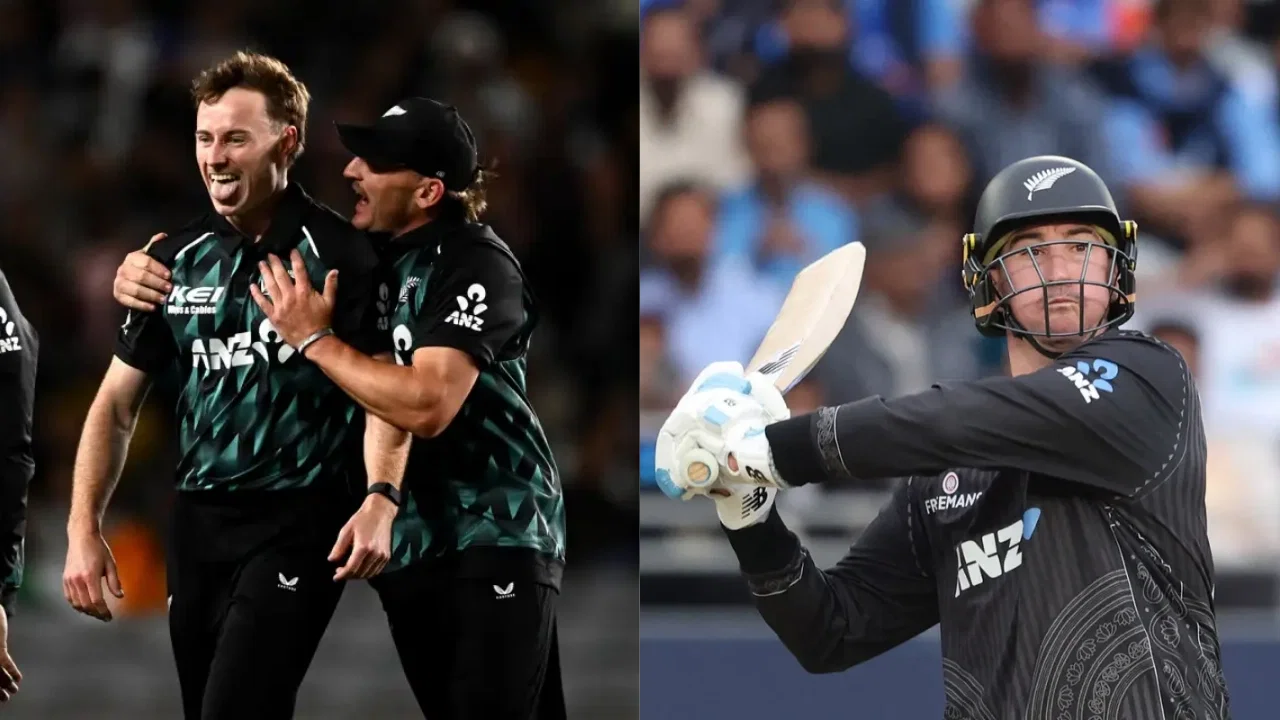
Matt Fisher Replaces Blair Tickner as New Zealand’s Concussion Substitute Against India
New Zealand fast bowler Matt Fisher has been approved as a concussion substitute for Blair Tickner during the second ODI against India in Wellington, after Tickner showed signs of a delayed concussion following a blow to his helmet. The incident came during a difficult innings for the hosts, who were bowled out for 134 in 41 overs after rain shortened the match to 47 overs per side.
India’s pace attack took advantage of helpful conditions, striking regularly and preventing New Zealand from building momentum. Gurnoor Brar led the effort with a career-best four-wicket haul, while Anshul Kamboj, Auqib Nabi and Axar Patel claimed two wickets apiece. India needed 135 runs to win, but the chase began nervously, with Shubman Gill and Virat Kohli back in the pavilion as the score slipped to 17 for two.
Tickner’s Helmet Blow Leads to Concussion Replacement
Tickner was struck on the side of his helmet by Kamboj in the 41st over of New Zealand’s innings. He continued batting after the impact, adding two runs from five deliveries before Kamboj dismissed him later in the same over. Although Tickner initially carried on, subsequent medical checks raised concerns about delayed concussion symptoms.
New Zealand’s medical staff then sought approval to bring Fisher into the match under the International Cricket Council’s concussion substitute rules. The replacement is intended to allow a team to field a player with a comparable role when a cricketer is unable to continue because of a head injury. Fisher’s inclusion gave New Zealand an available fast-bowling option for India’s run chase.
The incident also drew attention because Kyle Jamieson had taken a blow to his helmet during the closing stages of the innings. Helmet impacts are treated seriously in modern cricket, and a player may appear able to continue before symptoms become clear. That is why medical assessment can continue after the initial incident rather than relying only on how a player feels immediately afterwards.
Brar’s Four Wickets Put India in Control
India captain Shubman Gill won the toss and chose to bowl on Saturday, November 7. Rain reduced the contest to 47 overs per team, and India’s seamers quickly made the most of the conditions. The ball moved enough to trouble New Zealand’s top order, while disciplined lines made it difficult for the batters to settle.
Nabi struck first, dismissing Tim Seifert for a duck before removing Will Young after drawing an edge. Kamboj then made an immediate impact, bowling Henry Nicholls for 11 in his first over. New Zealand’s early losses left the middle order under pressure before it had a chance to establish a partnership.
Brar delivered the innings’ most damaging spell with a double-wicket maiden. He removed captain Tom Latham and Glenn Phillips in the same over, deepening New Zealand’s problems and leaving the hosts with little room to rebuild. His ability to maintain pressure while attacking the stumps proved central to India’s control of the innings.
Daryl Mitchell and Mitchell Santner briefly steadied New Zealand with a 59-run stand for the sixth wicket. Mitchell top-scored with 55 from 104 balls, while Santner made 33. Their partnership offered the home side a chance to reach a more competitive total, but it required patience on a surface where scoring freely was difficult.
Axar Patel broke the stand when Mitchell attempted to increase the scoring rate and was dismissed while trying an aggressive shot. Brar later removed Santner, and New Zealand’s lower order could not provide meaningful support. The final three wickets fell for just eight runs, leaving the hosts all out for 134 after 41 overs.
Brar finished with figures of 4 for 30, the best performance of his career to that point. Kamboj, Nabi and Axar each took two wickets, giving India a balanced effort across the attack. The modest target of 135 from 47 overs appeared manageable, although the early movement in the pitch suggested the chase might not be straightforward.
Ian Bishop Urges Patience With Emerging Fast Bowlers
Former West Indies fast bowler Ian Bishop praised Brar’s performance and used it to make a wider point about the development of young quicks. He noted that white-ball bowlers can be especially effective when the pitch offers assistance, and cautioned against making firm judgments about a fast bowler based on only a small number of appearances.
“Days like these remind us how bowlers come into their own in white-ball cricket when there is a bit of help in the pitch; and why it’s important to give fast bowlers like Gurnoor Brar as long a rope as possible to find out if they can be the player you’re looking for,” Bishop said.
The comment speaks to a familiar challenge in international cricket: emerging bowlers need opportunities to develop, but teams also face pressure to deliver immediate results. Brar’s four-wicket haul provided a compelling case for giving him further chances, particularly in conditions that reward pace, accuracy and persistence.
India’s Chase Begins With an Early Setback
Despite needing only 135, India did not begin the pursuit smoothly. Gill and Kohli were both dismissed as the score fell to 17 for two, giving New Zealand a brief opening. Kohli’s shot came too early for the pace of the delivery; the ball held up on the surface and travelled straight to Will Young.
That early wobble added intrigue to a chase that had looked straightforward on paper. New Zealand’s reduced total left India with a clear target, but the conditions and early wickets showed why a low-scoring ODI can still become a contest. The match’s key prediction would depend on whether India’s remaining batters could adjust to the surface and avoid further losses—or whether Fisher and New Zealand’s attack could turn the concussion substitution into a meaningful opportunity.
For New Zealand, the immediate priorities were managing Tickner’s recovery and making the most of the bowling conditions. For India, Brar’s breakthrough performance had already put the visitors in a strong position, but the early dismissals underlined the need for a measured chase rather than an assumption that the target would be reached without resistance.
Latest News

SA vs BAN Playing 11 Today, Live Streaming, Pitch & Weather: South Africa tour of Bangladesh 2026, 2nd Test

AUS vs ENG Playing 11 Today, Live Streaming, Pitch & Weather: England tour of Australia 2026, 2nd T20I

Blair Tickner ruled out of 2nd Test vs India, replacement named

Tim Paine and Justin Langer face fresh questions over Australia’s ball-tampering scandal

India tour of Bangladesh gets fresh hope as BCB confirms talks with BCCI

Tom Latham opens up on soft ball problem and saliva ban after draw against India

Ajinkya Rahane slams Tilak Varma for publicly criticising Shahbaz Ahmed after India A’s defeat

ICC to introduce IPL-style bat checks in international cricket

“Smiling Laughing doesn’t happen”: R Ashwin’s dig at India’s approach after draw vs New Zealand

“Not good enough for Test cricket”: Scott Styris, Sunil Gavaskar slam Wellington pitch

Dodda Ganesh declares India ‘out of WTC final race’ after Wellington Test draw

Ajinkya Rahane criticises Shubman Gill for abusing Akash Deep in 1st Test vs New Zealand

‘Why so many boundary riders?’ Dinesh Karthik questions Shubman Gill’s captaincy after Wellington Test

“I just want to enjoy my life”: Yash Dayal reflects on his return to cricket


