

Matt Henry left furious after Tom Latham refuses to review KL Rahul’s LBW appeal
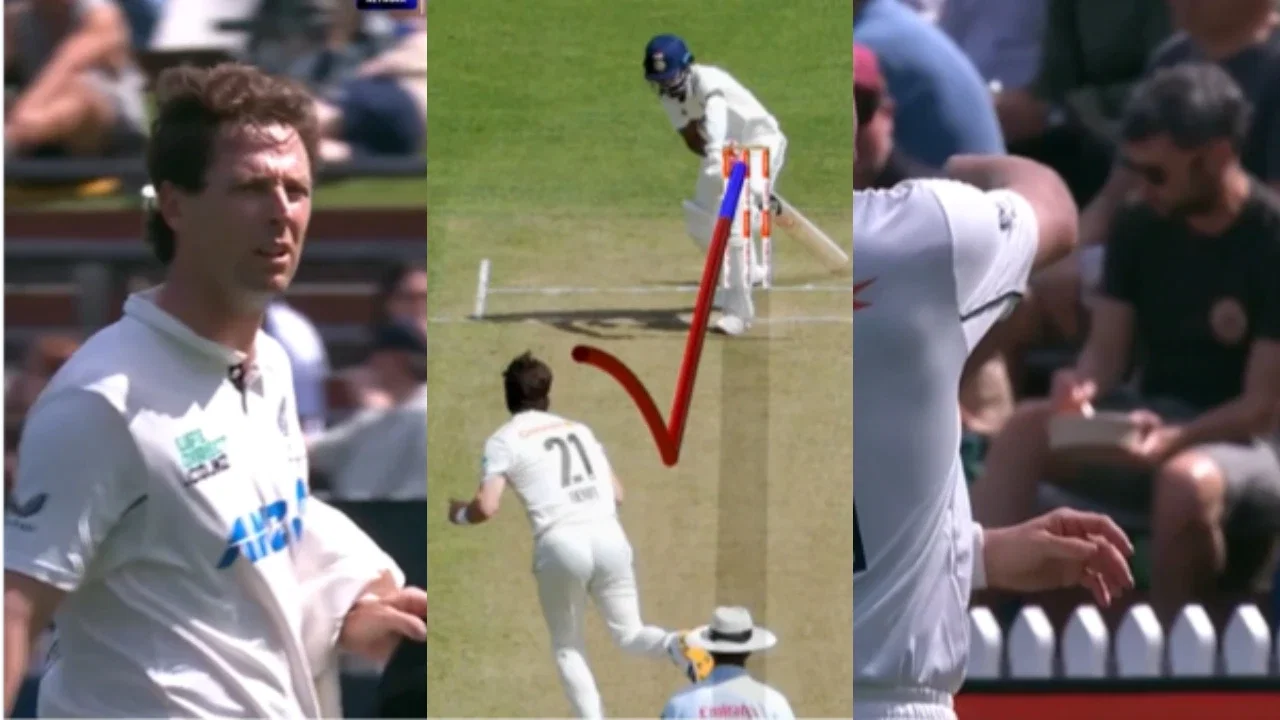
New Zealand’s Missed DRS Calls Give KL Rahul a Lifeline Against India
New Zealand’s bowlers created a series of promising chances against India on Day 2 of the first Test at Wellington’s Basin Reserve, but their efforts were repeatedly undone by missed opportunities. The most consequential moments involved two appeals against KL Rahul: one review that was lost after an inconclusive check, and another decision that New Zealand chose not to challenge despite replays suggesting Rahul was out.
The sequence frustrated captain Tom Latham and the Black Caps’ fast bowlers, who had worked hard to put India’s batters under pressure. Matt Henry’s reaction captured the mood after the second appeal: once the replay showed the ball was likely hitting the stumps, he threw his sweater beyond the boundary in frustration. The missed calls became a major talking point of the session and offered a reminder of how quickly a Test match’s momentum can turn on marginal decisions and review choices.
An early review leaves New Zealand confused
The first incident came in the fourth over, when Kyle Jamieson delivered a ball that moved sharply back into Rahul and struck him on the pads. Jamieson was convinced the batter had been trapped in front and urged Latham to review the on-field not-out decision.
The television umpire’s initial assessment did not establish clear evidence during the sound check. As a result, the review process did not proceed to a completed ball-tracking verdict. New Zealand were initially informed that their review remained available, and the broadcast later showed that the ball’s impact was outside the line of the stumps.
However, the team was subsequently told that the review had been counted as lost. The confusion added to New Zealand’s frustration, particularly because the incident came early in the innings, when every remaining review could prove valuable. In a close Test, the review system is more than a formality: captains must weigh the bowler’s confidence, the angle of delivery, the batter’s position and the potential cost of challenging an umpire’s call.
Henry’s appeal goes unreviewed
New Zealand soon had another opportunity to remove Rahul. Henry brought a delivery back into the batter, striking him on the pads as he defended. The bowler appealed emphatically, but on-field umpire Kumar Dharmasena ruled Rahul not out.
This time, Latham decided against using a review. Replays later suggested the ball had pitched in line and would have gone on to hit the stumps, making it a strong candidate for a successful challenge. With no review taken, Rahul survived and New Zealand lost the chance to turn a threatening spell into a breakthrough.
Henry’s disappointment was clear when he saw the replay, while Jamieson also appeared frustrated. The moment quickly became a focal point for viewers following the match, with the decision highlighting the fine margins involved in DRS prediction. Ball-tracking can help teams assess whether a delivery was likely to hit the stumps, but the system only comes into play if a captain chooses to challenge the original decision.
India’s batters face a difficult spell
Despite the missed chances, New Zealand’s pace attack made India work for runs. Jamieson used his height to generate bounce, including one sharp delivery that climbed towards Rahul’s chest and left him little time to adjust. The pressure was supported by an attacking field, with three slips and a gully waiting for an edge.
Henry also threatened Yashasvi Jaiswal. One ball moved back sharply and passed close to the off stump, while another produced a risky moment when Jaiswal attempted an aggressive shot. The ball travelled over mid-on, narrowly avoiding a catch and allowing the Indian batter to continue.
New Zealand’s fielders were kept busy as edges repeatedly fell just beyond their reach. One chance off Jamieson dropped short of third slip. Another flew through the gap between third slip and gully, despite Henry Nicholls diving in an attempt to intercept it. Glenn Phillips later got fingertips to an edge at gully, but the ball still raced away for four.
Those near misses showed that the bowlers were creating pressure, even when the scorecard did not immediately reflect it. In Test cricket, a disciplined spell can build the conditions for a wicket, but the fielding side must still convert its opportunities. A dropped chance, a narrow escape or a review not taken can extend a batter’s stay and force the bowlers to start again.
Why the missed chances matter
Rahul’s reprieves were particularly significant because early wickets can shape the rhythm of an innings. Removing an established batter gives the bowling side a chance to attack a new player, while allowing a batter to settle can make the same spell progressively harder to manage. New Zealand’s bowlers had already found movement and bounce, so a breakthrough could have rewarded their sustained pressure.
The episode also placed attention on Latham’s decision-making as captain. Review calls are rarely straightforward: a confident appeal from a bowler can be persuasive, but captains must also consider the angle, the batter’s movement and how much certainty the available evidence provides. The first review was complicated by the unclear checking process; the second became more contentious because the later replay appeared to support Henry’s appeal.
For India, the sequence provided a valuable reprieve during a testing period. For New Zealand, it was a reminder that strong bowling must be matched by sharp fielding and careful use of DRS. The Black Caps continued to generate chances, but the session’s defining story was how many of them slipped away.
Prediction: New Zealand will need to turn pressure into wickets
The session offered plenty of encouragement for New Zealand’s pace attack, but the missed opportunities could become costly if India’s batters make the most of their second chances. A reasonable prediction is that the contest will depend on whether the hosts can maintain their accuracy while converting the next clear opening. If Jamieson and Henry continue to find movement, further chances should come; the challenge will be ensuring that the fielders—and the captain’s review decisions—make them count.
Latest News

SA vs BAN Playing 11 Today, Live Streaming, Pitch & Weather: South Africa tour of Bangladesh 2026, 2nd Test

AUS vs ENG Playing 11 Today, Live Streaming, Pitch & Weather: England tour of Australia 2026, 2nd T20I

Blair Tickner ruled out of 2nd Test vs India, replacement named

Tim Paine and Justin Langer face fresh questions over Australia’s ball-tampering scandal

India tour of Bangladesh gets fresh hope as BCB confirms talks with BCCI

Tom Latham opens up on soft ball problem and saliva ban after draw against India

Ajinkya Rahane slams Tilak Varma for publicly criticising Shahbaz Ahmed after India A’s defeat

ICC to introduce IPL-style bat checks in international cricket

“Smiling Laughing doesn’t happen”: R Ashwin’s dig at India’s approach after draw vs New Zealand

“Not good enough for Test cricket”: Scott Styris, Sunil Gavaskar slam Wellington pitch

Dodda Ganesh declares India ‘out of WTC final race’ after Wellington Test draw

Ajinkya Rahane criticises Shubman Gill for abusing Akash Deep in 1st Test vs New Zealand

‘Why so many boundary riders?’ Dinesh Karthik questions Shubman Gill’s captaincy after Wellington Test

“I just want to enjoy my life”: Yash Dayal reflects on his return to cricket


