

Michael Vaughan reacts to Usman Khawaja’s ‘all Australians knew about ball-tampering’ claim
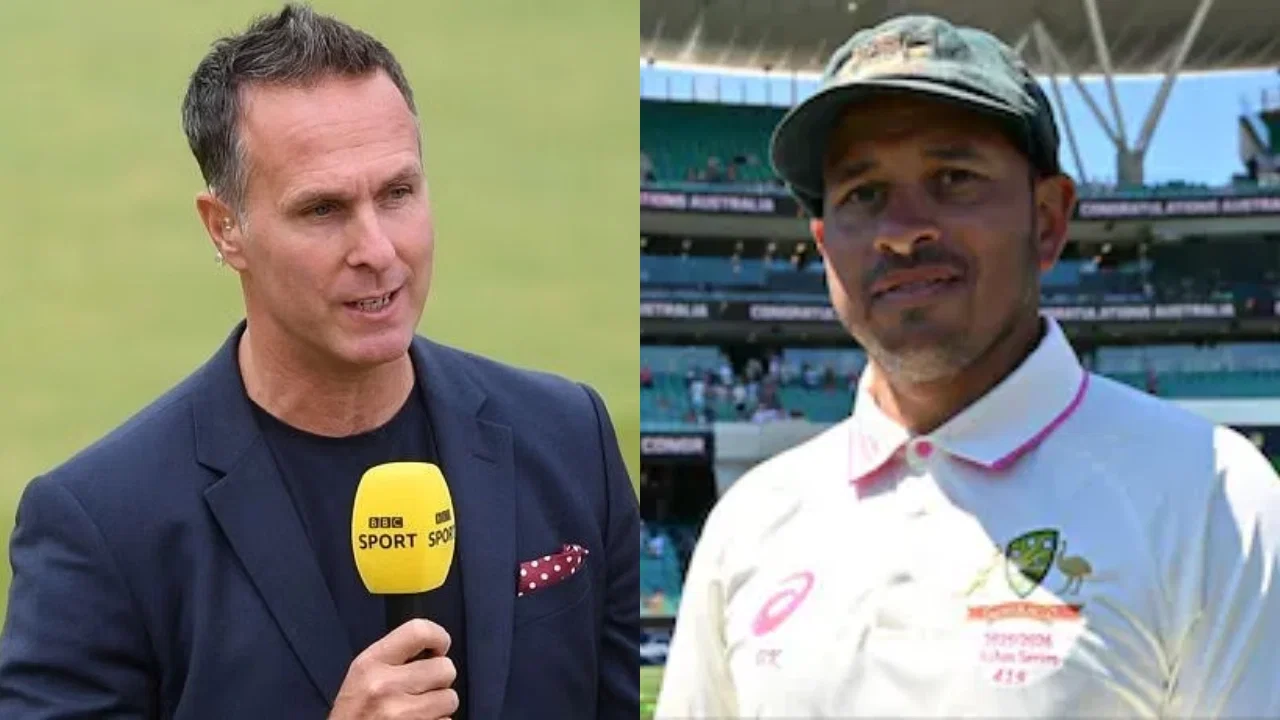
Michael Vaughan Mocks Usman Khawaja’s Ball-Tampering Claims as 2018 Scandal Returns to Spotlight
Former England captain Michael Vaughan has responded sharply to Usman Khawaja’s account of Australia’s 2018 ball-tampering scandal, arguing that the suggestion of wider team awareness was hardly a revelation. Khawaja says discussions about altering the ball were not limited to the three players punished after the Cape Town Test—a claim that has reopened debate about responsibility, team culture and what was known inside the Australian dressing room.
The controversy has resurfaced ahead of the release of Khawaja’s autobiography. In comments reported by Nine newspapers, the former Australia opener said the idea of changing the ball had been discussed among the squad during the tour of South Africa, including before the Test in Port Elizabeth. “It was all of us. All of us,” he said.
Vaughan reacted on X, formerly Twitter, with a sarcastic post suggesting that the claim confirmed what many cricket observers had suspected since the scandal broke. He also questioned the value of revisiting the episode eight years later, adding that the sport should now move on.
“So we finally now know the most hidden secret in the game … all the Aussie team knew about the sandpaper … 8 yrs later it all comes out … no sh*t Sherlock … now can we just move on,” Vaughan wrote.
What Khawaja Says About Australia’s Team Culture
Khawaja’s comments go beyond the question of who knew about the sandpaper. He has described the episode as a product of a “win at all costs” mentality that, in his view, had developed within the Australian team over a period of years. He also suggested that this culture contributed to the hostility Australia encountered from opponents and cricket fans after the incident became public.
His account contrasts with the findings of Cricket Australia’s investigation, which concluded that Steve Smith, David Warner and Cameron Bancroft were involved in the plan. Bancroft was caught on camera attempting to rough up the ball with sandpaper during the third Test against South Africa in Cape Town in March 2018. The images triggered an immediate investigation and a major crisis for Australian cricket.
Khawaja’s version raises a broader question: whether the three sanctioned players acted alone or whether other members of the touring party had prior knowledge of the plan. His claim, however, has not gone unchallenged, and it should be understood as his account of events rather than a new official finding.
Childhood Coach Disputes Khawaja’s Account
Bill Anderson, Khawaja’s childhood coach, has publicly questioned the former batter’s claim that the entire squad knew what was happening. Speaking to Australian Story, Anderson alleged that Khawaja had tried to persuade teammates to accept collective responsibility, but that some players were unwilling to support that version.
“Usman actually tried to coerce them all to say ‘we all knew what was going on’ and some of them wouldn’t buy into that,” Anderson said.
Anderson’s remarks add another layer to a story that has long been marked by competing accounts and intense scrutiny. They also underline the difficulty of establishing what individual players knew, when they knew it and whether general discussion about ball manipulation translated into awareness of the specific plan carried out in Cape Town.
Sanctions and the Aftermath of the Cape Town Test
Cricket Australia imposed lengthy bans on the three players identified in its investigation. Smith and Warner were suspended from international and domestic cricket for 12 months, while Bancroft received a nine-month suspension. Smith was Australia’s captain at the time, and Warner served as vice-captain. Both leadership positions became central to the public fallout.
Then-head coach Darren Lehmann was cleared of direct involvement in the plan, but resigned shortly after the South Africa series. The scandal also prompted a wider review of Australian cricket’s conduct and public image, as officials faced pressure to demonstrate that the incident would lead to meaningful cultural change.
The episode remains one of the most damaging controversies in modern Australian cricket. It was not only a breach of the rules governing the condition of the ball; it became a test of leadership, accountability and trust between players, administrators and supporters.
Vaughan Rejects Claims He Stayed Silent
Vaughan’s comments drew responses from social media users, including one who suggested he had avoided criticising Australia to protect his broadcasting work. The former England captain rejected that accusation, saying he had expressed doubts about the official account at the time.
“Pretty sure most in the game including myself said at the time that no way the whole didn’t know,” Vaughan replied.
Another user brought up allegations involving England players using hard sweets to help shine the ball during Vaughan’s time as captain. Vaughan answered with a joke, saying he had not realised players were not allowed to eat sweets on the field: “We were very hungry.” The exchange brought a lighter tone to a debate otherwise centred on serious questions about cricket’s rules and the standards expected of international teams.
Why the Ball-Tampering Debate Still Matters
The latest claims are likely to attract attention because they challenge the narrow version of responsibility established after the 2018 investigation. Yet the new discussion does not, by itself, change the official findings or establish that every player knew about the specific plan. Instead, it highlights the continuing gap between the investigation’s conclusions, Khawaja’s recollection and Anderson’s account.
For fans, the dispute also reflects a wider issue in elite sport: how a team’s competitive culture can shape decisions, and whether responsibility should be limited to those who carried out an offence or extend to people who may have known about it. The answer depends on evidence, individual knowledge and the standards of accountability a team is willing to uphold.
Vaughan’s prediction that the cricket world should move on may prove difficult to fulfil while key figures continue to offer different interpretations of the scandal. Khawaja’s autobiography could provide further context, but the enduring significance of the Cape Town incident will depend less on a single social media exchange than on whether the sport can draw clear lessons about transparency, leadership and fair play.
Latest News

SA vs BAN Playing 11 Today, Live Streaming, Pitch & Weather: South Africa tour of Bangladesh 2026, 2nd Test

AUS vs ENG Playing 11 Today, Live Streaming, Pitch & Weather: England tour of Australia 2026, 2nd T20I

Blair Tickner ruled out of 2nd Test vs India, replacement named

Tim Paine and Justin Langer face fresh questions over Australia’s ball-tampering scandal

India tour of Bangladesh gets fresh hope as BCB confirms talks with BCCI

Tom Latham opens up on soft ball problem and saliva ban after draw against India

Ajinkya Rahane slams Tilak Varma for publicly criticising Shahbaz Ahmed after India A’s defeat

ICC to introduce IPL-style bat checks in international cricket

“Smiling Laughing doesn’t happen”: R Ashwin’s dig at India’s approach after draw vs New Zealand

“Not good enough for Test cricket”: Scott Styris, Sunil Gavaskar slam Wellington pitch

Dodda Ganesh declares India ‘out of WTC final race’ after Wellington Test draw

Ajinkya Rahane criticises Shubman Gill for abusing Akash Deep in 1st Test vs New Zealand

‘Why so many boundary riders?’ Dinesh Karthik questions Shubman Gill’s captaincy after Wellington Test

“I just want to enjoy my life”: Yash Dayal reflects on his return to cricket


