Mohsin Naqvi’s PCB bans Pakistan cricketers from playing Afghanistan Premier League
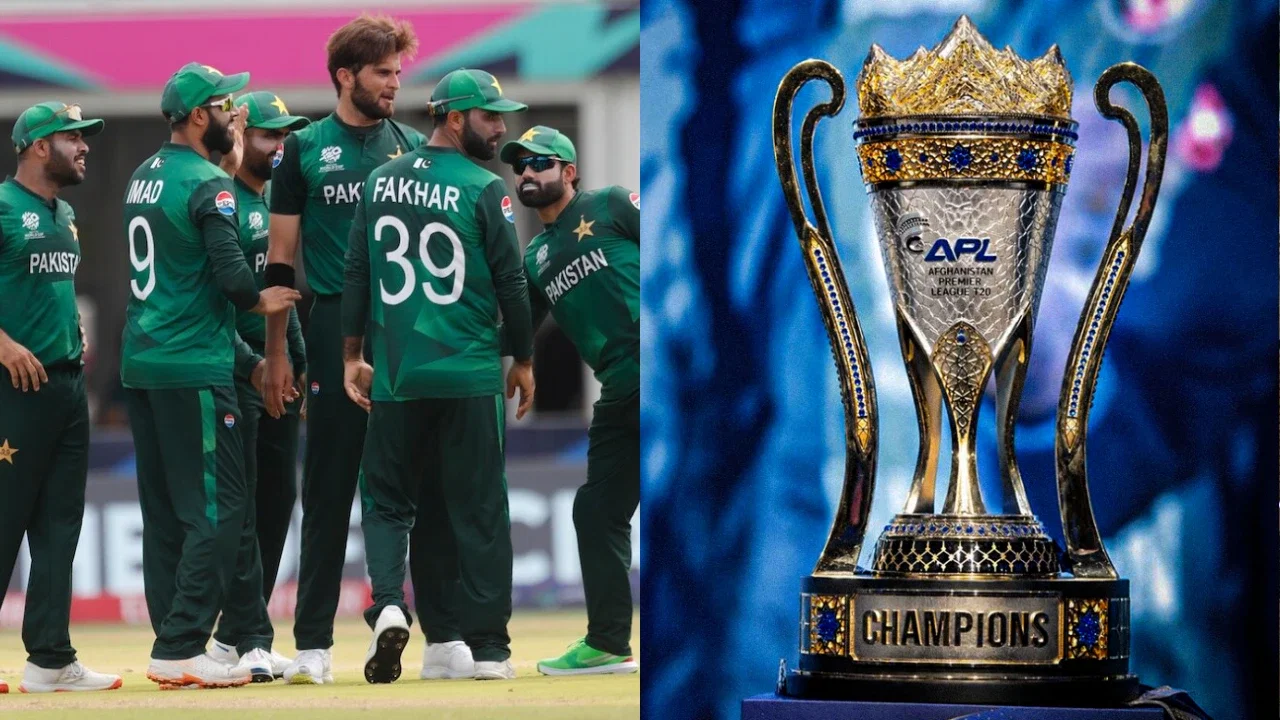
Prediction: Pakistan Declines Participation in Afghanistan Premier League 2026 Amid Rising Diplomatic Tensions
The recent developments within the cricketing landscape of South Asia signal a significant shift, as the Pakistan Cricket Board (PCB), under the leadership of Mohsin Naqvi, has officially refused to allow Pakistani cricketers to participate in the upcoming Afghanistan Premier League (APL) 2026. This decision, rooted in escalating political and diplomatic tensions between Pakistan and Afghanistan, underscores how geopolitics continue to influence sports, particularly cricket, in this volatile region.
Background: The Growing Rift Between Pakistan and Afghanistan
Cricket in South Asia is more than just a sport; it is a cultural phenomenon that unites millions. However, the political relationship between Pakistan and Afghanistan has been fraught with longstanding issues, including border disputes, allegations of safe havens for militant groups, and military conflicts. These tensions have periodically spilled over into the cricketing arena, impacting players, leagues, and bilateral sporting engagements.
The recent decision by the PCB to bar Pakistani players from participating in the APL 2026 can be seen as a reflection of this strained relationship. The move comes at a time when diplomatic efforts to de-escalate tensions have faltered, leading to a more cautious approach from Islamabad regarding engagement with Afghanistan’s cricketing ventures.
Details of the Decision: No Objection Certificates and Player Participation
As reported by multiple Pakistani media outlets, the Afghanistan Premier League’s franchises, Balkh Zwanan and Kandahar Warriors, approached four Pakistani cricketers for participation in the 2026 edition. Additionally, they sought coaching assistance from two former Pakistani cricket icons. Despite the interest from Afghan franchises, all attempts to secure Pakistani players and coaches were ultimately unsuccessful.
The Pakistan government, after consultations with the PCB, explicitly instructed that no Pakistani current or former players should partake in the APL. Consequently, the PCB announced it would not issue No Objection Certificates (NOCs), which are mandatory for Pakistani players to participate in foreign leagues. This effectively bars Pakistani cricketers from joining the APL, signaling a firm stance influenced by the broader political climate.
Sources within the PCB confirmed that the decision was made in response to the ongoing tensions and conflicts between the two nations, emphasizing that sports cannot be isolated from the geopolitical realities of the region.
Implications for Pakistani Cricketers and the Regional Cricketing Landscape
This decision has far-reaching implications for Pakistani cricketers, especially those aspiring to expand their careers through international leagues. The APL, which aims to promote cricket in Afghanistan and foster regional cooperation, now faces an uncertain future regarding participation from Pakistani players. The move also raises questions about the future of cross-border cricketing initiatives, which have historically served as a diplomatic bridge in South Asia.
Furthermore, the situation echoes the controversy surrounding the Pakistan Super League (PSL) 2026, where several prominent Afghanistan cricketers withdrew from the tournament. Notably, Rahmanullah Gurbaz had initially signed with Peshawar Zalmi but later withdrew, citing scheduling conflicts amidst social media backlash and worsening diplomatic ties. Other Afghan players, including Mohammad Nabi and Mujeeb Ur Rahman, followed suit, citing workload concerns and restrictions imposed by the Afghanistan Cricket Board (ACB).
The ACB’s decision to limit players’ participation in overseas leagues to three per year, excluding the PSL and Bangladesh Premier League, reflects a strategic move to prioritize domestic cricket and manage workloads amid diplomatic tensions. This restriction has been interpreted as a response to the deteriorating relations with neighboring countries, particularly Pakistan.
Political Tensions: The Underlying Catalyst
The core issue behind these cricketing restrictions lies in the complex and often tense political landscape. Pakistan has long accused the Afghan Taliban administration of providing sanctuary to the Tehrik-e-Taliban Pakistan (TTP), which Islamabad blames for numerous attacks within Pakistan’s borders. Conversely, the Taliban government denies these allegations, maintaining that they are committed to regional stability.
The dispute over the Durand Line — the international border between Afghanistan and Pakistan — remains unresolved, fueling further mistrust. Cross-border military operations, including Pakistan’s reported “Operation Ghazab lil-Haq,” and retaliatory attacks have exacerbated the already fragile relations. In February 2026, Pakistan declared an open-war situation, marking a significant escalation of hostilities.
While international mediators like China have attempted to broker peace, these efforts have yet to yield tangible results, leaving the region embroiled in uncertainty. The current cricketing fallout is a manifestation of these broader geopolitical struggles, illustrating how diplomacy and sports are intertwined in South Asia’s complex tapestry.
Public Response and Future Outlook
The Pakistani public and cricketing community have largely supported the PCB’s decision, viewing it as a necessary step to uphold national interests amid turmoil. Social media has been abuzz with support for the PCB’s stance, with many praising the move as a “prediction” of the broader geopolitical reality that sports cannot be divorced from diplomacy.
Analysts predict that this move might set a precedent for other countries in the region to adopt a more cautious approach towards cross-border sporting events. The recent withdrawal of Pakistani players from the Afghanistan Premier League and the restrictions imposed by the Afghanistan Cricket Board highlight a trend where political disagreements directly influence cricketing opportunities.
Looking ahead, the prediction remains that unless there is a significant easing of tensions, regional cricket leagues like the APL will continue to face hurdles in involving Pakistani players. The situation underscores a broader challenge: balancing sports diplomacy with national sovereignty and security concerns.
Conclusion: The Intersection of Cricket and Geopolitics
The decision by the PCB to prohibit Pakistani players from participating in the Afghanistan Premier League 2026 is more than a sports policy—it is a reflection of the current geopolitical climate. As the region grapples with unresolved conflicts, cross-border tensions, and diplomatic disputes, sports continue to serve as both a mirror and a battleground for these larger issues.
While cricket has historically acted as a unifying force in South Asia, recent developments suggest that political realities are increasingly dictating the boundaries of sporting engagement. The prediction is clear: unless diplomatic relations improve, collaborations like the APL face an uncertain future, and the intersection of politics and cricket will remain a defining feature of the region’s sporting landscape.
In the meantime, fans and stakeholders will be watching closely to see how these developments unfold, with the hope that someday soon, cricket can once again serve as a bridge for peace and cooperation in South Asia.
Latest News
Virat Kohli leaves himself out, picks 7 legends to build his ultimate ODI batter
Ravichandran Ashwin among three to have stands named after them at Chepauk
Aakash Chopra wants Mohammed Siraj in India’s XI for 2nd ODI vs West Indies

Shree Charani surpasses Megan Schutt’s record in ICC T20I rankings
Mohit Sharma set for CSK return in new role ahead of 2027 IPL season
Virat Kohli or Sachin Tendulkar? Mohammad Kaif settles the GOAT debate

SA vs AUS Playing 11 Today, Live Streaming, Pitch & Weather: South Africa vs Australia 3rd ODI, 2026
Rohit Sharma or Virat Kohli: Kuldeep Yadav reveals the hardest captain to convince for DRS
Mohsin Naqvi’s PCB bans Pakistan cricketers from playing Afghanistan Premier League
Rohit Sharma admits he was a fan of Virat Kohli’s Test captaincy
Rohit Sharma reveals his 2027 World Cup chats with Virat Kohli
“People want masala”: After Virat Kohli, Rohit Sharma reacts to ‘Ro-Ko’ moniker

Watch: Rohit Sharma stumbles and nearly falls during IND vs WI 1st ODI
Nathan Ellis, Joel Davies leave Australia’s South Africa tour injured