

Nitish Kumar Reddy equals Stuart Binny’s unwanted record after conceding 32 runs in 4th T20I vs New Zealand
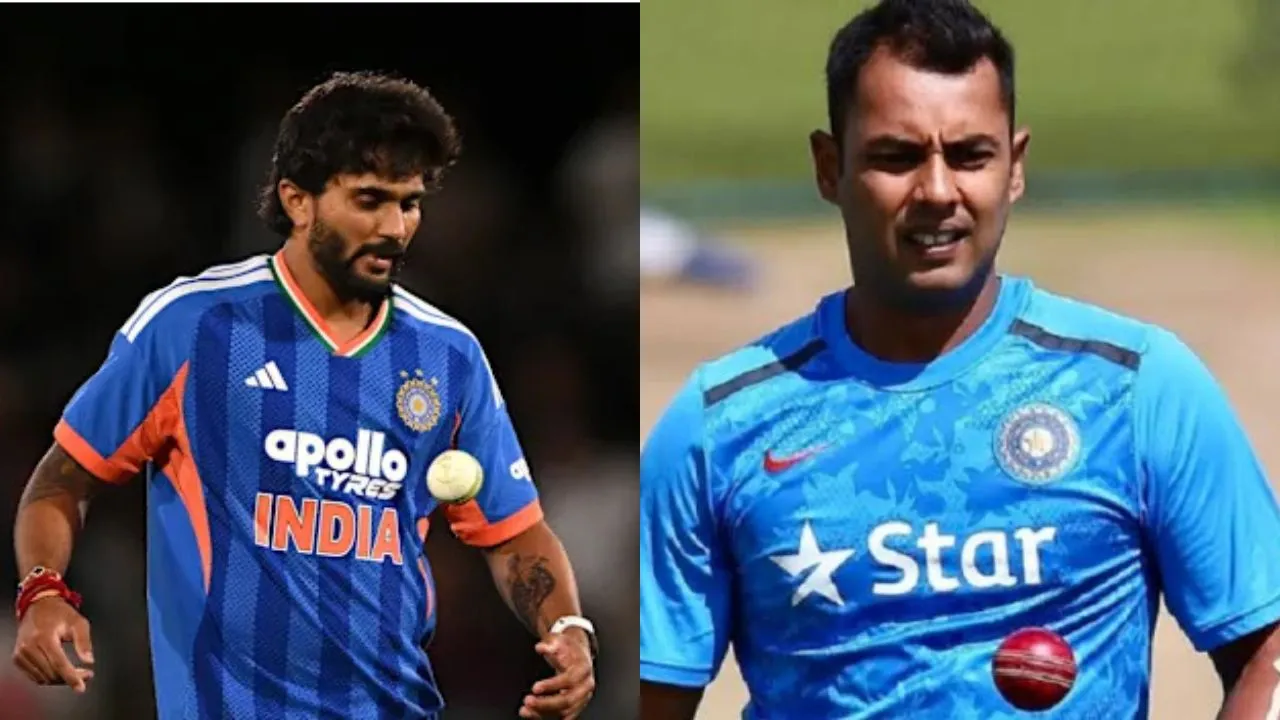
Nitish Kumar Reddy Concedes 32 Runs in an Over as Glenn Phillips Powers New Zealand to 259
India had already secured the T20I series before the fourth match, but the contest at Eden Park in Auckland delivered a sharp reminder that a settled series can still produce a demanding night for individual players. New Zealand’s batters attacked from the middle overs, led by a spectacular century from Glenn Phillips, while India all-rounder Nitish Kumar Reddy endured a difficult spell that brought an unwanted record.
Reddy conceded 64 runs from his four overs, including 32 in a single over, as New Zealand piled up 259 for seven. The figure matched the second-most runs conceded by an Indian bowler in one T20I over. Although the result of the wider series was already decided, the performance offered plenty for both sides to assess ahead of their next match.
Reddy’s costly 16th over changes the momentum
Reddy’s most challenging passage came in the 16th over, when Phillips took control of the attack. The Indian all-rounder began with a dot ball, but the over quickly turned into a run-scoring surge. A no-ball and a boundary gave New Zealand additional momentum, and Phillips followed up with a sequence of sixes to punish the bowling.
The over cost India 32 runs, placing Reddy alongside Stuart Binny for the second-highest number of runs conceded by an Indian in a single T20I over. Binny had also given away 32 runs against the West Indies in Lauderhill in 2016. The highest mark in the list belongs to Shivam Dube, who conceded 34 runs against New Zealand at Mount Maunganui in 2020.
Most runs conceded by an Indian in a T20I over:
- 34 runs: Shivam Dube vs New Zealand, Mount Maunganui, 2020
- 32 runs: Stuart Binny vs West Indies, Lauderhill, 2016
- 32 runs: Nitish Kumar Reddy vs New Zealand, Auckland, 2026
- 29 runs: Ravi Bishnoi vs England, Manchester, 2026
Reddy finished with one wicket, but the final figures do not tell the full story of his recent contribution. He had taken three wickets during the series and had generally been used as a fifth bowling option. In the third match, he recorded his best spell of the series, taking one wicket for 31 runs in four overs. One expensive outing, particularly in a high-scoring T20I, does not erase that earlier work—but it will give the team a clear point to review.
Phillips and Bracewell drive New Zealand’s huge total
Phillips was the central figure in New Zealand’s innings, striking 107 from just 49 deliveries. His century featured 10 sixes and six fours, with the power-hitting putting pressure on India’s bowlers and forcing the fielding side to adjust repeatedly. His ability to attack both pace and spin made it difficult for India to slow the scoring once he had settled.
Michael Bracewell added another major burst, scoring 65 from only 25 balls. His innings ensured New Zealand did not rely on Phillips alone and gave the hosts a strong finish to their 20 overs. The pair’s contrasting contributions—a commanding hundred followed by a rapid late assault—helped New Zealand reach 259 for seven, a formidable target even on a ground known for producing entertaining, high-scoring cricket.
India had won the toss and elected to bowl first. The visitors made two changes, bringing in Ishan Kishan and Mayank Yadav in place of Vaibhav Sooryavanshi and Bhuvneshwar Kumar. Despite the adjustments, India struggled to contain New Zealand’s middle-order attack, especially when Phillips and Bracewell found their rhythm.
India’s series success provides important context
The heavy scoring came after India had taken an unassailable lead by winning the first three matches. Under captain Shreyas Iyer, the team had produced a strong run of performances, combining aggressive batting with effective spells at key moments. The series win was also a significant milestone for Iyer, marking his first series victory in the SENA nations—South Africa, England, New Zealand and Australia.
India’s third-match chase had been particularly emphatic. Facing a target of 199, the team reached it in just 13.2 overs, powered by Abhishek Sharma’s extraordinary 113 from 38 deliveries. That result highlighted the depth and attacking intent in India’s batting order, even as the fourth match presented a very different challenge for the bowlers.
Reddy also contributed with the bat in the fourth T20I, scoring 21 from 10 deliveries as India found themselves under pressure during the chase. His quick runs added some urgency, but New Zealand’s total meant India needed a sustained assault rather than isolated bursts of scoring.
What the fourth T20I means for both teams
For New Zealand, the innings was a statement of batting depth. Phillips’ century demonstrated how quickly a T20I can shift when a set batter targets the boundary, while Bracewell’s explosive support showed the value of having another finisher capable of scoring at a high rate. Their performance also offered the hosts a blueprint for challenging India: maintain pressure through the middle overs and make every bowling change difficult to execute.
For India, the match is a chance to examine their bowling plans without losing sight of the broader series achievement. At Eden Park, a short boundary can reward clean hitting, but bowlers still need to vary pace, use changes of angle and avoid predictable lengths. Reddy’s costly over will attract attention because of the record, yet the team’s wider review is likely to consider how the attack handled Phillips and Bracewell throughout the innings.
Prediction: If India meet New Zealand again in similar conditions, the contest could once more hinge on controlling the middle overs. India’s batting has shown it can chase a daunting target, as the 199-run pursuit demonstrated, but restricting New Zealand’s power hitters will be essential. The fourth T20I may be remembered for Reddy’s unwanted record, yet it also underlined the value of adapting quickly when a batter like Phillips is in full flow.
Latest News

SA vs BAN Playing 11 Today, Live Streaming, Pitch & Weather: South Africa tour of Bangladesh 2026, 2nd Test

AUS vs ENG Playing 11 Today, Live Streaming, Pitch & Weather: England tour of Australia 2026, 2nd T20I

Blair Tickner ruled out of 2nd Test vs India, replacement named

Tim Paine and Justin Langer face fresh questions over Australia’s ball-tampering scandal

India tour of Bangladesh gets fresh hope as BCB confirms talks with BCCI

Tom Latham opens up on soft ball problem and saliva ban after draw against India

Ajinkya Rahane slams Tilak Varma for publicly criticising Shahbaz Ahmed after India A’s defeat

ICC to introduce IPL-style bat checks in international cricket

“Smiling Laughing doesn’t happen”: R Ashwin’s dig at India’s approach after draw vs New Zealand

“Not good enough for Test cricket”: Scott Styris, Sunil Gavaskar slam Wellington pitch

Dodda Ganesh declares India ‘out of WTC final race’ after Wellington Test draw

Ajinkya Rahane criticises Shubman Gill for abusing Akash Deep in 1st Test vs New Zealand

‘Why so many boundary riders?’ Dinesh Karthik questions Shubman Gill’s captaincy after Wellington Test

“I just want to enjoy my life”: Yash Dayal reflects on his return to cricket


