

Only second time in history: Virat Kohli, Rohit Sharma fall for ducks in same ODI
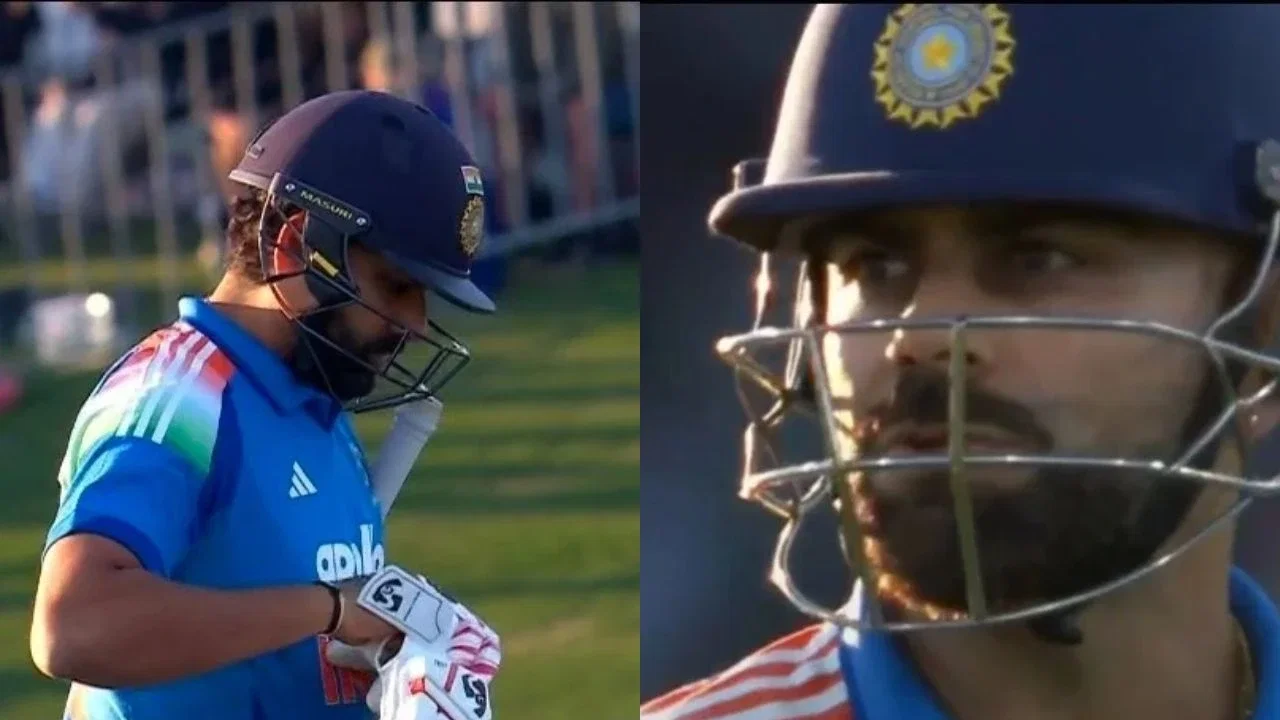
Matt Henry’s Stunning First-Over Spell Leaves India Reeling in Fourth ODI
New Zealand fast bowler Matt Henry produced a remarkable opening over against India in the fourth ODI at Bay Oval, Mount Maunganui, removing Rohit Sharma, Virat Kohli and Shreyas Iyer without conceding a run. Chasing a daunting target of 334, India lost three of its most important batters almost immediately, turning a demanding pursuit into an uphill battle.
Henry’s burst gave New Zealand exactly the kind of start it needed while defending 333. After winning the first two matches of the five-game series, India had been looking to strengthen its position. The third ODI was washed out, leaving the hosts under pressure to respond. Henry’s opening-over demolition supplied a dramatic answer—and became the defining moment of the match’s early stages.
Rohit Sharma Falls to the First Ball
Henry struck with the very first delivery of India’s chase. Bowling a testing length, the New Zealand quick found movement away from Rohit and generated enough bounce to make the ball difficult to control. Rohit was drawn into playing, but the delivery took the outside edge and flew towards first slip.
Finn Allen held on to the catch, sending Rohit back for a golden duck. The dismissal immediately lifted the home crowd and put India on the back foot before the chase had properly begun. It was a classic new-ball breakthrough: disciplined length, movement in the air or off the pitch, and a sharp catch in the cordon.
For India, losing Rohit on the opening delivery was especially costly. As an experienced opener, he is often expected to set the tempo in a large chase, combining early caution with the ability to accelerate. Instead, the visitors had to reorganize their plans almost at once, with the pressure shifting to the batters coming in behind him.
Virat Kohli Bowled for a Four-Ball Duck
Henry’s next major blow came only a few deliveries later. Virat Kohli faced a length ball that moved sharply back into him and stayed low. Kohli tried to defend, but the inward movement left a gap between bat and pad. The ball slipped through and hit the stumps, dismissing him for a four-ball duck.
The wicket was a striking example of how quickly a fast bowler can exploit uncertainty at the start of an innings. After Rohit’s dismissal had forced India to absorb pressure, Kohli’s departure left the visitors without two of their most experienced top-order batters. Henry had not relied on pace alone: the change in direction and the low bounce made the delivery particularly difficult to negotiate.
The rare double dismissal also drew attention because Rohit and Kohli have both been dismissed for ducks in the same ODI only twice. The previous instance came against Sri Lanka in Dambulla in 2010. Their matching scores at Mount Maunganui, 16 years later, created an unusual statistical footnote to an already extraordinary over.
Shreyas Iyer Completes the Triple-Wicket Maiden
Henry was not finished. He followed the two high-profile wickets by trapping Shreyas Iyer lbw, completing a triple-wicket maiden—the dismissal of three batters in an over without conceding a run. Iyer was struck while attempting to deal with another sharp delivery that came back into him. The on-field umpire initially rejected the appeal, but New Zealand reviewed the decision.
Ball-tracking showed the ball hitting the stumps, overturning the original call and confirming Iyer’s dismissal for a golden duck. In the space of one over, India had lost three batters for no runs, and Henry had transformed New Zealand’s defence into a commanding position.
A triple-wicket maiden is rare in ODI cricket because it requires a bowler to combine accuracy, movement and the ability to capitalize on each new batter’s immediate pressure. Henry achieved all three. The sequence also demonstrated the value of New Zealand’s review: with the umpire’s decision initially going against them, the successful challenge ensured the third wicket counted.
Why Henry’s Spell Changed the Chase
India began the innings needing 334 runs, a substantial but achievable target in modern one-day cricket. However, losing three wickets in the opening over radically altered the equation. The remaining batters had to balance two competing priorities: rebuild the innings and keep the required scoring rate within reach.
That is the strategic impact of an early collapse. A team chasing a big total usually wants its top order to provide a stable platform, allowing the middle order to attack later. When the leading batters depart immediately, the incoming players may need to spend valuable overs rebuilding rather than scoring freely. New Zealand, meanwhile, could attack with close catchers and maintain pressure while the ball was still new.
Henry’s performance also highlighted the importance of conditions at Bay Oval. The ground’s coastal setting can offer fast bowlers assistance when there is movement in the air or moisture in the surface. When a bowler consistently lands the ball in the right area, even accomplished batters can be forced into difficult decisions. Henry’s combination of bounce, seam movement and control made the first over especially threatening.
New Zealand’s Series Stakes
The fourth ODI carried added significance for New Zealand after India had taken the first two matches and the third had been abandoned. The hosts needed a strong performance to keep the series contest alive, and defending a total of 333 gave their bowlers a sizeable cushion—but it still required early breakthroughs against a powerful Indian batting lineup.
Henry delivered those breakthroughs in spectacular fashion. His spell offered New Zealand an immediate opportunity to dictate the match, while India faced the challenge of recovering from a start few teams could plan for. The opening over also reinforced a familiar lesson in ODI cricket: a large target can appear manageable, but the loss of key wickets before the innings settles can change the entire outlook.
Match Prediction: Can India Recover from the Early Collapse?
Any match prediction after Henry’s opening over had to account for the scale of India’s setback. Three wickets down without scoring left the visitors needing a substantial partnership just to restore some stability. New Zealand, by contrast, could press its advantage with attacking fields and continued pressure from the fast bowlers.
Still, a dramatic start does not automatically decide an ODI. India’s recovery depended on its middle and lower order finding a way to rebuild without allowing the required rate to climb beyond reach. For New Zealand, the challenge was to maintain discipline rather than assume the match was already won. Henry’s first over gave the hosts a powerful platform; the contest would ultimately depend on whether they could turn that momentum into sustained control.
Regardless of the final result, Henry’s three-wicket opening over was an unforgettable display of fast bowling. Removing Rohit, Kohli and Iyer in succession combined skill, precision and a successful review into one extraordinary passage of play—one that instantly placed the fourth ODI among the most dramatic starts of the series.
Latest News

SA vs BAN Playing 11 Today, Live Streaming, Pitch & Weather: South Africa tour of Bangladesh 2026, 2nd Test

AUS vs ENG Playing 11 Today, Live Streaming, Pitch & Weather: England tour of Australia 2026, 2nd T20I

Blair Tickner ruled out of 2nd Test vs India, replacement named

Tim Paine and Justin Langer face fresh questions over Australia’s ball-tampering scandal

India tour of Bangladesh gets fresh hope as BCB confirms talks with BCCI

Tom Latham opens up on soft ball problem and saliva ban after draw against India

Ajinkya Rahane slams Tilak Varma for publicly criticising Shahbaz Ahmed after India A’s defeat

ICC to introduce IPL-style bat checks in international cricket

“Smiling Laughing doesn’t happen”: R Ashwin’s dig at India’s approach after draw vs New Zealand

“Not good enough for Test cricket”: Scott Styris, Sunil Gavaskar slam Wellington pitch

Dodda Ganesh declares India ‘out of WTC final race’ after Wellington Test draw

Ajinkya Rahane criticises Shubman Gill for abusing Akash Deep in 1st Test vs New Zealand

‘Why so many boundary riders?’ Dinesh Karthik questions Shubman Gill’s captaincy after Wellington Test

“I just want to enjoy my life”: Yash Dayal reflects on his return to cricket


