

Pakistan remove Saim Ayub from ODI squad, name Sahibzada Farhan as replacement
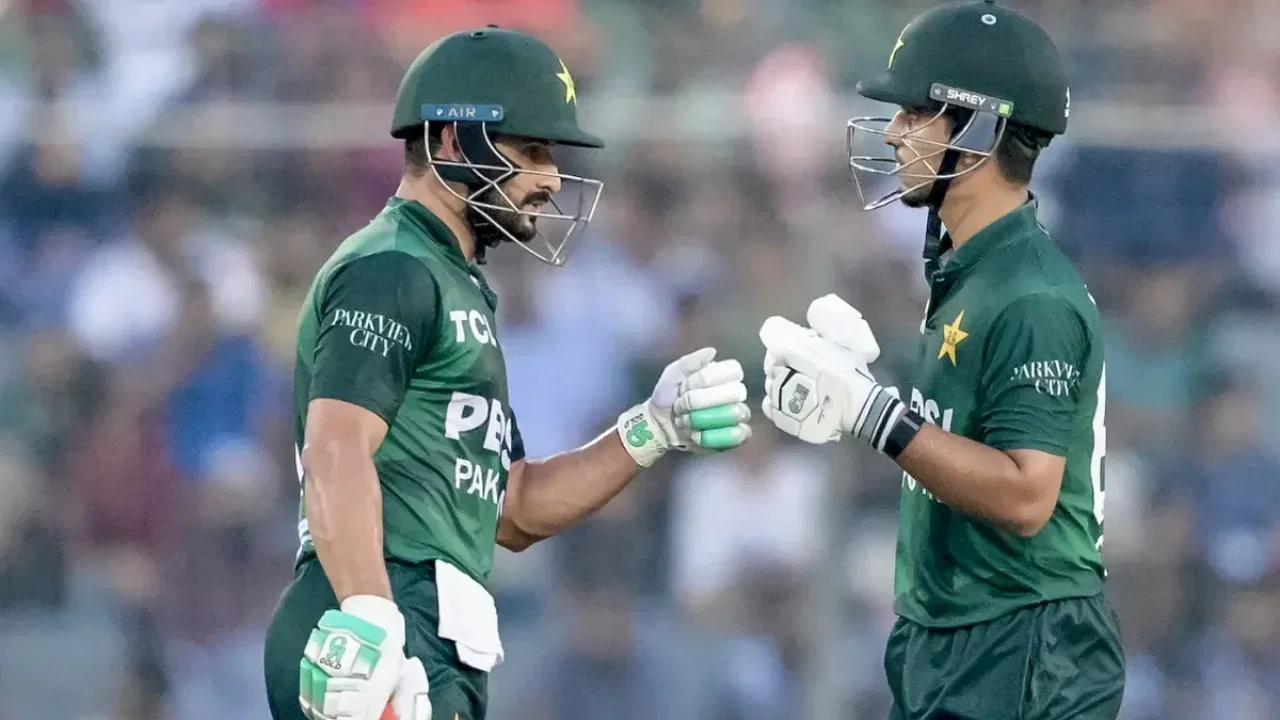
Saim Ayub Leaves Pakistan’s ODI Tri-Series to Rebuild Batting Confidence
Pakistan opener Saim Ayub has been released from the ongoing ODI tri-series after asking to return to domestic cricket and work on his batting form. The Pakistan Cricket Board (PCB) accepted the request following discussions involving the player, team management and head coach Mike Hesson.
The decision comes after Ayub managed only 21 runs across three innings against Sri Lanka and England. Pakistan have already secured a place in the tri-series final after winning their first three matches, giving the team an opportunity to make a change before the knockout game. Sahibzada Farhan has been selected as Ayub’s replacement for the remainder of the tournament.
PCB Backs Ayub’s Request for a Domestic Cricket Reset
Senior Pakistani journalist Abdul Majid Bhatti reported that Ayub approached the team management because he wanted to regain confidence and address his batting concerns through domestic cricket. The PCB subsequently confirmed that the request had been accepted by the management and national selection committee.
In its statement, the board said it respected Ayub’s decision and appreciated his honest assessment of his current form. It added that the selection committee had named Farhan as his replacement for the rest of the series.
The move appears to be a considered step rather than a judgement on Ayub’s long-term prospects. A return to domestic competition can give a batter more time at the crease and a chance to work through technical or mental adjustments away from the immediate pressure of international results. For a young player still establishing himself in Pakistan’s top order, that opportunity may prove valuable.
Three Brief Innings Against Sri Lanka and England
Ayub’s tri-series campaign began with a seven-run innings from eight balls against Sri Lanka on October 18. Left-arm fast bowler Dilshan Madushanka ended his stay at the crease. In his next appearance, against England, Ayub made eight from six deliveries before being dismissed by Sonny Baker.
His final outing in the tournament brought six runs from 12 balls, with Henry Crocombe taking his wicket. Across the three innings, Ayub scored 21 runs without getting the chance to build a substantial partnership or settle into a longer innings.
Those returns stand out because Ayub is generally valued for his ability to attack early and put pressure on opposing bowlers. However, aggressive opening batters can be vulnerable when they are searching for timing or trying to force momentum. The short sequence of scores does not, by itself, define his ability—but it has given the player and management a reason to pause and reassess.
Farhan Steps Into the Squad
Sahibzada Farhan will join Pakistan for the remainder of the tri-series, including the final league match against Sri Lanka at Gaddafi Stadium in Lahore on Tuesday, October 27. His inclusion gives the selectors another option at the top of the order as Pakistan prepare for the final.
Farhan’s international ODI record is still developing. He has scored 101 runs in six matches at an average of 16.83 and a strike rate of 75.93. His domestic List A record, however, offers a broader picture of his experience: 3,165 runs in 81 matches at an average of 40.06, with eight centuries and 20 half-centuries.
That domestic consistency could be relevant as Pakistan weigh their batting combinations. Farhan’s selection gives him a chance to translate his List A form to the international stage, though his immediate role and position in the lineup will depend on the team’s plans for the final.
Ayub’s ODI Record Offers a More Complete Picture
Although Ayub’s latest scores have been modest, his overall ODI record suggests the tri-series is a temporary dip rather than a complete reflection of his potential. He has made 772 runs in 20 ODIs at an average of 40.63 and a strike rate of 99.36. His tally includes three centuries and three half-centuries, with a highest score of 113 not out.
Those figures underline why Pakistan have invested in Ayub as an attacking option at the top of the order. His ability to score quickly while also producing substantial innings has made him an important part of the team’s plans. The challenge now is to rediscover that balance after a difficult run of appearances.
His numbers across other formats have been less consistent. In Test cricket, Ayub has scored 364 runs in nine matches at an average of 22.75, including three half-centuries. In T20 internationals, he has accumulated 1,356 runs in 71 matches and 67 innings, averaging 21.19 at a strike rate of 136.42, with six half-centuries.
What the Decision Could Mean for Pakistan
Pakistan’s choice to accept Ayub’s request reflects the importance of managing form and confidence alongside selection demands. With qualification for the final already secured, the team has room to assess its options while Ayub focuses on rebuilding his rhythm in domestic cricket.
The key question is how quickly he can turn that opportunity into stronger performances. Regular time in the middle may help him sharpen his shot selection, regain timing and return to international cricket with renewed assurance. For Pakistan, a confident Ayub would add an attacking dimension to the opening partnership and strengthen the batting order ahead of future assignments.
For now, the tri-series final will offer a fresh test for Farhan and the rest of the Pakistan lineup. Ayub’s next steps will be watched closely, but his established ODI record provides a reason for measured optimism. The prediction for his return will ultimately depend on how he responds in domestic matches—and whether he can convert renewed confidence into consistent runs.
Latest News

SA vs BAN Playing 11 Today, Live Streaming, Pitch & Weather: South Africa tour of Bangladesh 2026, 2nd Test

AUS vs ENG Playing 11 Today, Live Streaming, Pitch & Weather: England tour of Australia 2026, 2nd T20I

Blair Tickner ruled out of 2nd Test vs India, replacement named

Tim Paine and Justin Langer face fresh questions over Australia’s ball-tampering scandal

India tour of Bangladesh gets fresh hope as BCB confirms talks with BCCI

Tom Latham opens up on soft ball problem and saliva ban after draw against India

Ajinkya Rahane slams Tilak Varma for publicly criticising Shahbaz Ahmed after India A’s defeat

ICC to introduce IPL-style bat checks in international cricket

“Smiling Laughing doesn’t happen”: R Ashwin’s dig at India’s approach after draw vs New Zealand

“Not good enough for Test cricket”: Scott Styris, Sunil Gavaskar slam Wellington pitch

Dodda Ganesh declares India ‘out of WTC final race’ after Wellington Test draw

Ajinkya Rahane criticises Shubman Gill for abusing Akash Deep in 1st Test vs New Zealand

‘Why so many boundary riders?’ Dinesh Karthik questions Shubman Gill’s captaincy after Wellington Test

“I just want to enjoy my life”: Yash Dayal reflects on his return to cricket


