

“Pakistan was far superior”: Shoaib Akhtar sends message to India U19 over aggressive celebrations
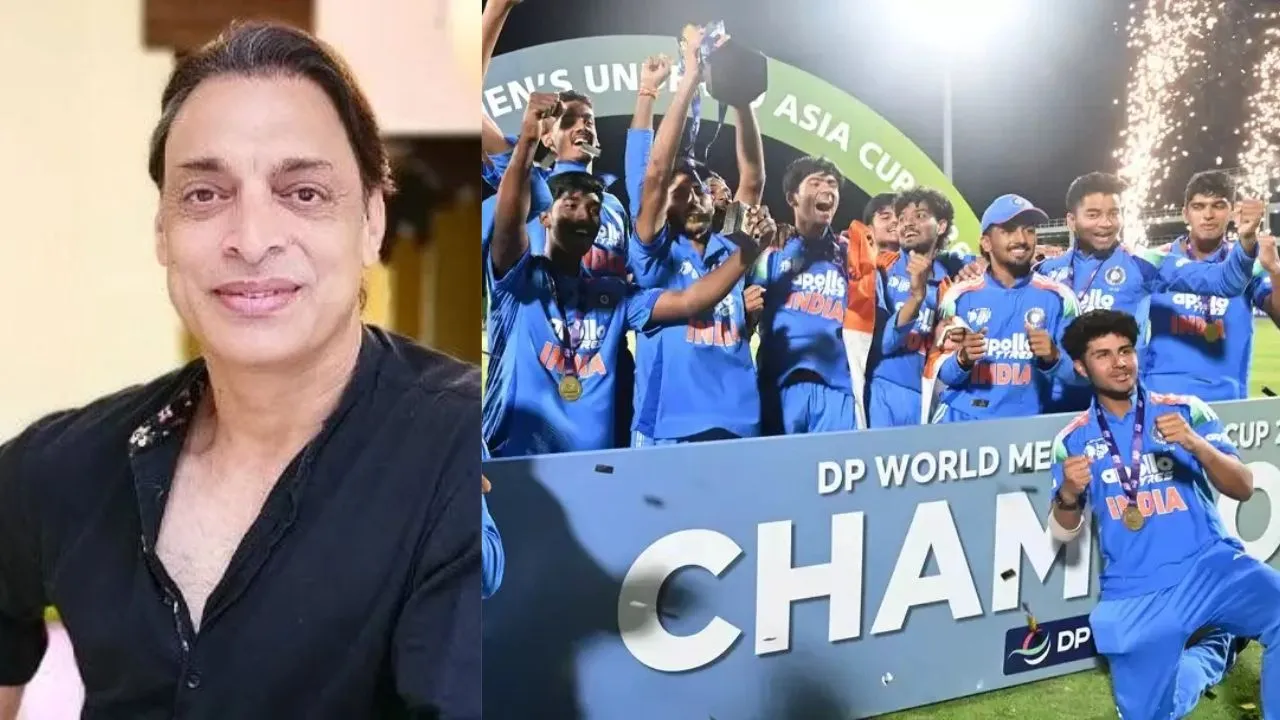
India U19 Beat Pakistan by One Wicket in Dramatic Asia Cup Final
India’s Under-19 team produced a remarkable last-ball comeback to defeat Pakistan by one wicket in the ACC Men’s U19 Asia Cup 2026 final at Al Amerat Cricket Ground (Ministry Turf 2) in Oman. Chasing a formidable target of 338, India appeared to be slipping out of contention after a middle-order collapse, only for its lower order to deliver a memorable finish.
The result added another chapter to one of youth cricket’s fiercest rivalries. Former Pakistan fast bowler Shoaib Akhtar congratulated India after the match, praising the team’s aggression while arguing that Pakistan had been the stronger side for much of the tournament. In his view, the final turned on a familiar difference between the teams: India’s ability to remain composed when the pressure is at its highest.
Shoaib Akhtar Praises India’s Aggression and Composure
Speaking on PTV Sports, Akhtar acknowledged India’s spirited approach and congratulated the young players on their victory. He also suggested that Pakistan had performed better overall during the competition but failed to close out the final when it mattered most.
“My message to Indian kids: Beta (son), do show the aggression—I liked it. But Pakistan was a far superior team, so much better throughout the tournament. Somehow, they couldn’t handle the pressure. As always, India knows how to handle the pressure in crunch moments,” Akhtar said.
His comments captured the contrast between Pakistan’s strong position and India’s eventual resilience. Pakistan had already beaten India in the group stage, so the final offered the Indian side an opportunity to respond. Rather than allowing the early setbacks to dictate the chase, India’s lower order kept the target within reach and made the most of the final overs.
India’s Record Against Pakistan in U19 ODIs
The U19 rivalry remains closely contested. India and Pakistan have met 32 times in the format, with India recording 17 victories and Pakistan winning 15. Their first meeting dates back to 1988, and the narrow gap in results reflects how competitive these encounters have been across generations.
The 2026 final also served as a response to Pakistan’s group-stage win, when the team prevailed by three wickets in another close contest. That earlier result gave Pakistan confidence, but the final brought a different test: sustaining control through a high-scoring first innings and then defending the total against a determined chase.
Recent finals between the countries have added further intensity to the rivalry. The supplied account notes that India has won the last three finals against Pakistan across competitions, including senior-level meetings and this U19 decider. For young players, those results can become part of the wider context surrounding each match—though the pressure of a final still has to be managed in real time.
Pakistan Builds a Huge Total After Choosing to Bat
After winning the toss, Pakistan elected to bat first and made the most of the opportunity. Opener Usman Khan led the innings with an outstanding 107, giving his side a strong platform. Abdul Qadir added 80, while captain Farhan Yousaf contributed 63 as Pakistan’s batters repeatedly found ways to keep the scoreboard moving.
The combined effort carried Pakistan to 337 for nine in 50 overs, a total that placed substantial pressure on India. A target of 338 in a final demands both patience and a high scoring rate: batters must avoid a collapse without letting the required run rate become unmanageable. Pakistan’s innings appeared to have set up a commanding position, particularly after its bowlers began taking wickets during the middle stages of the chase.
Aaryavir Sehwag Gives India an Early Platform
India began its response with intent. Opener Aaryavir Sehwag scored 58, while captain Lakshya Rajesh Raichandani made 80. Their partnership helped India establish momentum and showed that the target was not beyond reach, even against a strong Pakistan attack.
Sehwag’s contribution was especially notable because it came in a final where India needed a confident start. His half-century helped reduce the scale of the chase and gave the middle order a platform. The supplied report also identifies him as Player of the Tournament, a recognition of his broader impact during the competition, not just his performance in the final.
However, Pakistan fought back as wickets fell in the middle overs. With India’s established batters dismissed, the required runs began to look increasingly difficult to find. At that stage, the contest shifted from a conventional top-order chase to a test of lower-order skill, decision-making and nerve.
Manal Chauhan and Mohit Ulva Complete the Comeback
Manal Chauhan helped keep India in the contest with a valuable 47. His innings was crucial in preventing Pakistan from ending the chase quickly and gave the remaining batters a chance to build a late partnership. Mohit Ulva then produced one of the most important contributions of the match, finishing unbeaten on 49.
India reached the target on the final ball to secure a one-wicket victory, turning a difficult chase into a defining moment for the team. The finish underlined why lower-order contributions can be decisive in limited-overs cricket. When a side loses wickets in clusters, even a patient innings from a bowler or lower-order batter can change the outcome.
For Pakistan, the defeat will raise questions about how the team managed its advantage after posting 337. A large total can create confidence, but it does not guarantee control—especially when the opposition retains batters capable of scoring under pressure. India, meanwhile, will take encouragement from its ability to keep competing after the match appeared to be slipping away.
What the Final Means for Both Teams
The final was more than a close scoreline. It offered a lesson in pressure management, partnerships and the value of staying in a game until the last delivery. Pakistan’s strong batting performance and group-stage win demonstrated its quality, while India’s final-ball success showed how composure can turn a difficult position into a title-winning opportunity.
Any prediction about future India-Pakistan U19 meetings remains uncertain, given how evenly matched the teams have been over time. This final suggests that small moments—an extra partnership, a missed chance or a calm decision in the closing overs—may matter more than pre-match expectations. For fans, it was a compelling reminder of why the rivalry continues to draw attention: the outcome can remain undecided until the very end.
Latest News

SA vs BAN Playing 11 Today, Live Streaming, Pitch & Weather: South Africa tour of Bangladesh 2026, 2nd Test

AUS vs ENG Playing 11 Today, Live Streaming, Pitch & Weather: England tour of Australia 2026, 2nd T20I

Blair Tickner ruled out of 2nd Test vs India, replacement named

Tim Paine and Justin Langer face fresh questions over Australia’s ball-tampering scandal

India tour of Bangladesh gets fresh hope as BCB confirms talks with BCCI

Tom Latham opens up on soft ball problem and saliva ban after draw against India

Ajinkya Rahane slams Tilak Varma for publicly criticising Shahbaz Ahmed after India A’s defeat

ICC to introduce IPL-style bat checks in international cricket

“Smiling Laughing doesn’t happen”: R Ashwin’s dig at India’s approach after draw vs New Zealand

“Not good enough for Test cricket”: Scott Styris, Sunil Gavaskar slam Wellington pitch

Dodda Ganesh declares India ‘out of WTC final race’ after Wellington Test draw

Ajinkya Rahane criticises Shubman Gill for abusing Akash Deep in 1st Test vs New Zealand

‘Why so many boundary riders?’ Dinesh Karthik questions Shubman Gill’s captaincy after Wellington Test

“I just want to enjoy my life”: Yash Dayal reflects on his return to cricket


