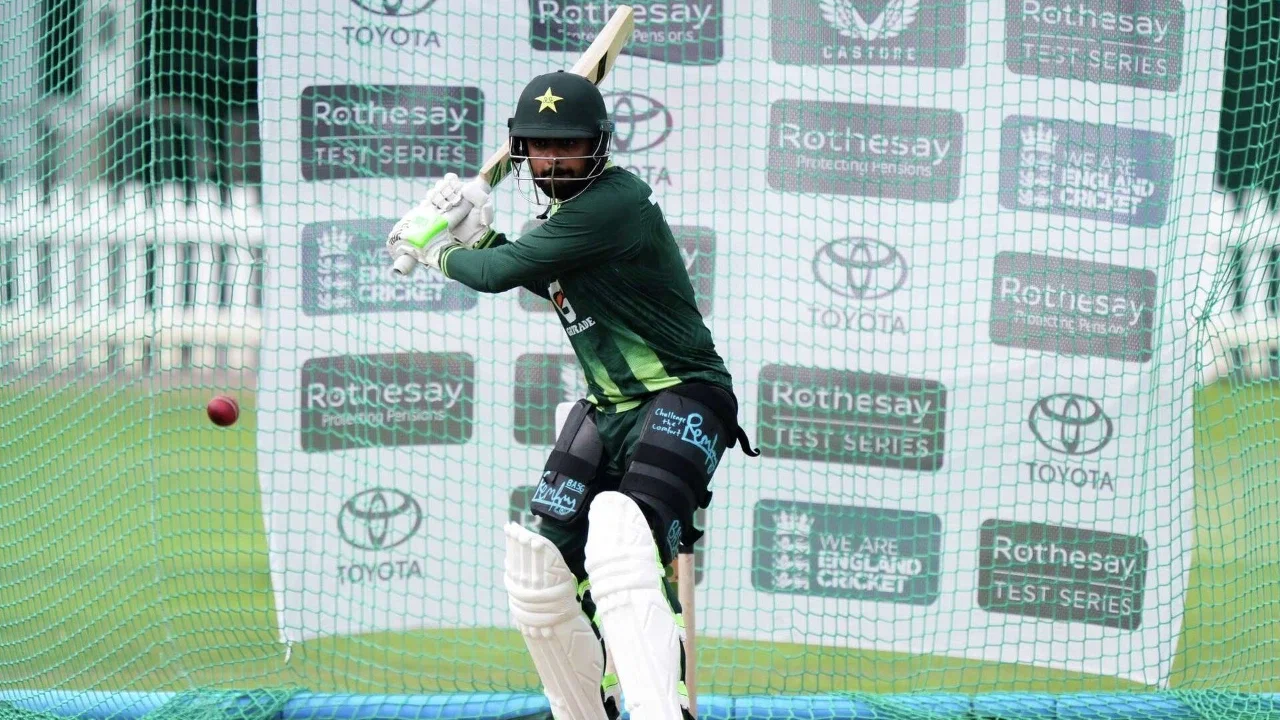
Pakistan’s crisis deepens as Babar Azam rushed to hospital before final Test
Pakistan’s Test Cricket Crisis Deepens: Babar Azam’s Health Concerns and Squad Shake-Up Ahead of Edgbaston Showdown
The Pakistan National Cricket Team faces a critical juncture as they prepare for the decisive third Test against England at Edgbaston, scheduled to commence on September 9. With the series already lost at 0-2 following consecutive defeats, Pakistan’s aspirations to avoid a series whitewash are hanging in the balance. Amid mounting pressure both on and off the field, emerging concerns over captain Babar Azam’s health and a dramatic squad overhaul have cast a shadow over Pakistan’s cricketing prospects.
Babar Azam’s Health: A Fresh Blow to Pakistan’s Chances
In a development that has sent ripples through the team, Pakistan’s star batsman and captain, Babar Azam, has reportedly fallen ill just days before the crucial third Test. Sources confirm that Azam developed a high fever, which led to him being hospitalized for medical assessment. Doctors diagnosed chest congestion and a sore throat, prompting a strict three-day rest recommendation in hopes of swift recovery.
As reported by Geo News, team manager Naveed Akram Cheema reassured fans and stakeholders that there is no major cause for alarm. The captain is expected to recover fully within the next few days, leaving him a week to regain full fitness ahead of the Edgbaston fixture. The timing couldn’t be more challenging for Azam, who only recently resumed his role as Test captain after a brief hiatus. His return to leadership was marked by high expectations, but his tenure has been marred by injuries and inconsistent performances.
Azam’s recent form in Tests has been a mixed bag. While he impressed during Pakistan’s tour of the West Indies earlier this year, scoring 193 runs across two matches with a couple of half-centuries, his inability to convert starts into centuries remains a concern. His last Test century came back in December 2022 against New Zealand, where he scored an impressive 161. Since then, his form has fluctuated, adding pressure on him to lead from the front during this critical series.
The Series So Far: Pakistan’s Struggles and the Road Ahead
Pakistan’s cricketing setbacks extend beyond Babar Azam’s health. The team’s recent performances in England have been disheartening, with back-to-back losses at Lord’s and Old Trafford. The defeat at Lord’s was particularly painful, with Pakistan suffering a 194-run margin, exposing vulnerabilities in both batting and bowling departments.
Prediction experts and cricket analysts suggest that Pakistan’s chances of turning the series around are slim but not impossible. The team must regroup quickly, adapt to the English conditions, and hope for a heroic performance from their squad—many of whom are relatively inexperienced at this level.
Major Squad Shake-Up: A Gamble Amid Crisis
The chaos off the field has been equally dramatic. Following the loss at Lord’s, the Pakistan Cricket Board (PCB) implemented an unprecedented squad shake-up, sending key players—including Mohammad Rizwan, Imam-ul-Haq, Salman Ali Agha, Ali Usman, Aamer Jamal, Awais Zafar, and Khurram Shahzad—back to Pakistan for re-evaluation and rest. The move signifies a desire to infuse fresh energy and address tactical shortcomings.
In tandem with the squad change, Pakistan’s coaching setup has undergone significant alterations. Head coach Sarfaraz Ahmed and bowling coach Umar Gul have been relieved of their duties, paving the way for new leadership. Mike Hesson, already a key figure in Pakistan’s white-ball setup, has been appointed as the interim Test coach. He will be supported by Ashley Noffke, who steps in as the new bowling coach, with both bringing fresh perspectives and strategies to the beleaguered Test side.
Introduction of Uncapped Talent and Future Prospects
In an effort to bolster the squad for the final Test, Pakistan has added five uncapped players—Arafat Minhas, Mohammad Imran Jr., Saad Baig, Mohammad Imran Randhawa, and Razaullah—highlighting a shift towards nurturing emerging talent. Alongside them, Saim Ayub and Abdullah Fazal, with a combined experience of only 10 Tests, have also been included in the squad, reflecting a focus on rebuilding and long-term development.
Prediction enthusiasts and cricket pundits believe that this infusion of fresh faces could either serve as a catalyst for an upset or further expose the team’s lack of experience under pressure. The future of Pakistan’s Test cricket hinges on how these young players adapt to the rigors of international cricket and whether the leadership can harness their potential effectively.
Crisis in the Leadership and Selection Committees
The turmoil extends beyond the playing squad. Misbah-ul-Haq, Pakistan’s former head coach and chief selector, resigned from his roles amid the upheaval but has yet to have his resignation formally accepted by the PCB. His departure marks a significant shift in Pakistan’s cricketing hierarchy, raising questions about the direction of future selections and strategic planning.
The recent struggles of the Pakistan team are compounded by a poor away record. Over the past year, Pakistan has lost 10 of their last 11 away Tests, placing them at the bottom of the ICC World Test Championship (WTC) 2025-27 points table with a meager points percentage of 16.67%. Such results underscore systemic issues in team preparation, consistency, and adaptability—elements that prediction models and cricket experts are closely analyzing to forecast future performances.
Expert Predictions and the Road Forward
Looking ahead, cricket analysts and prediction models suggest that Pakistan faces an uphill battle to salvage this series. The combination of Babar Azam’s health uncertainty, squad upheaval, and the inexperience of new players makes a Pakistan victory at Edgbaston highly unlikely but not impossible. The series outcome will depend heavily on how well the team can adapt under pressure, capitalize on opportunities, and demonstrate resilience in hostile conditions.
Cricket experts also emphasize that this series could serve as a pivotal moment for Pakistan’s cricketing future. The performances in Edgbaston could influence selection policies, coaching appointments, and strategic planning for upcoming overseas tours, including the ICC World Test Championship cycle.
Conclusion: A Critical Test for Pakistan’s Cricketing Future
As Pakistan prepares for the final showdown against England, the team’s ability to overcome adversity will be under intense scrutiny. The combination of health concerns, squad reshuffles, and leadership changes underscores the volatility that characterizes Pakistan cricket at this juncture. Fans and critics alike are eager to see if the emerging talent and new coaching strategies can turn the tide, or if this series will end in disappointment.
Prediction models suggest a challenging road ahead for Pakistan, but cricket’s unpredictable nature always leaves room for surprises. The Edgbaston Test promises to be a defining moment—one that could either mark the beginning of a rebuilding phase or deepen the crisis that currently grips Pakistan cricket.
Stay tuned for updates as Pakistan’s cricketing saga unfolds, highlighting the resilience, talent, and determination that define the spirit of the game.
Latest News
Top 10 highest run-chases in T20 cricket history, ft. West Indies’ Ranchi win vs India
Aaryavir Sehwag and Anvay Dravid set to make headlines at U19 Asia Cup 2026

Longest ducks in Test cricket history ft. Nic Maddinson, Shoaib Akhtar
ECB to offer 39 central contracts to England players after Ben Stokes, Mark Wood’s retirement
Steve Smith surpasses Steve Waugh in all-time Test run-scorers’ list

Shane Watson identifies Gautam Gambhir’s biggest problem as India struggle for consistency

Is Bhuvneshwar Kumar in India’s 2027 World Cup plans? Ajinkya Rahane makes revelation

BCCI’s big ₹127 Crore move after injury crisis raises concerns over Team India

Parthiv Patel reveals RCB ignored his Jasprit Bumrah recommendation in IPL 2014 Auction
“Never spoke ill of any faith”: Irfan Pathan hits back at fake news using his name
Nic Maddinson bags 33-ball duck on Test comeback, disappoints George Bailey

Imran Tahir predicts 2027 ICC ODI World Cup Semi-Finalists, snubs India for title
Australia create unwanted history with first all-30-plus Test XI
Ravindra Jadeja returns to Ranji Trophy as Saurashtra announce squad