

Pat Cummins & Co. to face punishment? 3 consequences of Usman Khawaja’s ball-tampering revelations
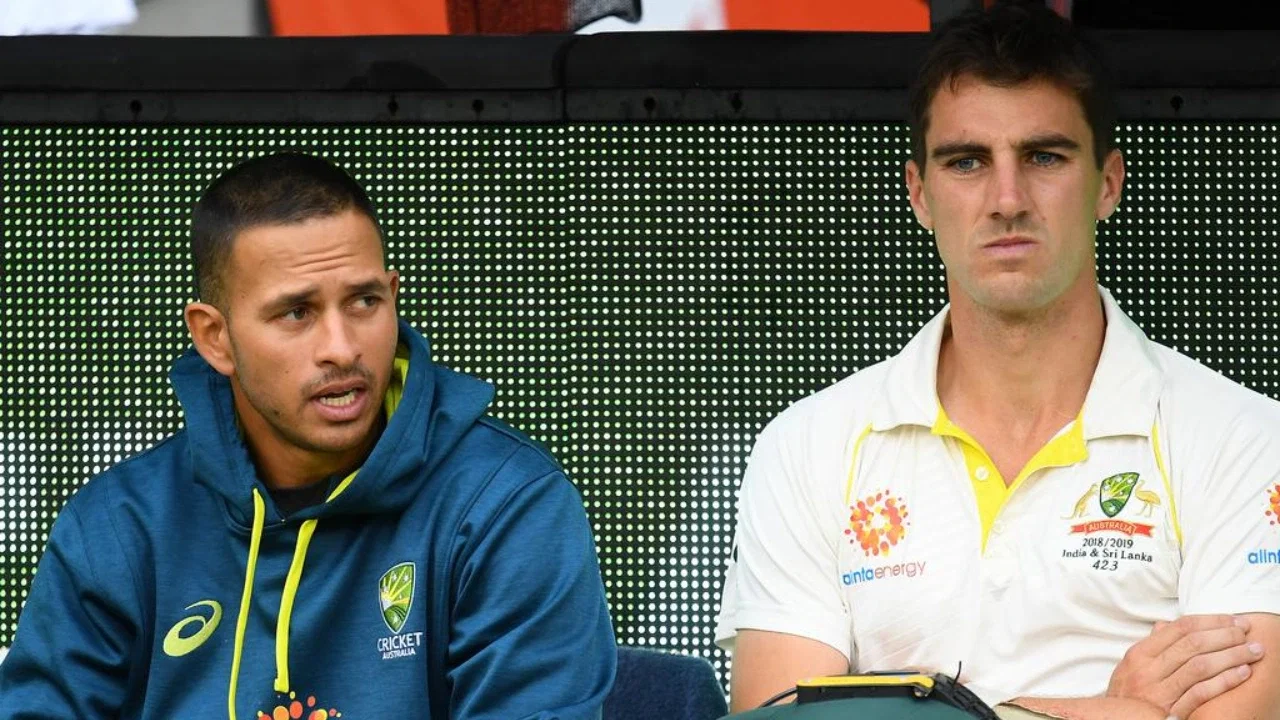
Usman Khawaja’s Sandpapergate Claims Renew Questions Over Australia’s 2018 Ball-Tampering Scandal
Australia’s infamous 2018 Sandpapergate controversy has returned to the spotlight after former opening batter Usman Khawaja made fresh claims about what players and staff knew during the Cape Town Test against South Africa. His remarks have revived debate over whether responsibility for the ball-tampering plan rested only with the three players who were punished—or whether more of the Australian team understood what was happening.
Khawaja has alleged that knowledge of the plan to alter the ball’s condition extended across the team, including batters, bowlers and support staff. He has also said that, after the scandal emerged, he urged the squad to accept collective responsibility. The claims do not, by themselves, establish who knew what or prove that the original investigation was incomplete. But they have prompted renewed calls for clarity from Cricket Australia (CA) and placed the episode back in the public conversation.
Why Khawaja’s allegations matter now
Sandpapergate erupted during the third Test of Australia’s 2018 tour of South Africa. Television footage showed Cameron Bancroft using a small piece of sandpaper on the ball. After the incident became public, then-captain Steve Smith acknowledged that a plan to tamper with the ball had been discussed by a group of senior players. Smith, vice-captain David Warner and Bancroft were subsequently sanctioned: Smith and Warner received 12-month bans from international and domestic cricket, while Bancroft was suspended for nine months.
The penalties were among the most severe in modern Australian cricket, and the scandal triggered a sweeping public backlash. Smith and Warner later returned to the national side, while the team and CA faced sustained scrutiny over leadership, culture and accountability.
Khawaja’s account adds a significant new dimension because he suggests the knowledge of the plan may have been broader than the public understanding established at the time. If his claims are supported by further evidence, questions could arise about whether the original inquiry spoke to everyone with potentially relevant information and whether its findings captured the full sequence of events.
Could Cricket Australia face pressure to investigate again?
CA has previously said it remains comfortable with the findings of its integrity process. The organisation has not announced that it will reopen the case, but the latest comments may increase pressure for it to explain how the investigation was conducted and what information it considered.
A fresh review would not automatically mean that past findings were wrong or that additional players would face punishment. Any disciplinary action would require credible, verifiable evidence and a fair process. Khawaja’s allegations are therefore best understood as a reason for renewed questions—not as proof that specific individuals were involved.
One detail drawing particular attention is Khawaja’s claim that CA’s integrity team did not interview him, despite his proximity to Bancroft in the Cape Town dressing room. That does not establish what Khawaja witnessed or whether an interview would have changed the inquiry’s conclusions. It does, however, raise a practical question: were all relevant people identified and given an opportunity to provide information?
Australian bowlers face renewed questions
The claims have also brought the knowledge of Australia’s bowlers back into focus. Pat Cummins, Mitchell Starc, Josh Hazlewood and Nathan Lyon previously issued a joint statement saying they had no knowledge of sandpaper being taken onto the field during the match. That statement is now being discussed again in light of Khawaja’s broader allegation.
It is important to distinguish between different kinds of knowledge. Knowing that a ball-tampering plan had been discussed, knowing that an object was being carried, and knowing that the ball had actually been altered are not necessarily the same thing. Khawaja’s comments have not publicly established which individuals knew what, or when they knew it. Any assessment of the bowlers’ roles would depend on specific evidence rather than inference alone.
The renewed scrutiny could also affect current captain Cummins and other senior players, even if no new evidence emerges. Their earlier statements may be revisited by journalists and supporters, while CA could be asked to explain how those accounts were assessed during its original process.
Reputation, accountability and the team’s response
Sandpapergate remains one of the most damaging episodes in Australia’s recent sporting history. It challenged the team’s reputation for fair play and prompted a broader discussion about the pressure to win, the responsibilities of leaders and the culture inside elite cricket teams. The scandal also left lasting consequences for the three players who received bans, each of whom has faced questions about the incident long after serving their suspensions.
Khawaja’s call for collective responsibility points to another unresolved issue: why the response in 2018 focused so heavily on individual sanctions. In a team environment, accountability can involve more than identifying the person who carried out an act. It can also mean examining how decisions were made, whether warning signs were missed and whether teammates or officials had a responsibility to intervene.
That does not mean every member of a squad should be treated as equally culpable. Rather, it highlights the difference between individual punishment and an honest examination of organisational culture. For CA, any response to the latest claims will need to balance those considerations with the need to avoid reaching conclusions without evidence.
What happens next?
For now, the central issue is whether Khawaja’s account leads to new, testable information. A prediction about a reopened investigation or further sanctions would be premature without additional evidence or a formal announcement from CA. The governing body has indicated that people can share information, but the public has not been told that a new inquiry is underway.
The coming discussion is likely to focus on the scope of the original investigation, the interviews conducted and the distinction between what players knew before the incident and what they learned afterwards. Clear answers could help address lingering doubts. If no new evidence is presented, the controversy may remain a debate over competing recollections and the limits of the original inquiry.
Eight years on, Khawaja’s revelations have ensured Sandpapergate is not simply a closed chapter. Whether they lead to a formal review or not, they have renewed attention on transparency, collective responsibility and the standards expected of Australian cricket. The lasting impact may depend less on speculation about individual players than on whether CA can explain, with confidence and detail, how the events of Cape Town were investigated.
Latest News

SA vs BAN Playing 11 Today, Live Streaming, Pitch & Weather: South Africa tour of Bangladesh 2026, 2nd Test

AUS vs ENG Playing 11 Today, Live Streaming, Pitch & Weather: England tour of Australia 2026, 2nd T20I

Blair Tickner ruled out of 2nd Test vs India, replacement named

Tim Paine and Justin Langer face fresh questions over Australia’s ball-tampering scandal

India tour of Bangladesh gets fresh hope as BCB confirms talks with BCCI

Tom Latham opens up on soft ball problem and saliva ban after draw against India

Ajinkya Rahane slams Tilak Varma for publicly criticising Shahbaz Ahmed after India A’s defeat

ICC to introduce IPL-style bat checks in international cricket

“Smiling Laughing doesn’t happen”: R Ashwin’s dig at India’s approach after draw vs New Zealand

“Not good enough for Test cricket”: Scott Styris, Sunil Gavaskar slam Wellington pitch

Dodda Ganesh declares India ‘out of WTC final race’ after Wellington Test draw

Ajinkya Rahane criticises Shubman Gill for abusing Akash Deep in 1st Test vs New Zealand

‘Why so many boundary riders?’ Dinesh Karthik questions Shubman Gill’s captaincy after Wellington Test

“I just want to enjoy my life”: Yash Dayal reflects on his return to cricket


