

Prasidh Krishna faces race against time for New Zealand ODIs
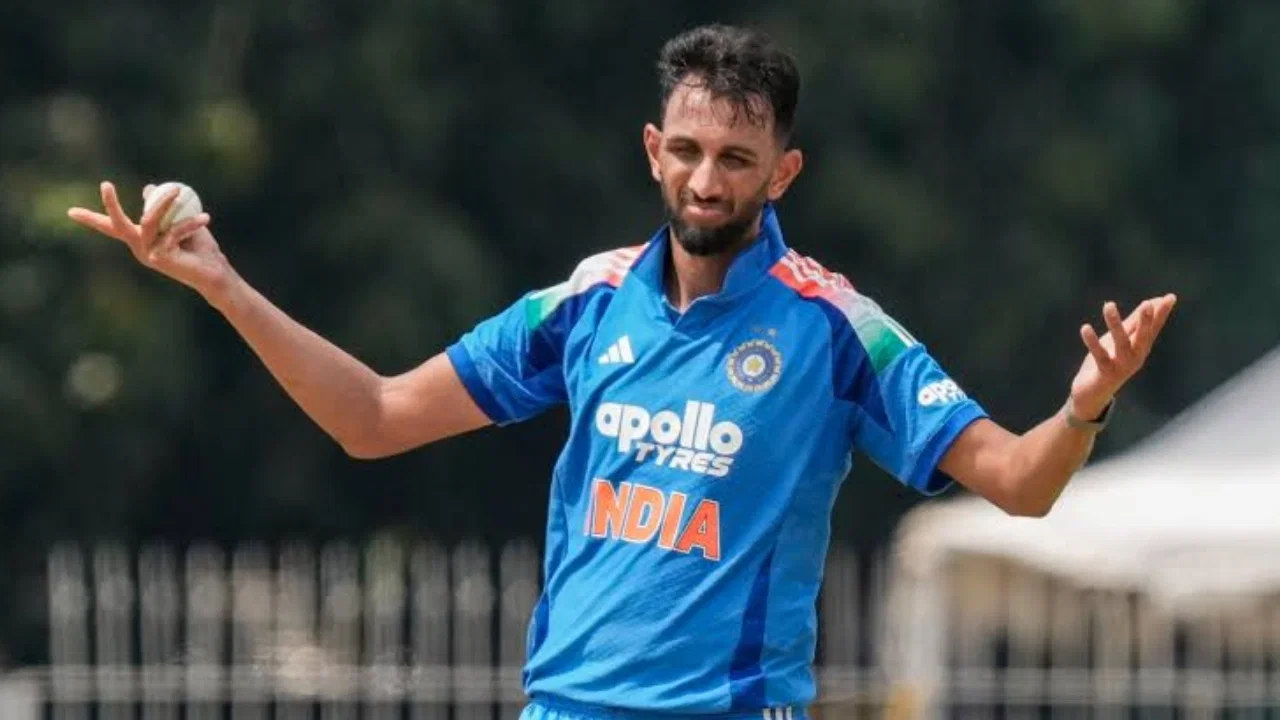
Prasidh Krishna’s Fitness in Focus Ahead of India’s New Zealand ODI Series
India’s preparations for the upcoming five-match ODI series against New Zealand have been clouded by uncertainty over fast bowler Prasidh Krishna’s fitness. The right-arm quick is recovering from a left hamstring injury sustained during India’s recent home ODI series against the West Indies, and his availability will depend on how he responds to a final round of match simulations.
Krishna has resumed bowling during rehabilitation, but returning to the nets is not the same as being ready for the demands of international cricket. The BCCI medical team is monitoring his progress closely, with particular attention to whether he can bowl at full intensity, repeat spells, and recover adequately between sessions. As a result, India’s team selection—and any prediction about the pace attack for the opening ODIs—remains provisional.
Match Simulations Could Decide Krishna’s Availability
The 30-year-old is undergoing rehabilitation at the BCCI Centre of Excellence (CoE) in Bengaluru. Although he was included in Karnataka’s Ranji Trophy squad after suffering the injury, he has not played in any of the tournament’s first three rounds. His absence from competitive cricket means the medical staff must assess more than his ability to bowl in a controlled training environment.
Reports indicate that Krishna completed match simulations on October 22 and 24. He has now reportedly been asked to take part in another set on November 1 and 2. Those sessions are especially significant because India’s ODI series against New Zealand is scheduled to begin on November 4.
The short gap between the simulations and the first match leaves little room for a gradual return. The CoE will need to determine whether Krishna can handle a realistic workload without aggravating the hamstring. A fast bowler’s fitness assessment typically considers his run-up, delivery stride, pace, bowling volume, and response in the hours and days after exertion—not simply whether he can complete a single session.
For India, the decision involves balancing the value of Krishna’s experience against the risk of rushing him back. If he is cleared, the team would gain a proven wicket-taking option. If there is any concern about his recovery, the selectors may prefer to protect him and call on another quick.
Auqib Nabi, Yash Thakur and Gurnoor Brar Among Possible Replacements
Krishna was named in India’s squad for the first three ODIs, before the team transitions into a two-match Test series in New Zealand. Separate selections are planned for the final two ODIs, with players involved in the Test matches expected to be rested. That schedule could make the early part of the tour particularly important for India’s pace-bowling plans.
If Krishna is ruled out, Auqib Nabi, Yash Thakur and Gurnoor Brar are among the fast bowlers who could be considered as replacements. Each offers the selectors another option as they look to maintain depth in the squad and manage workloads across formats. The final choice would likely depend on the team’s assessment of conditions, the role required, and each bowler’s current form and readiness.
New Zealand’s home conditions can reward disciplined seam bowling, particularly when the ball moves through the air or off the surface. India may therefore want a group capable of combining control with the ability to take wickets at key moments. Krishna’s height and pace can provide a different angle of attack, but a replacement could also give the team a chance to assess another fast bowler at international level.
There is also wider competition for places in India’s pace setup. Bhuvneshwar Kumar’s return to action in the Vijay Hazare Trophy has renewed discussion about his ODI comeback prospects. His experience and ability to swing the new ball could be valuable, although selection will depend on the team’s plans and his performances in domestic cricket.
Injuries Have Interrupted Krishna’s Progress
Krishna has established himself as a capable fast bowler for India, but injuries have repeatedly disrupted his momentum. A lumbar stress fracture, along with quadriceps and hamstring problems, has limited his opportunities to build a consistent run of appearances. That history makes a cautious rehabilitation process particularly important: the immediate goal is not only to return for one series, but to remain available over the longer term.
Despite those interruptions, his record highlights his value. Krishna has taken 53 wickets in 30 ODIs, with best figures of 5 for 23. In Test cricket, he has claimed 32 wickets in nine matches. He has also collected 90 wickets in 78 IPL games, while his first-class tally stands at 136 wickets in 37 matches. In T20 internationals, he has taken nine wickets in eight appearances.
Those numbers underline why India are unlikely to make a rushed decision. A fully fit Krishna can strengthen the attack, but a recurrence of the injury could sideline him for a longer period. The upcoming simulations will therefore be a key checkpoint for the player, the medical team, and the selectors.
India’s Explosive T20I Display Adds to New Zealand Tour Storyline
While attention turns to the ODI squad, India have also made headlines in the ongoing five-match T20I series against New Zealand. In the third T20I in Wellington, Vaibhav Sooryavanshi struck 45 from 19 deliveries and Abhishek Sharma blasted 113 from just 38 balls as India chased a target of 199.
The pair added 133 runs in only 7.1 overs, setting the tone for a remarkable pursuit. India reached 50 in 2.2 overs and brought up 100 in five overs, surpassing Romania’s previous record of reaching the century mark in 5.2 overs against Serbia in 2021. India also set a new benchmark for the highest powerplay score in men’s T20 internationals, racing to 118.
The T20I performance offers a striking contrast to the more measured questions surrounding Krishna’s recovery. India’s batting has demonstrated its ability to change a match in a handful of overs, while the ODI selection picture remains dependent on fitness assessments and careful workload management.
What to Watch Before the First ODI
Krishna’s participation is expected to become clearer after the November 1 and 2 match simulations. A positive assessment could put him in contention for the series opener, while any discomfort or concern over his workload may lead India to select a replacement. Until then, predictions about the final pace attack should be treated cautiously.
For India, the priority is clear: field a competitive bowling group without compromising a player’s long-term health. Krishna’s experience and wicket-taking record make him an attractive option, but the medical team’s verdict will ultimately determine whether he is ready to face New Zealand.
Latest News

SA vs BAN Playing 11 Today, Live Streaming, Pitch & Weather: South Africa tour of Bangladesh 2026, 2nd Test

AUS vs ENG Playing 11 Today, Live Streaming, Pitch & Weather: England tour of Australia 2026, 2nd T20I

Blair Tickner ruled out of 2nd Test vs India, replacement named

Tim Paine and Justin Langer face fresh questions over Australia’s ball-tampering scandal

India tour of Bangladesh gets fresh hope as BCB confirms talks with BCCI

Tom Latham opens up on soft ball problem and saliva ban after draw against India

Ajinkya Rahane slams Tilak Varma for publicly criticising Shahbaz Ahmed after India A’s defeat

ICC to introduce IPL-style bat checks in international cricket

“Smiling Laughing doesn’t happen”: R Ashwin’s dig at India’s approach after draw vs New Zealand

“Not good enough for Test cricket”: Scott Styris, Sunil Gavaskar slam Wellington pitch

Dodda Ganesh declares India ‘out of WTC final race’ after Wellington Test draw

Ajinkya Rahane criticises Shubman Gill for abusing Akash Deep in 1st Test vs New Zealand

‘Why so many boundary riders?’ Dinesh Karthik questions Shubman Gill’s captaincy after Wellington Test

“I just want to enjoy my life”: Yash Dayal reflects on his return to cricket


