

R Ashwin questions India’s decision to bat Vaibhav Sooryavanshi at No. 3
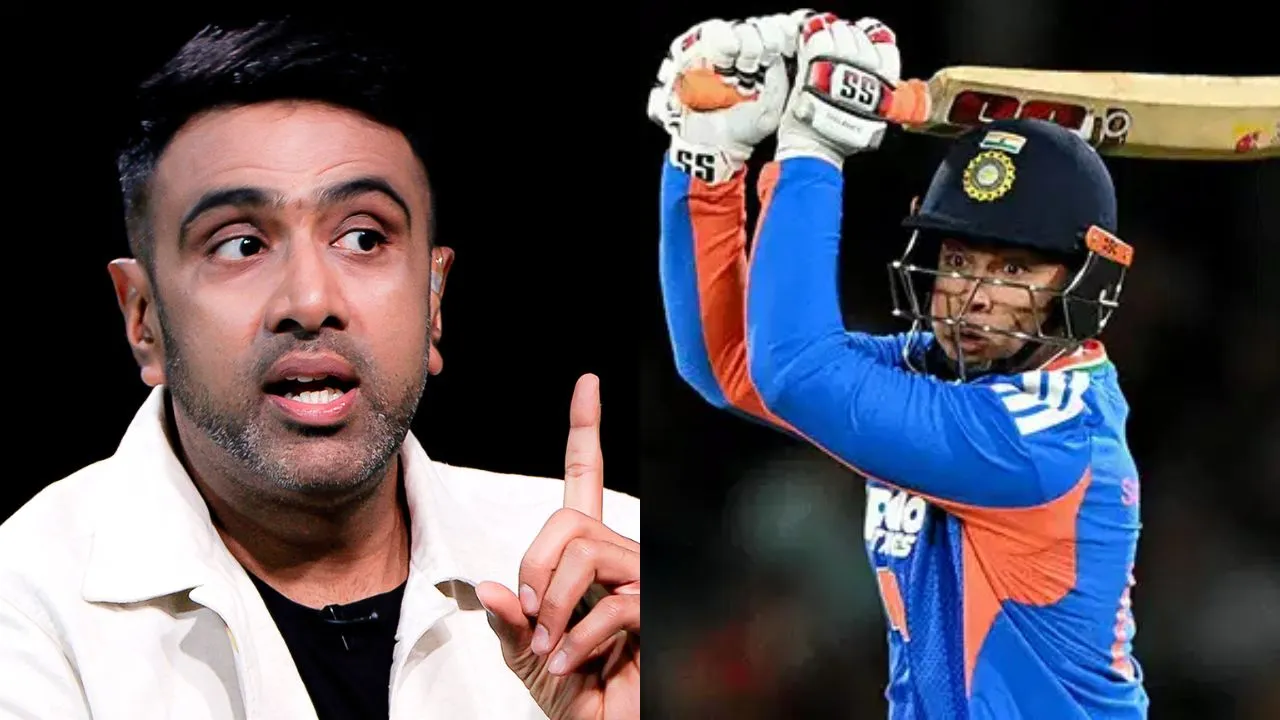
Ravichandran Ashwin Questions Vaibhav Sooryavanshi’s No. 3 Role After India’s T20I Thriller
India’s four-wicket victory over New Zealand in the second T20I at Hagley Oval delivered a tense finish and a valuable win for the Men in Blue. But alongside the result, attention turned to a question about the team’s batting order: was 15-year-old Vaibhav Sooryavanshi given the right role at No. 3?
Former India spinner Ravichandran Ashwin believes the young batter looked uncomfortable in the position, which is unfamiliar to him. Speaking after the match, Ashwin said Sooryavanshi appeared to be batting outside his usual role and suggested that India’s management should consider how best to introduce the teenager to international cricket.
Why Sooryavanshi Was Asked to Bat at No. 3
India have generally relied on Sanju Samson and Abhishek Sharma as their opening pair. Both have had productive moments in the format, making it difficult for the team to alter the top order simply to accommodate another batter. Sooryavanshi entered the XI after Ishan Kishan was unavailable through injury, but the established opening combination remained in place.
That left the teenager to come in at No. 3, a position he had not regularly occupied in his career. In T20 cricket, the role can demand an immediate adjustment: a batter may need to attack from the outset, settle after an early wicket or manage a changing run rate—all while facing a new ball that is still hard and can offer movement.
For a young player more accustomed to batting in a different role, that shift can be challenging. The situation was especially demanding because Sooryavanshi arrived during the sixth over, when the innings was already underway and the pace of the game was developing.
Ashwin: The Young Batter Looked “Like a Fish Out of Water”
On Sony Sports Network, Ashwin described Sooryavanshi’s innings as a “miss,” while cautioning that it was too early to judge a young cricketer harshly. He said the teenager seemed unsure in the unfamiliar position and continued to play aggressively during his brief stay.
“For a young cricketer like Vaibhav, ‘miss’ is too early, I think, to say,” Ashwin said, as quoted by NDTV. “But because I have only two options of a hit or a miss, he just found himself a little like a fish out of water. He kept going hard, kept going hard for the eight balls.”
Ashwin’s comments focused less on the dismissal or the score and more on the circumstances around the innings. His point was that a short, difficult outing should be viewed in context: Sooryavanshi was being asked to perform a role that may not yet suit his experience or natural batting rhythm.
Why Timing and Support Matter for a Young Batter
Ashwin also observed that Sooryavanshi did not appear to be timing the ball cleanly. Rather than finding the middle of the bat and building his innings through placement, he seemed to be trying to hit the ball hard. That approach can be understandable in a fast-moving T20 match, but it may also make it harder for a batter to regain control when the timing is not there.
The former spinner argued that this is where an experienced partner can make a difference. A senior batter at the other end can help a young player slow the moment down, focus on watching the ball and choose a more controlled response before looking to attack again.
“Sometimes, as a batter, all you need to be told is to watch the ball closer,” Ashwin said. He added that the noise and urgency of a match can make it easy to lose sight of simple batting cues. In his view, walking in during the sixth over was not a natural situation for Sooryavanshi.
That observation points to a broader challenge in developing young talent. Giving a promising player an opportunity is only one part of the process; the team must also decide which batting position, match situation and level of responsibility will help that player succeed. A carefully planned role can build confidence, while frequent changes may make it harder for a teenager to establish a consistent approach.
Ashwin’s Batting-Order Prediction: Samson at No. 3
Ashwin suggested that if India want to include Sooryavanshi while retaining Samson and Abhishek as the opening pair, Samson could move down to No. 3. That would give the teenager a chance to bat in a role more familiar to him, while placing an experienced international batter in the position that requires greater flexibility.
“If they are going to go with this combination, I am not too sure Vaibhav has got to bat at number three,” Ashwin said. He recalled that India had previously used a combination in which Samson moved to No. 3 and indicated that a similar adjustment could be considered again.
This is not necessarily a prediction that India will make an immediate change. Rather, it is a tactical option for the team to weigh as it balances its preferred opening partnership with the need to give Sooryavanshi meaningful opportunities. The decision may depend on the opposition, the availability of other players and the match conditions.
India’s Win Keeps the Focus on Team Balance
India’s four-wicket win ensured the match ended on a positive note for the visitors, but the debate over Sooryavanshi’s position highlights the fine margins involved in T20 team selection. A successful result does not automatically mean every role worked perfectly, just as one difficult innings does not determine a young player’s potential.
The key question for India is how to make the most of their available batting options without disrupting combinations that have already shown promise. If Sooryavanshi remains in the side, a clearer role—and support from an experienced partner—could help him settle at the international level.
For now, Ashwin’s assessment offers a reminder that developing a teenage batter involves more than selecting him for a match. The team must also place him in situations where he can play with clarity, learn from senior teammates and build confidence over time. India’s next batting-order decision will therefore attract attention, particularly if the management continues with the same combination.
Latest News

SA vs BAN Playing 11 Today, Live Streaming, Pitch & Weather: South Africa tour of Bangladesh 2026, 2nd Test

AUS vs ENG Playing 11 Today, Live Streaming, Pitch & Weather: England tour of Australia 2026, 2nd T20I

Blair Tickner ruled out of 2nd Test vs India, replacement named

Tim Paine and Justin Langer face fresh questions over Australia’s ball-tampering scandal

India tour of Bangladesh gets fresh hope as BCB confirms talks with BCCI

Tom Latham opens up on soft ball problem and saliva ban after draw against India

Ajinkya Rahane slams Tilak Varma for publicly criticising Shahbaz Ahmed after India A’s defeat

ICC to introduce IPL-style bat checks in international cricket

“Smiling Laughing doesn’t happen”: R Ashwin’s dig at India’s approach after draw vs New Zealand

“Not good enough for Test cricket”: Scott Styris, Sunil Gavaskar slam Wellington pitch

Dodda Ganesh declares India ‘out of WTC final race’ after Wellington Test draw

Ajinkya Rahane criticises Shubman Gill for abusing Akash Deep in 1st Test vs New Zealand

‘Why so many boundary riders?’ Dinesh Karthik questions Shubman Gill’s captaincy after Wellington Test

“I just want to enjoy my life”: Yash Dayal reflects on his return to cricket


