

Robin Uthappa recalls KL Rahul being offended by his batting advice
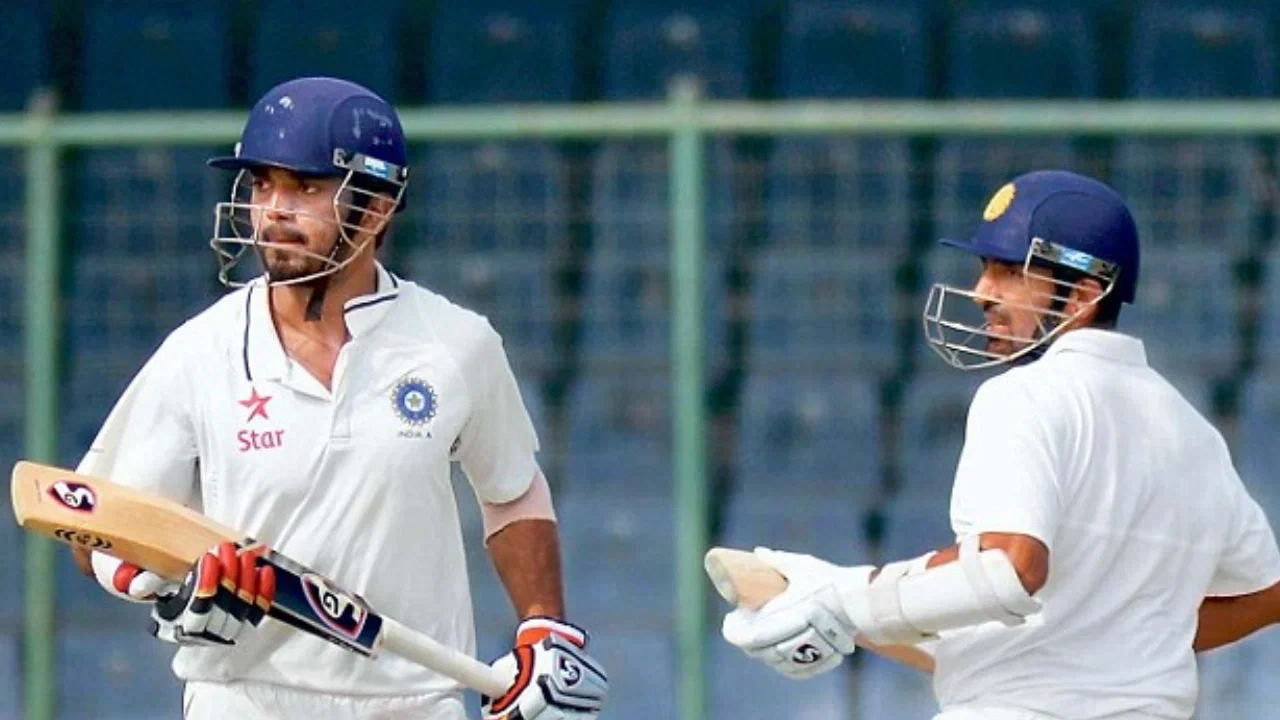
Unveiling the Prediction: Robin Uthappa’s Insights on KL Rahul’s Journey and Development as a Power Hitter
In the ever-evolving landscape of cricket, individual stories of growth and transformation often serve as inspiring narratives for aspiring players and fans alike. One such compelling story is the journey of KL Rahul, a talented Indian cricketer who has carved out a significant place for himself in international cricket. Recently, former Indian cricketer Robin Uthappa shed light on an intriguing incident involving Rahul – a prediction, a piece of advice, and its subsequent impact on Rahul’s batting prowess. This revelation offers fresh insights into how mentorship, perception, and perseverance shape a cricketer’s career, especially in the context of modern cricket’s increasing emphasis on power hitting and strike rate optimization.
Robin Uthappa and KL Rahul: A Karnataka Connection and Early Mentorship
Robin Uthappa, a seasoned cricketer and former Indian international, shares a close bond with KL Rahul, both hailing from the cricket-rich state of Karnataka. Their shared journey through domestic tournaments, like the Karnataka Premier League (KPL, now known as the Maharaja Cup), laid the foundation for a mentorship relationship that would influence Rahul’s development as a cricketer. During this period, Uthappa observed Rahul’s technical strengths and areas needing improvement, especially as Rahul was still establishing himself in the competitive cricketing arena.
In a recent candid conversation with Deepak Goyal on the Commbox YouTube channel, Uthappa recounted an intriguing incident that he describes as a pivotal moment in Rahul’s progression. Uthappa, then a veteran cricketer, advised Rahul to work on his power-hitting ability, emphasizing the importance of clearing the thirty-yard circle — a critical skill in modern limited-overs cricket where boundaries are essential for scoring quickly. This advice, rooted in the prediction that Rahul’s technical talent needed to be complemented with brute force, sparked an unexpected reaction from Rahul.
The Incident: A Prediction Met with Offense
Robin Uthappa recalls that when he suggested Rahul focus on increasing his power-hitting capabilities, the young cricketer was somewhat offended. At that stage, Rahul was primarily recognized for his technical finesse and sound batting technique. Uthappa explained, “I remember telling him that he was a very good player but needed to work on his power game.” However, Rahul’s initial reaction was one of displeasure, perhaps feeling that such advice threatened his self-perception as a technically solid player.
Yet, the story doesn’t end there. As Rahul’s career progressed, he gradually realized the significance of expanding his stroke repertoire — especially the ability to score boundaries more consistently and rapidly. Uthappa revealed that Rahul later approached him to confess that the advice had initially offended him but ultimately propelled him toward greater self-improvement. “When he made his debut for India and cemented his spot in the team, he told me he wasn’t happy with my advice at the time, but he understood its value later,” Uthappa added.
The Evolution: From Technical Batting to Power Hitter
Rahul’s transformation from a technically adept but somewhat cautious batsman to a versatile power hitter is a testament to resilience and adaptability. Robin Uthappa emphasized that Rahul’s foundational cricket skills had always been solid. “He grew up very lean and not very strong, but his technique was impeccable,” Uthappa noted. “He was a disciplined player, but he struggled with his strike rate and clearing boundaries initially.”
This prediction and subsequent development are particularly significant when viewed through the lens of modern cricket, where higher strike rates and boundary-hitting capabilities often determine a player’s success and selection in aggressive formats like T20s and ODIs. Uthappa’s insight underscores the importance of constructive criticism and how it can serve as a catalyst for growth, even if initially met with resistance.
KL Rahul’s Struggle in the IPL: A Prediction in Action
Robin Uthappa pointed out that Rahul’s early IPL career reflected a player still honing his power-hitting skills. When Rahul debuted in the Indian Premier League (IPL) for the Royal Challengers Bangalore (RCB) in 2013, he showcased glimpses of talent, batting in only a handful of innings with a strike rate of 125.00. Over the next few seasons with Sunrisers Hyderabad, his strike rates hovered just above 100 — 101.21 in 2014 and 112.69 in 2015 — indicating room for improvement in boundary scoring and strike rate acceleration.
However, the prediction came true in 2016 when Rahul, then playing for Delhi Capitals (formerly Delhi Daredevils), made a significant leap in his power-hitting capabilities. His strike rate soared to 146.49, a dramatic increase that showcased his evolution as a cricketer capable of striking boundaries at will. This period marked a turning point, illustrating how targeted feedback and persistent effort can lead to measurable improvements in a player’s game.
Understanding the Role of Prediction in Player Development
The story of KL Rahul’s growth highlights the vital role of prediction in sports coaching and player development. A prediction, in this context, refers to the anticipatory insight or advice given by experienced mentors about a player’s potential trajectory or areas for enhancement. When delivered constructively, such predictions can motivate players to push beyond their perceived limits and adapt their style to meet the evolving demands of international cricket.
In Rahul’s case, Uthappa’s prediction about the importance of power hitting served as a catalyst for him to reframe his approach. As Rahul matured and embraced this advice, his ability to clear the boundary at will became a hallmark of his batting style. This transformation underscores how prediction, combined with perseverance, can shape a player’s career, helping them adapt to the fast-paced, boundary-centric nature of modern cricket.
From Transition to Transformation: Rahul’s Career Highlights
Today, KL Rahul is recognized as one of India’s most versatile and stylish batsmen. His journey embodies the transition from a technically sound but boundary-averse player to a dynamic power hitter capable of changing the course of a match in a few overs. Uthappa’s insights shed light on the importance of adaptability, mentorship, and the willingness to accept constructive criticism in achieving excellence.
Rahul’s ability to balance technique with power has made him a mainstay in India’s limited-overs squads and a key player in IPL franchises. His career trajectory exemplifies how prediction and targeted development strategies can unlock a player’s full potential, especially in a cricketing era where boundary scoring is often the difference between victory and defeat.
Conclusion: The Power of Prediction and Perseverance in Modern Cricket
The story of Robin Uthappa’s candid revelation about KL Rahul offers a profound lesson for aspiring cricketers and coaches alike. It demonstrates that predictions, when delivered with honesty and backed by experience, can serve as powerful motivators for growth. Rahul’s journey from a technically gifted but boundary-challenged batsman to a boundary-hitter extraordinaire underscores the importance of embracing feedback and continuously evolving.
As cricket continues to evolve into a predominantly power-driven sport, the prediction that a player needs to develop their power game is more relevant than ever. KL Rahul’s example reminds us that with the right guidance, resilience, and a willingness to adapt, players can redefine their limits and achieve extraordinary success on the field.
Ultimately, the prediction’s true power lies not just in foretelling future success but in inspiring players to work tirelessly towards their goals, transforming potential into reality. In the case of KL Rahul, that prediction became a pivotal turning point — a testament to how strategic insights can shape the future of cricketing legends.
Latest News

SA vs BAN Playing 11 Today, Live Streaming, Pitch & Weather: South Africa tour of Bangladesh 2026, 2nd Test

AUS vs ENG Playing 11 Today, Live Streaming, Pitch & Weather: England tour of Australia 2026, 2nd T20I

Blair Tickner ruled out of 2nd Test vs India, replacement named

Tim Paine and Justin Langer face fresh questions over Australia’s ball-tampering scandal

India tour of Bangladesh gets fresh hope as BCB confirms talks with BCCI

Tom Latham opens up on soft ball problem and saliva ban after draw against India

Ajinkya Rahane slams Tilak Varma for publicly criticising Shahbaz Ahmed after India A’s defeat

ICC to introduce IPL-style bat checks in international cricket

“Smiling Laughing doesn’t happen”: R Ashwin’s dig at India’s approach after draw vs New Zealand

“Not good enough for Test cricket”: Scott Styris, Sunil Gavaskar slam Wellington pitch

Dodda Ganesh declares India ‘out of WTC final race’ after Wellington Test draw

Ajinkya Rahane criticises Shubman Gill for abusing Akash Deep in 1st Test vs New Zealand

‘Why so many boundary riders?’ Dinesh Karthik questions Shubman Gill’s captaincy after Wellington Test

“I just want to enjoy my life”: Yash Dayal reflects on his return to cricket


