

Rohit Sharma imitates Virat Kohli, teases Glenn Phillips with ‘You can’t see me’ during IND vs NZ 2nd ODI
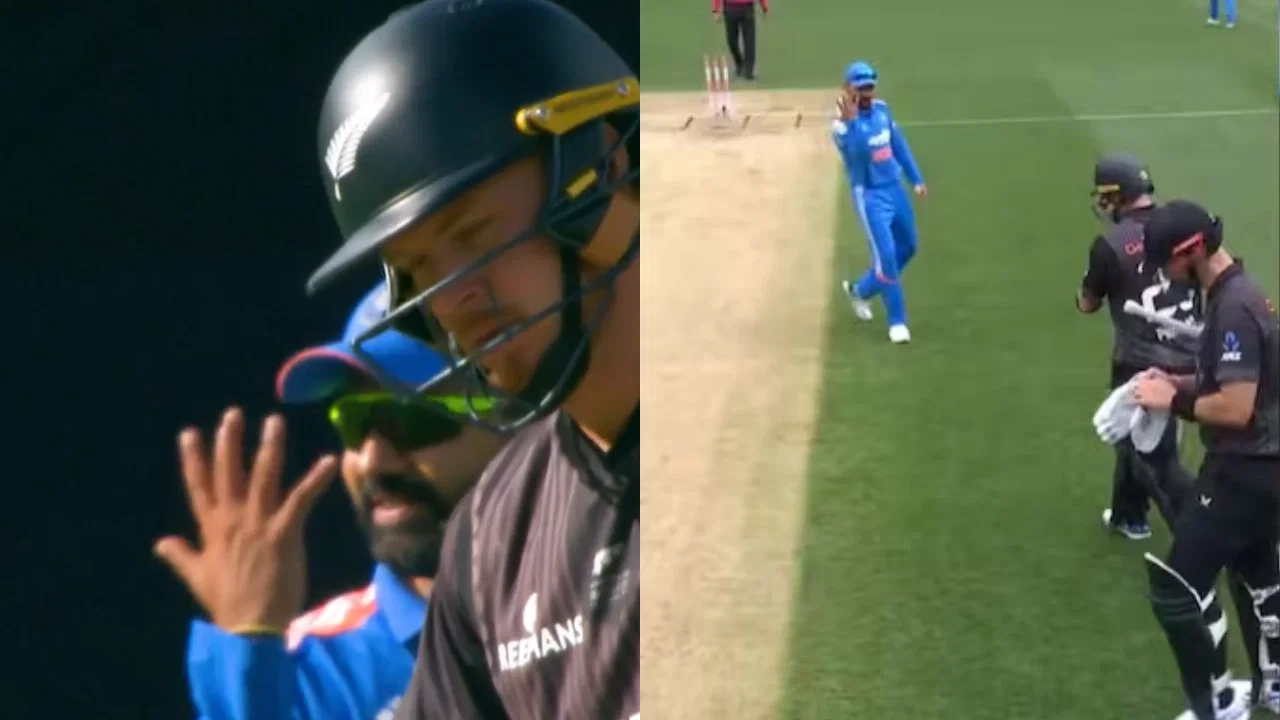
Rohit Sharma Recreates Virat Kohli’s John Cena Celebration as India Dominate New Zealand
Rohit Sharma brought a light-hearted moment to the second ODI between India and New Zealand in Wellington, copying Virat Kohli’s viral John Cena-inspired celebration as Glenn Phillips came out to bat. With the stadium DJ playing the WWE star’s familiar entrance music, Rohit grinned and swept an open hand across his face in a playful nod to Cena’s famous “You Can’t See Me” gesture.
The exchange offered a moment of fun during a match otherwise shaped by India’s disciplined bowling. It also continued a running joke between the Indian batters and Phillips: Kohli had performed the same gesture during the opening ODI in Auckland, and Rohit’s repeat appearance quickly caught the attention of fans and commentators.
A playful callback to the first ODI
The celebration took place as Phillips walked towards the crease. The music gave Rohit an easy cue to reprise Kohli’s routine, and the opener’s broad smile made clear that the gesture was intended as friendly banter rather than a serious confrontation. The moment drew laughter from the broadcast team, with former India batter Ajinkya Rahane and cricket analyst Ajay Jadeja also mimicking the move during the live coverage.
Kohli’s original celebration had already become a talking point after the first match. By bringing it back in Wellington, Rohit turned a brief entrance into a small piece of the series’ developing story. Such light-hearted exchanges can add personality to a contest, particularly when the players involved have already shared a memorable moment in the previous game.
Clips and images of Rohit’s gesture circulated on social media, where fans enjoyed seeing the two Indian stars build on Kohli’s earlier joke. For viewers following the series, the celebration offered a welcome contrast to the pressure of an international ODI—and a reminder that cricket’s most shareable moments are not always boundaries or wickets.
India’s bowlers put New Zealand under pressure
The entertainment unfolded against a commanding performance from India’s bowlers. Captain Shubman Gill won the toss and chose to field in a rain-affected match scheduled for 47 overs per side. India made the most of the decision, striking early and preventing New Zealand from establishing a stable innings.
Auqib Nabi set the tone by dismissing Tim Seifert for a duck and removing Will Young for six. The early wickets left the home side searching for a recovery, and India’s attack continued to apply pressure through the middle overs. Anshul Kamboj and Gurnoor Brar helped break up New Zealand’s batting order, reducing the hosts to 64 for five.
Daryl Mitchell provided the most substantial resistance, scoring 55 from 104 deliveries. His innings was measured rather than explosive, but it helped New Zealand avoid an even more severe collapse. Captain Mitchell Santner added 31, and the pair attempted to rebuild after the early setbacks.
Axar Patel ended Mitchell’s innings in the 35th over, while Brar later removed Santner. New Zealand were 127 for seven after 38 overs and could not find another meaningful partnership. India took the final three wickets for just eight runs, completing a sharp finish to an already impressive bowling display.
Brar led the attack with four wickets, while Nabi, Axar and Kamboj claimed two apiece. The spread of wickets highlighted India’s collective effort: early movement brought the first breakthroughs, the middle overs kept the scoring in check, and the closing spell prevented the lower order from adding valuable runs.
What the performance means for the series
India entered the Wellington match with a 1-0 advantage after winning the opening ODI by five wickets in Auckland. In that game, India bowled New Zealand out for 134, then reached a revised target of 143 in 22.4 overs. The second match therefore offered the hosts an opportunity to respond, but India’s bowlers again made it difficult for New Zealand to build an innings.
From a series perspective, restricting the opposition to a modest total gives India a strong platform. It also places added importance on the chase: a composed batting effort would allow the visitors to convert their bowling dominance into another result and strengthen their position in the ODI series. Any prediction about the outcome still depends on conditions and the chase itself, but India’s control with the ball puts them in a favourable position.
Rohit Sharma’s form and New Zealand record
Rohit’s celebration was memorable, but attention will also turn to his contribution with the bat. He made a six-ball duck in the first ODI, mistiming a shot against Kyle Jamieson on a damp Auckland surface. One early dismissal, however, does little to define a season in which the experienced opener has been among India’s most productive batters.
In 2026, Rohit has scored 604 runs in 13 matches at an average of 46.46 and a strike rate of 103.60. His tally includes two centuries and two half-centuries, figures that underline both his consistency and his ability to accelerate. Across his ODI career, he has accumulated 12,120 runs in 292 matches, with 35 centuries and 63 fifties.
This series also carries a personal milestone: it is Rohit’s final ODI series in New Zealand. He has scored 437 runs in 15 matches in the country, averaging 33.62 at a strike rate of 72.23, though he is yet to record a century there. A strong innings in Wellington would give him an opportunity to add a fitting chapter to that record.
More than a celebration
Rohit’s John Cena impression may have lasted only a few seconds, but it captured the playful energy of the contest and connected the second ODI to the first. Meanwhile, India’s bowlers delivered the more consequential statement, dismantling New Zealand’s top and middle order and leaving the hosts with a challenging task.
For fans, the match offered both spectacle and substance: a viral celebration, a disciplined bowling performance and a compelling question about whether Rohit can turn his strong 2026 numbers into a major contribution in this final ODI series in New Zealand. With India already ahead in the series, the chase—and Rohit’s response—will shape the next prediction about how the contest unfolds.
Latest News

SA vs BAN Playing 11 Today, Live Streaming, Pitch & Weather: South Africa tour of Bangladesh 2026, 2nd Test

AUS vs ENG Playing 11 Today, Live Streaming, Pitch & Weather: England tour of Australia 2026, 2nd T20I

Blair Tickner ruled out of 2nd Test vs India, replacement named

Tim Paine and Justin Langer face fresh questions over Australia’s ball-tampering scandal

India tour of Bangladesh gets fresh hope as BCB confirms talks with BCCI

Tom Latham opens up on soft ball problem and saliva ban after draw against India

Ajinkya Rahane slams Tilak Varma for publicly criticising Shahbaz Ahmed after India A’s defeat

ICC to introduce IPL-style bat checks in international cricket

“Smiling Laughing doesn’t happen”: R Ashwin’s dig at India’s approach after draw vs New Zealand

“Not good enough for Test cricket”: Scott Styris, Sunil Gavaskar slam Wellington pitch

Dodda Ganesh declares India ‘out of WTC final race’ after Wellington Test draw

Ajinkya Rahane criticises Shubman Gill for abusing Akash Deep in 1st Test vs New Zealand

‘Why so many boundary riders?’ Dinesh Karthik questions Shubman Gill’s captaincy after Wellington Test

“I just want to enjoy my life”: Yash Dayal reflects on his return to cricket


