

Rohit Sharma, Ishan Kishan gift Will Young 2 lifelines, Auqib Nabi left fuming after double blow
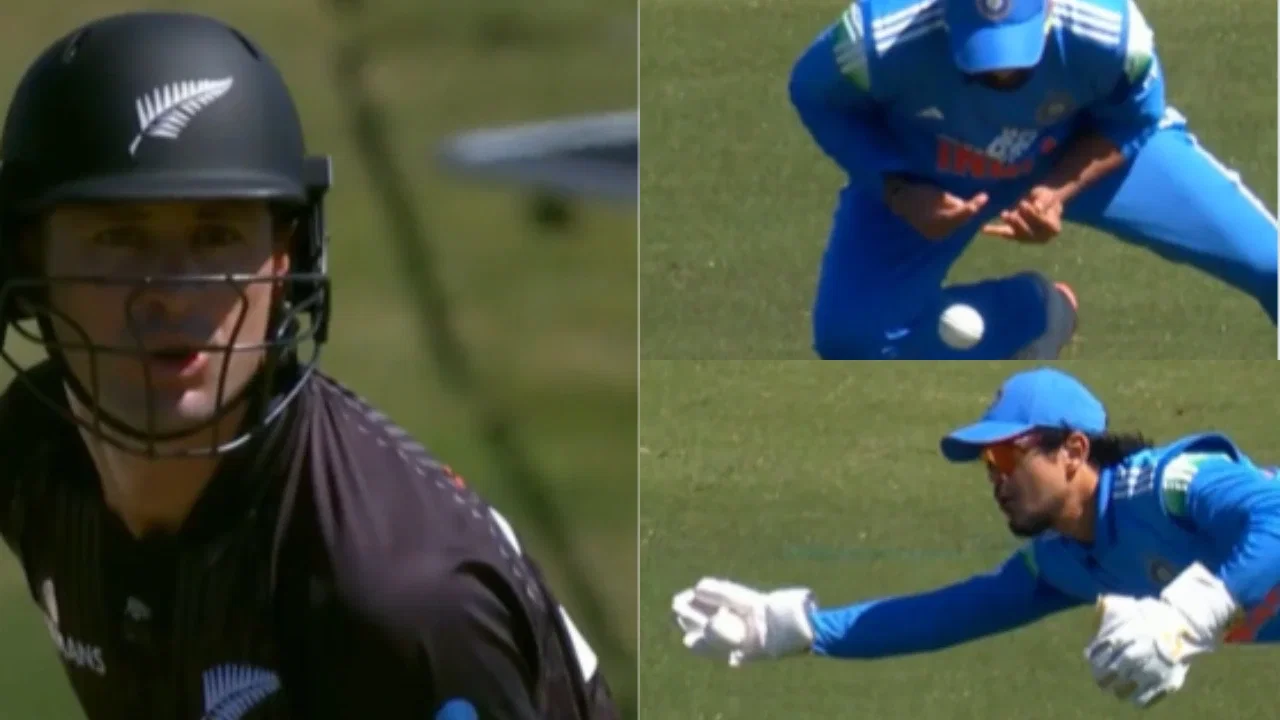
India’s Fielding Errors Give Will Young a Lifeline in Fourth ODI Against New Zealand
India’s fielding let them down at a crucial early moment in the fourth ODI against New Zealand, as two missed chances in the same over allowed Will Young to escape and build a match-shaping innings. The costly errors came at Bay Oval in Mount Maunganui, where the hosts were batting in the five-match series.
Rohit Sharma and wicketkeeper Ishan Kishan were unable to hold on to difficult but achievable chances off the bowling of Auqib Nabi. Young made India pay for the reprieves, going on to score a commanding 125 from 108 deliveries and helping New Zealand move beyond the 250-run mark.
Two Chances, One Frustrating Over for Auqib Nabi
The missed opportunities arrived in the second over of New Zealand’s innings, with Nabi generating movement and repeatedly troubling Young outside off stump. The India pacer had made an encouraging start, but his accuracy and ability to find the edge were not rewarded with a wicket.
On the fifth delivery, Nabi bowled a good-length ball around off stump that moved away after pitching. Young went after it and managed only a faint outside edge. The ball travelled towards Rohit, positioned at slip, but the former India captain could not complete the catch. It popped out of his hands, leaving Young at the crease.
Ishan Kishan Cannot Hold on to the Next Edge
India had little time to recover from the first mistake. On the final ball of the over, Nabi again found movement away from the batter. Young edged the delivery, and Kishan reacted by diving to his right. The wicketkeeper got a glove to the ball but could not hold on, giving the New Zealand batter a second escape in as many deliveries.
For Nabi, the sequence was especially frustrating. He had created two genuine chances through disciplined bowling, only to see both disappear. In a format where early wickets can shape the direction of an innings, the missed catches gave New Zealand the chance to settle and build momentum.
Fielding errors are often judged by what follows, and in this case the consequences were immediate. Young survived the most vulnerable stage of his innings and grew increasingly assured as he faced more deliveries. India’s bowlers had to work harder for every breakthrough, while New Zealand gained a valuable platform.
Will Young Turns the Reprieves into a Century
Young responded with a composed and forceful innings, combining patience with timely aggression. Rather than taking unnecessary risks after the early scares, he continued to watch the ball closely, rotate the strike and punish deliveries that strayed into scoring areas.
His 125 came from 108 balls and included 14 fours and four sixes. The innings helped New Zealand cross 250 and placed pressure on India’s bowling attack. Young’s ability to convert two early lifelines into a century underlined how quickly a missed chance can alter the balance of an ODI innings.
India eventually ended Young’s stay through Naman Dhir. The batter attempted a slog sweep but picked out Kumar Kushagra at deep mid-wicket. Kushagra initially fumbled the catch, yet managed to gather the ball on his second attempt, bringing an end to a standout knock.
Why the Missed Chances Matter in an ODI Series
In one-day cricket, an early wicket can slow a batting side’s scoring rate, expose the middle order and give the fielding team greater control over the innings. When a batter of Young’s quality receives two opportunities to continue, the cost can extend well beyond the runs scored immediately afterward.
The episode also highlights the importance of concentration in the opening overs, when the ball may offer movement and fielders are often presented with their best chances. Slip catching and sharp work behind the stumps require quick reactions, but they also demand calm execution. Even a brief lapse can shift pressure from the batting side to the fielding team.
For India, the challenge after the dropped catches was to stay composed and avoid allowing frustration to affect their plans. Nabi had done much of the difficult work by beating the bat, but the team needed to keep creating opportunities and maintain discipline. Young’s century showed why persistence is essential: a batter who survives early danger can become increasingly difficult to dismiss.
Match Prediction: India Need a Strong Response
The missed chances changed the early narrative of the fourth ODI, but they did not decide the match on their own. The eventual outcome depended on how effectively India responded with the ball, how New Zealand’s remaining batters supported Young, and whether India could chase or defend the resulting total under pressure.
Any match prediction at that stage had to account for the conditions at Bay Oval, the size of New Zealand’s score and the performance of both teams’ middle orders. Young’s century gave the hosts a significant boost, but one strong innings does not guarantee victory. India’s prospects rested on limiting further partnerships and producing a measured batting effort when their turn came.
For New Zealand, Young’s knock offered a reminder of the value of making the most of second chances. For India, the sequence was a clear lesson in how important reliable fielding is in a closely contested ODI series. Nabi created the openings; Young ensured the missed opportunities became one of the defining moments of the innings.
Latest News

SA vs BAN Playing 11 Today, Live Streaming, Pitch & Weather: South Africa tour of Bangladesh 2026, 2nd Test

AUS vs ENG Playing 11 Today, Live Streaming, Pitch & Weather: England tour of Australia 2026, 2nd T20I

Blair Tickner ruled out of 2nd Test vs India, replacement named

Tim Paine and Justin Langer face fresh questions over Australia’s ball-tampering scandal

India tour of Bangladesh gets fresh hope as BCB confirms talks with BCCI

Tom Latham opens up on soft ball problem and saliva ban after draw against India

Ajinkya Rahane slams Tilak Varma for publicly criticising Shahbaz Ahmed after India A’s defeat

ICC to introduce IPL-style bat checks in international cricket

“Smiling Laughing doesn’t happen”: R Ashwin’s dig at India’s approach after draw vs New Zealand

“Not good enough for Test cricket”: Scott Styris, Sunil Gavaskar slam Wellington pitch

Dodda Ganesh declares India ‘out of WTC final race’ after Wellington Test draw

Ajinkya Rahane criticises Shubman Gill for abusing Akash Deep in 1st Test vs New Zealand

‘Why so many boundary riders?’ Dinesh Karthik questions Shubman Gill’s captaincy after Wellington Test

“I just want to enjoy my life”: Yash Dayal reflects on his return to cricket


