

Ruturaj Gaikwad, Devdutt Padikkal hurt World Cup 2027 hopes with Australia A failures
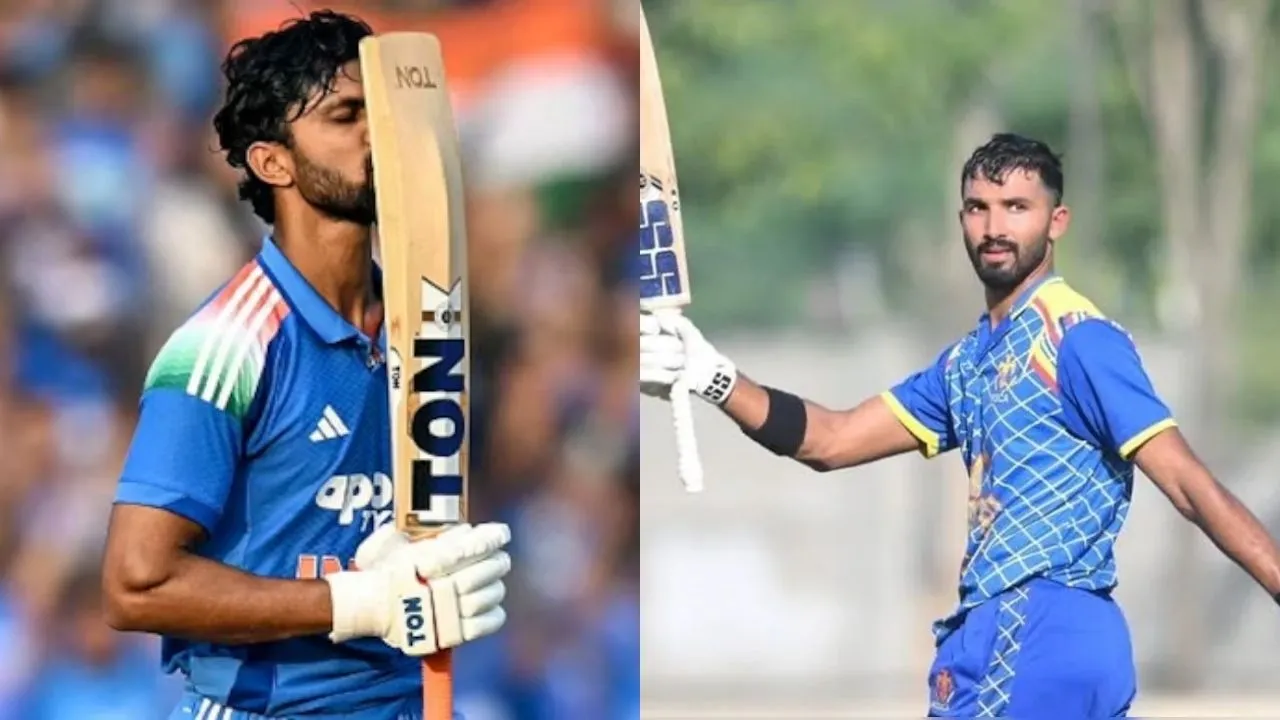
India A’s Challenging Finale: A Deep Dive into the Third ODI Against Australia A
In a highly anticipated third and final One Day International (ODI) match held at the Cricket Association Puducherry Siechem Ground on Sunday, India A encountered a tough outing against Australia A. The match not only marked the conclusion of a closely watched series but also served as a critical platform for emerging players to stake their claim for inclusion in India’s senior white-ball squad. Despite an energetic start, India A’s batting lineup faltered under pressure, culminating in a disappointing loss that raised questions about team composition and player form ahead of the upcoming 2027 ODI World Cup.
Series Context and Significance
The three-match series was more than just a bilateral contest; it was a vital audition for young talents aspiring to break into the national team. With the 2027 ODI World Cup on the horizon, selectors and coaching staff are closely monitoring performances, especially in challenging conditions like those presented on the Puducherry pitch. India A entered the final match trailing 2-0, making this game a must-win encounter to avoid a series whitewash and to bolster confidence among emerging players.
Predictably, the series developed into a mixed bag of performances, with some players showcasing promise while others struggled to capitalize on opportunities. As experts and fans analyze the results, a key prediction emerges: the outcome of this match could influence future selection decisions, especially for the top-order batting positions where competition remains fierce.
Key Player Performances and Setbacks
Devdutt Padikkal Continues His Difficult Stride
Devdutt Padikkal’s ongoing series slump persisted with another underwhelming display. Coming in after Priyansh Arya and Prabhsimran Singh established a strong opening partnership of 82 runs, Padikkal faced his second successive failure. He scored only two runs off six balls before falling victim to Liam Scott’s bowling.
Padikkal’s attempt at aggressive shot selection against a full outside-off delivery resulted in a mistimed shot that ended up in the hands of Todd Murphy at mid-on. His dismissal left India A at a precarious 96/2, and with scores of 0, 1, and 2 across the series, his prediction for a comeback in the upcoming series remains uncertain. The young left-hander’s repeated failures highlight the intense competition for a place in India’s top order, where consistency is paramount for selection consideration.
Ruturaj Gaikwad’s Struggles and Leadership Outlook
Meanwhile, Ruturaj Gaikwad, who had shown flashes of promise earlier in the series with scores of 15 and 12, could not convert his start into a significant contribution. His innings of 33 off 57 balls ended in the 30th over when Mitchell Owen deceived him with an effective delivery that guided the ball onto his stumps. Gaikwad’s attempt to guide a delivery towards third man resulted in a dismissal that epitomized the batting challenges faced on this surface.
Gaikwad’s series tally now stands at 60 runs, and his recent form underscores the unpredictability faced by young batters in international conditions. As a leader in the team, his insights before the match reflected a pragmatic approach: “On this surface, batting is a little bit tough. You have to adjust and adapt pretty well. That is one thing we would like to do in this game. We have spoken about it. It did not happen in the last game, but there are positives. Rajat played really well. Anukul also played well. Batting is where we would like to contribute more.”
Team Dynamics and Match Flow
India A’s promising start, built on an aggressive opening partnership, was ultimately undermined by pressure from Australia’s bowling unit. After winning the toss and opting to bowl, Australia A’s bowlers responded well, particularly Liam Scott, who claimed two key wickets. His dismissal of Padikkal and another of Prabhsimran Singh, who scored 39, shifted momentum in favor of the visitors.
India’s middle order struggled to maintain momentum. Rajat Patidar, who had recently scored consecutive fifties in earlier matches, managed only three runs, and the team’s batting lineup collapsed from 82 without loss to 165/6. This rapid loss of wickets exemplifies the challenges young Indian batters face when adapting to diverse conditions and high-pressure situations – a crucial consideration for predictions regarding future team composition.
Strategic Insights and Future Prediction
Given the current trajectory, cricket analysts predict that India’s selectors will prioritize consistency and adaptability in upcoming selections for the senior team. The series’ outcome suggests that while some players like Rajat Patidar and Prabhsimran Singh demonstrated resilience, others like Padikkal and Gaikwad must refine their game to meet international standards.
Looking ahead, the prediction for India’s white-ball squad is that emerging talents will need to show not only technical proficiency but also mental toughness against varied opposition. The series has served as a litmus test, highlighting areas for improvement. The ability to handle challenging pitches, maintain composure under pressure, and convert starts into substantial innings will be decisive factors for future selections, especially with the 2027 ODI World Cup now on the horizon.
Expert Opinions and Player Development
Cricket experts emphasize that the series underscores the importance of preparing young players for the rigors of international cricket. The prediction for India’s future squad revolves around identifying those who can adapt quickly and perform consistently under pressure. Coaches are likely to focus on honing technical skills and mental resilience, key components that distinguish successful international players.
Additionally, the ongoing series offers valuable lessons for players like Padikkal and Gaikwad. Their performance in the upcoming domestic seasons and international fixtures will be scrutinized to determine whether they can overcome early setbacks and establish themselves as reliable top-order options.
Conclusion: The Road Ahead for India A and Beyond
The third ODI against Australia A has been a stark reminder of the challenges faced by emerging Indian cricketers. While the series has exposed areas needing improvement, it also provides a strategic prediction: the future of India’s white-ball cricket hinges on nurturing players capable of performing under diverse conditions and high-stakes scenarios.
As India A prepares for upcoming assignments, the insights gained from this series will shape the selection and training strategies leading into the 2027 ODI World Cup. The prediction remains optimistic that with targeted development and resilience, the next generation of Indian cricketers will rise to meet international expectations, turning early struggles into long-term success.
In conclusion, the series has not only tested individual talents but also reinforced the importance of adaptability and mental toughness. The prediction for the future is clear: those players who learn from these experiences and refine their game will be the key to India’s success in the next phase of international cricket.
Latest News

SA vs BAN Playing 11 Today, Live Streaming, Pitch & Weather: South Africa tour of Bangladesh 2026, 2nd Test

AUS vs ENG Playing 11 Today, Live Streaming, Pitch & Weather: England tour of Australia 2026, 2nd T20I

Blair Tickner ruled out of 2nd Test vs India, replacement named

Tim Paine and Justin Langer face fresh questions over Australia’s ball-tampering scandal

India tour of Bangladesh gets fresh hope as BCB confirms talks with BCCI

Tom Latham opens up on soft ball problem and saliva ban after draw against India

Ajinkya Rahane slams Tilak Varma for publicly criticising Shahbaz Ahmed after India A’s defeat

ICC to introduce IPL-style bat checks in international cricket

“Smiling Laughing doesn’t happen”: R Ashwin’s dig at India’s approach after draw vs New Zealand

“Not good enough for Test cricket”: Scott Styris, Sunil Gavaskar slam Wellington pitch

Dodda Ganesh declares India ‘out of WTC final race’ after Wellington Test draw

Ajinkya Rahane criticises Shubman Gill for abusing Akash Deep in 1st Test vs New Zealand

‘Why so many boundary riders?’ Dinesh Karthik questions Shubman Gill’s captaincy after Wellington Test

“I just want to enjoy my life”: Yash Dayal reflects on his return to cricket


