

S Badrinath fires back at English media over Harry Brook, calls Abhishek Sharma No.1
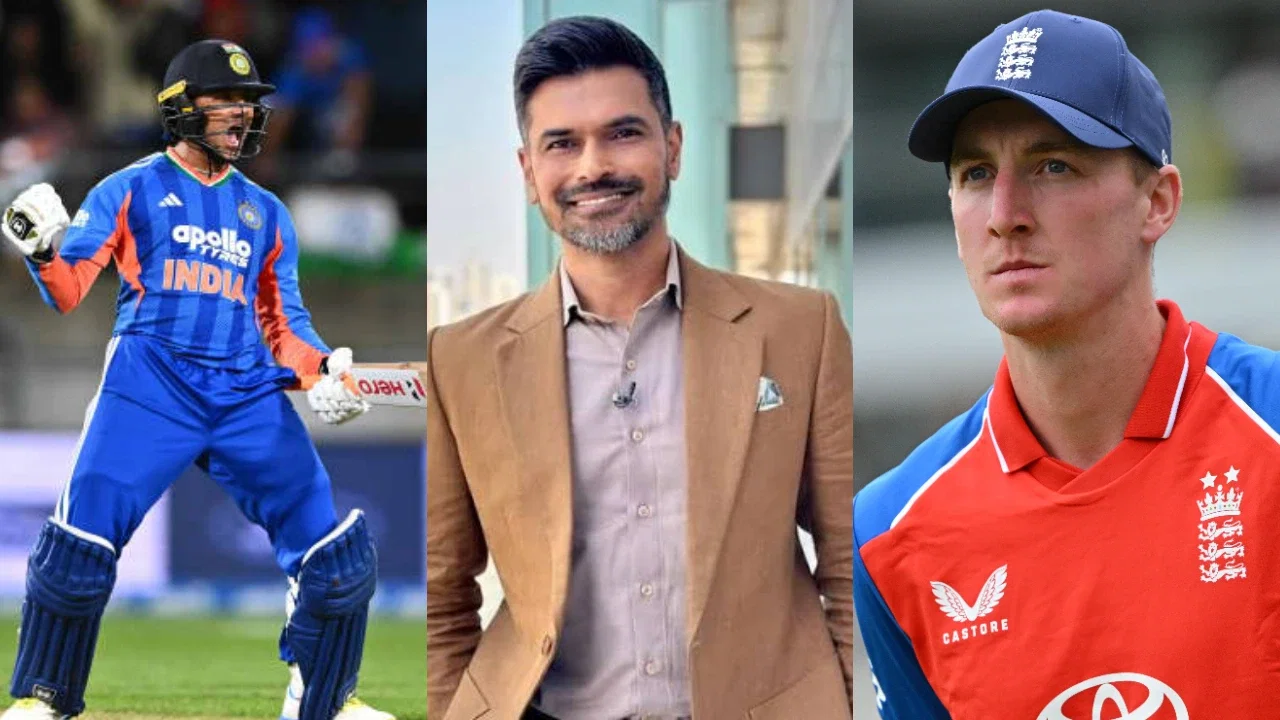
S Badrinath Names Abhishek Sharma the Best T20 Batter, Questions Harry Brook Claims
Former India batter S Badrinath has backed Abhishek Sharma as the most dangerous batter in T20 cricket right now, arguing that the left-handed opener’s power and scoring rate set him apart from the competition. He also took aim at English media commentary suggesting that England captain Harry Brook is currently the format’s leading batter, pointing to Abhishek’s numbers as evidence for his case.
Badrinath’s comments have added another talking point to India’s ongoing five-match T20I series against New Zealand. Abhishek has become known for attacking from the outset, particularly during the powerplay, when fielding restrictions create opportunities for boundary hitters. For Badrinath, that ability does more than produce quick runs: it can put the bowling side under pressure before the innings has properly settled.
Badrinath praises Abhishek’s powerplay impact
Speaking on his YouTube channel, Badrinath described Abhishek as one of the most destructive hitters in the game. He suggested that the opener’s youthful appearance contrasts sharply with the force and confidence of his batting.
“I think Abhishek is one of the most devastating hitters,” Badrinath said. “It is enough to instill fear within the bowlers in the powerplay even though he has a baby face. His batting is on the next level.”
Badrinath also challenged the idea, attributed to sections of the English media, that Brook is the best T20 batter at present. His view was direct: Abhishek should be considered the leading candidate, and his record supports the argument.
The comparison is not simply about reputation. T20 batting is judged through a mix of total runs, consistency, boundary frequency and the speed at which a player scores. Abhishek’s strike rate stands out in that discussion, reflecting his willingness to attack early rather than wait for conditions to become easier.
How Abhishek Sharma and Harry Brook compare
The career figures cited in the discussion show two accomplished batters with different statistical profiles. Brook has scored 4,835 runs in 194 T20 matches at an average of 35.03 and a strike rate of 157.64. His record includes five centuries and 20 half-centuries.
Abhishek, meanwhile, has made 6,633 runs in 221 matches, averaging 33.16 at a strike rate of 179.27. He has recorded 11 centuries and 40 half-centuries. Brook’s average is higher, but Abhishek’s scoring rate and larger number of hundreds and fifties strengthen Badrinath’s case for the Indian opener.
Those numbers need context: career statistics can be shaped by competition, role, conditions and the balance between domestic and international appearances. Still, the figures highlight why Abhishek’s name is increasingly part of conversations about elite T20 batting. His aggressive approach is particularly valuable in a format where a fast start can influence the entire innings.
That does not make the debate settled. Brook has built a strong reputation across formats and remains a major part of England’s white-ball plans. But Badrinath’s assessment reflects a wider question for fans and analysts: should the best T20 batter be defined by average, overall volume, or the ability to change a match in a handful of overs?
India’s changing opening combination draws criticism
Badrinath also questioned India’s frequent changes at the top of the order during the New Zealand series. The team has experimented with different combinations involving Abhishek Sharma, Sanju Samson and Vaibhav Sooryavanshi, leaving uncertainty over who should open and where each player fits best.
In the second T20I, Abhishek and Samson opened, while Vaibhav came in at number three. India then used Abhishek and Vaibhav as the opening pair in the third match. After Ishan Kishan returned to the playing XI, India went back to Abhishek and Samson at the top for the fourth T20I.
Such changes can give a team useful flexibility, especially when it is assessing young players or managing returning batters. However, repeated reshuffling can also make it harder for players to establish clear roles. Openers often need time to develop an understanding of when to attack, when to rotate the strike and how to respond if an early wicket falls.
Badrinath said Samson deserves clarity about his position, rather than being moved around without a consistent plan. He was particularly surprised when Vaibhav and Abhishek opened together, even though India posted 118 runs in the powerplay in that match. A strong start, he suggested, does not remove the need for a settled batting order.
“Who should open? Vaibhav or Sanju Samson? Samson at three, I feel, is not fair,” Badrinath said. “If they decide something, they need to stick to it.”
India face a key decision before the series finale
India’s selection debate comes after New Zealand secured an 87-run win in the fourth T20I in Auckland. The result gives the final match added significance, with India needing to respond while also weighing whether to prioritize continuity or continue testing different combinations.
The fifth and final T20I is scheduled for November 1 in Hamilton. India’s decision at the top of the order will be closely watched, particularly because Abhishek’s attacking style can shape the powerplay and Samson’s role remains a point of discussion. The team may also need to balance opportunities for emerging talent with the value of giving established players a dependable position.
Abhishek’s form and Badrinath’s prediction that he is currently the best T20 batter have brought fresh attention to his growing influence. Whether fans agree with the ranking or prefer Brook’s consistency, the comparison underlines how much modern T20 cricket rewards both impact and efficiency. For India, the immediate challenge is turning individual firepower into a coherent batting plan—and settling on an opening combination that players can trust.
Latest News

SA vs BAN Playing 11 Today, Live Streaming, Pitch & Weather: South Africa tour of Bangladesh 2026, 2nd Test

AUS vs ENG Playing 11 Today, Live Streaming, Pitch & Weather: England tour of Australia 2026, 2nd T20I

Blair Tickner ruled out of 2nd Test vs India, replacement named

Tim Paine and Justin Langer face fresh questions over Australia’s ball-tampering scandal

India tour of Bangladesh gets fresh hope as BCB confirms talks with BCCI

Tom Latham opens up on soft ball problem and saliva ban after draw against India

Ajinkya Rahane slams Tilak Varma for publicly criticising Shahbaz Ahmed after India A’s defeat

ICC to introduce IPL-style bat checks in international cricket

“Smiling Laughing doesn’t happen”: R Ashwin’s dig at India’s approach after draw vs New Zealand

“Not good enough for Test cricket”: Scott Styris, Sunil Gavaskar slam Wellington pitch

Dodda Ganesh declares India ‘out of WTC final race’ after Wellington Test draw

Ajinkya Rahane criticises Shubman Gill for abusing Akash Deep in 1st Test vs New Zealand

‘Why so many boundary riders?’ Dinesh Karthik questions Shubman Gill’s captaincy after Wellington Test

“I just want to enjoy my life”: Yash Dayal reflects on his return to cricket


