

Sachin Tendulkar dragged into India-Pakistan U19 controversy as Mohammad Yousuf criticises celebration
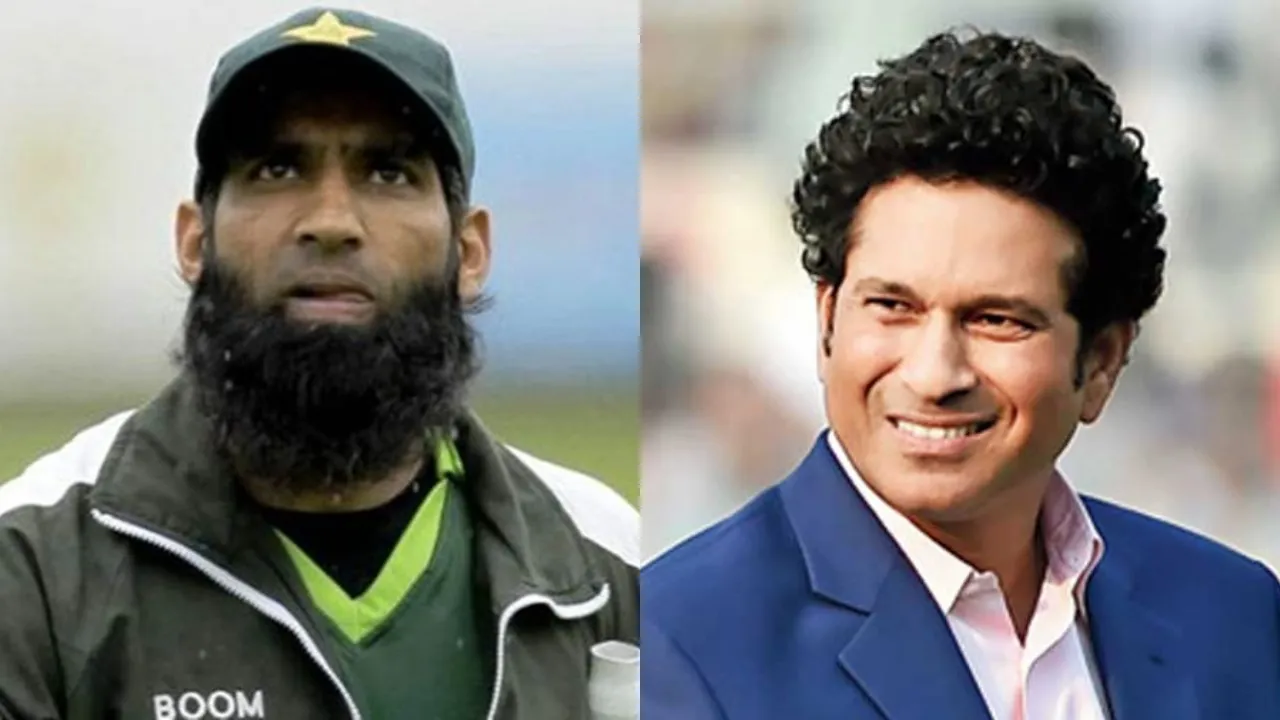
Mohammad Yousuf Urges India’s U19 Players to Show Respect After Dramatic Asia Cup Final
Former Pakistan batter Mohammad Yousuf has called on India’s Under-19 cricketers to show greater restraint after their dramatic one-wicket victory over Pakistan in the Asia Cup final. While congratulating both teams on a fiercely contested match, Yousuf said young players should remember that their conduct represents more than their country: it also reflects their upbringing and values.
The final, played on Saturday, November 14, produced a remarkable finish. India chased down Pakistan’s imposing 338-run target, reaching 339 for nine with a boundary from the last delivery. The result came after India had appeared close to defeat, making the late turnaround one of the tournament’s most memorable moments.
Yousuf points to Sachin Tendulkar and Saeed Anwar
In a post on X, Yousuf described the tournament as a valuable learning experience for players with the potential to become future stars. He praised the pressure-filled contest but also raised concerns about how some Indian players celebrated immediately after the winning shot.
Yousuf’s central message was that sportsmanship matters regardless of the result. He urged the youngsters to remain respectful and composed in both victory and defeat, and named former greats Sachin Tendulkar and Saeed Anwar as examples of players who could serve as role models.
His comments followed reports that some Indian players made inappropriate gestures towards their Pakistani opponents after the winning boundary, including wicketkeeper Hamza Zahoor. Members of India’s support staff reportedly stepped in to calm the situation. The incident has prompted renewed discussion about how teams can celebrate an emotional win without turning the moment into a personal confrontation.
Such scrutiny is common in high-profile India-Pakistan cricket matches, where the rivalry brings intense attention from fans and media. At youth level, however, the spotlight also creates an opportunity to reinforce the qualities that help players develop: discipline, respect for opponents and composure under pressure. A match-winning performance can shape a player’s reputation, but so can the way they respond to the final result.
India’s last-wicket partnership turns the final around
India’s chase looked to be slipping away when the team lost eight wickets for 252 in the 42nd over. With 86 runs still required and only two wickets in hand, Pakistan appeared well placed to defend its total. Mohit Ulva and Manal Chauhan changed the direction of the match with a 57-run stand for the ninth wicket.
Manal made 47 from 32 balls, keeping the chase alive with a brisk innings before falling with India on 302. That left the team needing another 36 runs with one wicket remaining. Mohit, who had already helped revive India’s hopes, stayed at the crease as Chigurupati Venkata joined him.
Venkata was playing his first match of the tournament and contributed an unbeaten 11 from eight deliveries. Their calm partnership took India into the final over, where the target narrowed to eight runs. With three needed from the last ball, Mohit struck Ahmed Hussain’s leg-spin towards long-off and found the boundary to seal the title.
Mohit finished unbeaten on 49 from just 26 deliveries, a knock that combined urgency with control at the decisive stage. The last-ball finish also underlined how quickly a final can change: Pakistan had been close to defending its total, but India’s lower order held its nerve when the margin for error was smallest.
Strong opening stand gave India a platform
India’s pursuit was built on a positive start from captain Lakshya Raichandani and Aaryavir Sehwag. The openers put on 95 runs, with Raichandani scoring 80 and Sehwag contributing 58. Their partnership helped India stay on the required pace against a challenging target.
Pakistan regained control when Sehwag was dismissed, followed by the wickets of Raichandani and Anvay Dravid. The cluster of breakthroughs left India in trouble and set the stage for the late rescue act from Manal and Mohit. In retrospect, the opening stand and the ninth-wicket partnership were equally important: one established the chase, while the other completed it.
Usman Khan’s century powers Pakistan to 337
Pakistan’s total of 337 was built around a commanding innings from opener Usman Khan, who scored 107 from 106 balls. He shared an early 62-run partnership with Hayam Khan before combining with Abdul Qadir to give Pakistan control through the middle overs.
Usman and Qadir added 135 runs in 18 overs. Qadir struck 80 from 54 deliveries, reaching his maiden Youth ODI half-century in 39 balls and attacking India’s spin options with confidence. He hit consecutive sixes against Manal Chauhan and Yashbardhdan Chauhan before Arjun Rajput dismissed him, with VK Vineeth taking the catch at cover.
Usman fell soon afterwards, caught by Rajput at mid-off while attempting to slash a delivery from Kavya Patel. Pakistan were 240 for three after 36 overs, but captain Farhan Yousaf ensured the innings continued to gather momentum. His 60 from 63 balls helped Pakistan pass 300 and set India a demanding target.
India’s bowlers made important gains late in the innings. Patel finished with figures of four for 68, while Venkata claimed three for 40. Those wickets limited Pakistan’s finish, though the total remained substantial enough to put India under considerable pressure.
What the final means for both teams
For India, the victory was a lesson in persistence: even after losing eight wickets, the team kept the chase within reach and found two batters capable of delivering under pressure. For Pakistan, Usman’s century and Qadir’s attacking contribution showed the strength of its top and middle order, although India’s late resistance ultimately proved decisive.
Any prediction about which players will progress to senior international cricket remains uncertain; youth tournaments are an early test, not a guarantee of future success. Still, performances like Mohit’s last-ball finish, Manal’s counterattacking innings and Usman’s century offer compelling signs of talent. Yousuf’s message adds another measure of development: alongside skill and temperament, emerging players are judged by how they treat opponents when the stakes are highest.
Latest News

SA vs BAN Playing 11 Today, Live Streaming, Pitch & Weather: South Africa tour of Bangladesh 2026, 2nd Test

AUS vs ENG Playing 11 Today, Live Streaming, Pitch & Weather: England tour of Australia 2026, 2nd T20I

Blair Tickner ruled out of 2nd Test vs India, replacement named

Tim Paine and Justin Langer face fresh questions over Australia’s ball-tampering scandal

India tour of Bangladesh gets fresh hope as BCB confirms talks with BCCI

Tom Latham opens up on soft ball problem and saliva ban after draw against India

Ajinkya Rahane slams Tilak Varma for publicly criticising Shahbaz Ahmed after India A’s defeat

ICC to introduce IPL-style bat checks in international cricket

“Smiling Laughing doesn’t happen”: R Ashwin’s dig at India’s approach after draw vs New Zealand

“Not good enough for Test cricket”: Scott Styris, Sunil Gavaskar slam Wellington pitch

Dodda Ganesh declares India ‘out of WTC final race’ after Wellington Test draw

Ajinkya Rahane criticises Shubman Gill for abusing Akash Deep in 1st Test vs New Zealand

‘Why so many boundary riders?’ Dinesh Karthik questions Shubman Gill’s captaincy after Wellington Test

“I just want to enjoy my life”: Yash Dayal reflects on his return to cricket


