

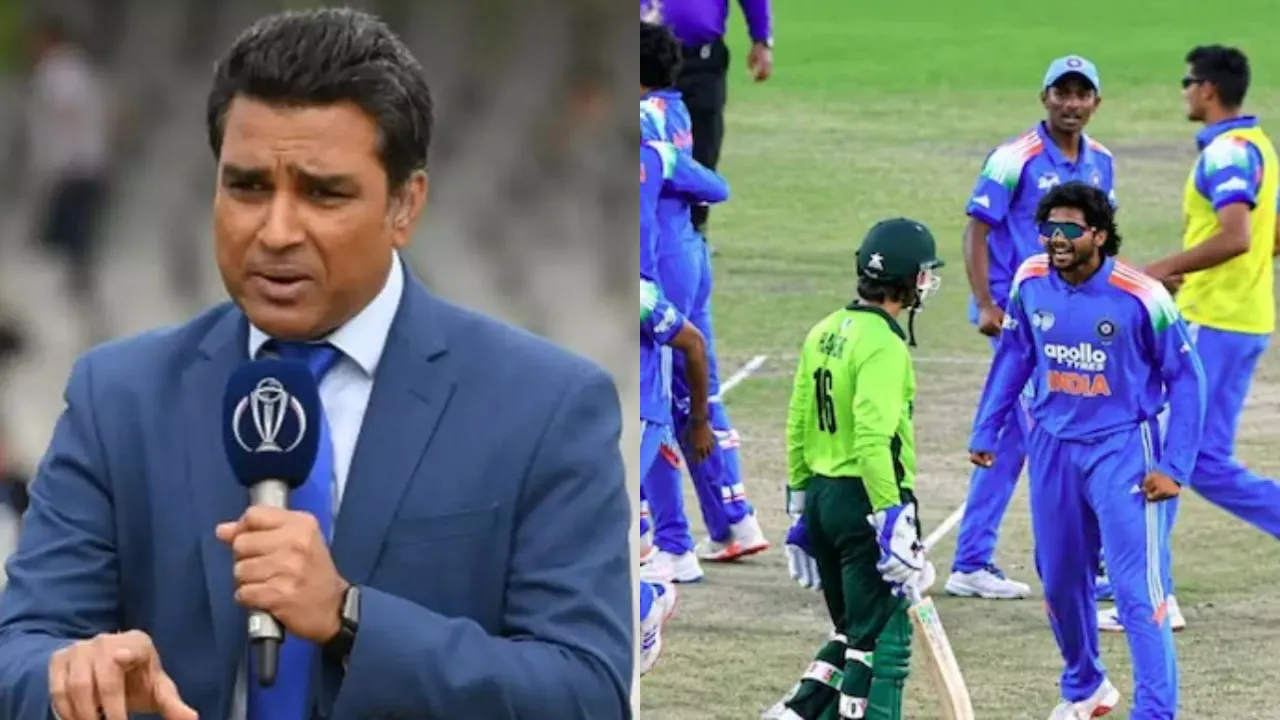
Sanjay Manjrekar calls Pakistan “Soft & Easy Target” after India’s U19 players’ aggressive celebrations
India U19’s Last-Ball Asia Cup Triumph Sparks Debate Over Celebrations
India’s Under-19 team produced a remarkable final-ball comeback to defeat Pakistan by one wicket in the Asia Cup final, but the celebrations that followed have become a talking point of their own. Former India batter and commentator Sanjay Manjrekar questioned the intensity directed at Pakistan, describing the side as a “soft and easy target” and urging Indian cricketers to show comparable aggression against stronger opponents.
The dramatic final took place in Al Amerat, Oman, on Saturday, November 14. Chasing Pakistan’s imposing total of 338, India reached 339 for nine on the final delivery, sealing a victory that looked increasingly unlikely during the closing stages. The result delivered a memorable title moment for captain Lakshya Raichandani’s team—and set off a wider discussion about sportsmanship, rivalry and how young players celebrate big wins.
Manjrekar Challenges India to Show Its Edge Against Top Teams
Manjrekar shared his reaction on X, formerly Twitter, on November 15. He argued that if Indian players wanted to display aggression on the field, they should direct that competitive energy towards teams such as Australia, South Africa, New Zealand and England.
“Indian cricket should now pick guys of their own size if they want to show ‘aggression’ on the field. Pak is now a soft & easy target. I suggest Aus, SA, NZ & Eng…,” he wrote.
The post drew a mixed response. Some fans agreed that celebrations should remain respectful, particularly when directed at opponents who had just lost a close final. Others defended the players’ emotion, pointing to the pressure of an India-Pakistan contest and the extraordinary circumstances of the win. Several supporters also criticised Manjrekar, suggesting he was minimising the team’s achievement or repeatedly questioning the passion shown by Indian players.
The argument reflects a familiar tension in elite sport: players are expected to compete with intensity, but also to show restraint when emotions run high. In youth cricket, where players are still learning how to handle the spotlight, that balance can attract even greater scrutiny.
India’s Chase Turned on a Lower-Order Fightback
India’s pursuit of 339 was built on contributions from several players, but the defining partnership arrived when the team was under severe pressure. Raichandani scored 80, while Aaryavir Sehwag added 58 to keep the chase alive through the middle overs.
India were 252 for eight, still needing 86 runs from 51 deliveries. With only two wickets remaining, Pakistan appeared to have control of the final. Instead, Manal Chauhan and Mohit Ulva produced a crucial 57-run stand for the ninth wicket, changing the momentum and giving India a realistic chance of reaching the target.
Chauhan made 47 from 32 balls before being dismissed at 302, leaving India 36 runs short with one wicket in hand. The pressure then shifted to Ulva and Chigurupati Venkata, who was playing his first match of the tournament. Venkata contributed an unbeaten 11 from eight deliveries, providing valuable support while Ulva took responsibility for the scoring.
Ulva Delivers Under Pressure
India entered the final over needing eight runs, with Pakistan leg-spinner Ahmed Hussain tasked with defending the total. Five runs came from the first five balls, leaving India needing three from the last delivery. Ulva found the boundary, finishing unbeaten on 49 from 26 balls and completing a one-wicket victory at 339 for nine.
The finish was an emphatic conclusion to a tense chase. India’s lower order had to manage both the required rate and the risk of losing the final wicket, while Pakistan were one delivery away from defending their total. The match’s final-ball prediction would have been difficult to make with confidence: the balance of the contest shifted repeatedly, and the outcome remained uncertain until Ulva’s boundary.
Celebrations Become a Separate Talking Point
Indian players rushed onto the field after the winning shot, celebrating a title secured in extraordinary fashion. But footage circulating after the match appeared to show some players making gestures towards Pakistan opponents, including wicketkeeper Hamza Zahoor. One clip reportedly showed Chauhan gesturing in Zahoor’s direction, while members of India’s support staff appeared to step in as the celebrations became more animated.
The videos prompted criticism from viewers who felt the players should have kept their celebrations focused on their own achievement. For them, there is a clear difference between expressing joy after a hard-fought victory and making gestures at opponents who have just endured a painful defeat.
Others argued that the scenes should be viewed in context. An India-Pakistan final carries unusual emotional weight, and a last-ball win after a difficult chase naturally produces an intense reaction. That context helps explain the excitement, though it does not necessarily settle the question of whether every gesture was appropriate.
A Memorable Win and a Lesson in Sportsmanship
India’s victory will be remembered first for its resilience. Raichandani and Sehwag established a platform, while Chauhan, Ulva and Venkata kept the chase alive when the match appeared to be slipping away. Ulva’s decisive boundary capped one of the tournament’s most dramatic finishes and gave India the title by the narrowest possible margin.
The debate surrounding the celebrations, however, highlights another challenge for emerging players: managing emotion in high-profile moments. Competitive fire is part of sport, and passionate celebrations are an understandable response to a major achievement. Respect for opponents remains important too, especially in a final where both teams have contributed to the spectacle.
Manjrekar’s comments have ensured that the match is being discussed beyond its scorecard. Whether fans agree with his assessment or not, the final offered a reminder that sporting success is judged not only by the result, but also by the conduct that follows it. For India’s young players, the dramatic Asia Cup win was a major milestone; how they learn from the scrutiny may prove just as valuable as the trophy itself.
Latest News

SA vs BAN Playing 11 Today, Live Streaming, Pitch & Weather: South Africa tour of Bangladesh 2026, 2nd Test

AUS vs ENG Playing 11 Today, Live Streaming, Pitch & Weather: England tour of Australia 2026, 2nd T20I

Blair Tickner ruled out of 2nd Test vs India, replacement named

Tim Paine and Justin Langer face fresh questions over Australia’s ball-tampering scandal

India tour of Bangladesh gets fresh hope as BCB confirms talks with BCCI

Tom Latham opens up on soft ball problem and saliva ban after draw against India

Ajinkya Rahane slams Tilak Varma for publicly criticising Shahbaz Ahmed after India A’s defeat

ICC to introduce IPL-style bat checks in international cricket

“Smiling Laughing doesn’t happen”: R Ashwin’s dig at India’s approach after draw vs New Zealand

“Not good enough for Test cricket”: Scott Styris, Sunil Gavaskar slam Wellington pitch

Dodda Ganesh declares India ‘out of WTC final race’ after Wellington Test draw

Ajinkya Rahane criticises Shubman Gill for abusing Akash Deep in 1st Test vs New Zealand

‘Why so many boundary riders?’ Dinesh Karthik questions Shubman Gill’s captaincy after Wellington Test

“I just want to enjoy my life”: Yash Dayal reflects on his return to cricket


