

Sanju Samson does a KL Rahul, plays first-over maiden against Matt Henry in 2nd T20I
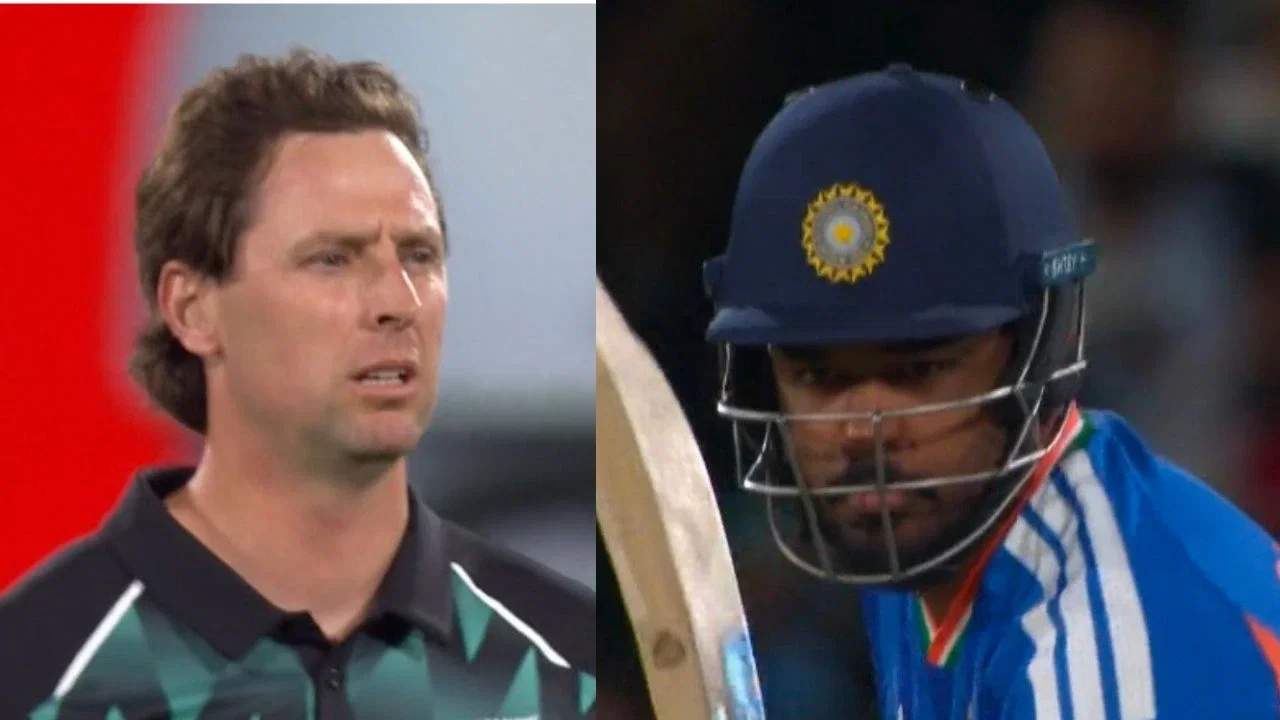
Sanju Samson Endures Maiden Over as New Zealand Reach 180 in Christchurch T20I
India opener Sanju Samson began the second T20I against New Zealand with an unusual setback, failing to score from the opening over at Hagley Oval in Christchurch on Saturday, October 24. Matt Henry delivered six consecutive dot balls, making Samson the latest Indian batter to face a maiden first over in men’s T20 internationals.
The moment offered an early glimpse of the contest’s contrasting themes: New Zealand’s disciplined new-ball bowling, India’s sharp start with the ball, and a substantial recovery led by Glenn Phillips and Bevon Jacobs. New Zealand finished their innings at 180/5 after India captain Shreyas Iyer won the toss and chose to field.
Matt Henry Keeps Sanju Samson Quiet
Henry opened the attack with a controlled spell of line and length, repeatedly targeting the channel outside off stump. Samson was forced to defend, and the New Zealand seamer beat the outside edge on several occasions as he maintained pressure throughout the over.
A maiden first over is an uncommon but not unheard-of occurrence in T20Is. Samson became the fifth Indian opener to experience one, joining KL Rahul, Shikhar Dhawan, Rohit Sharma and Yashasvi Jaiswal. Rahul has faced a maiden opening over five times, while Dhawan, Rohit and Jaiswal have done so once each.
Although the over did not produce a wicket, it gave New Zealand an economical start and tested Samson’s patience. In a fast-paced format where teams often look to score immediately, six scoreless deliveries can influence the early rhythm of an innings. Samson’s response after the opening over was therefore an important point of interest for India’s chase and for any pre-match or live-match prediction of how the innings might develop.
India’s Fast Bowlers Strike Early
India’s pace attack initially gave its captain reason for confidence. Arshdeep Singh removed Tim Seifert for seven, while Bhuvneshwar Kumar dismissed Daryl Mitchell for six. The visitors then struck again in the final over of the powerplay, when Prince Yadav bowled Finn Allen for 16.
Those early breakthroughs left New Zealand looking for stability. Rather than forcing the pace immediately, Phillips and Jacobs rebuilt through a combination of strike rotation and sharp running. Their partnership shifted the momentum, allowing the hosts to recover from the early losses without losing control of the scoring rate.
Phillips and Jacobs Build a 116-Run Partnership
Phillips was New Zealand’s leading scorer, making 70 from 43 deliveries with four boundaries and four sixes. Jacobs contributed 50 from 40 balls as the pair added 116 runs, turning a pressured start into a competitive total. Their partnership provided the foundation for New Zealand’s late acceleration.
The hosts found another gear in the final seven overs, scoring 99 runs during that period. Phillips and Jacobs both fell after reaching half-centuries, but their work had already put New Zealand in a strong position. Michael Bracewell added consecutive boundaries late in the innings to help ensure the scoring did not stall.
New Zealand’s total of 180/5 was their fifth-highest score in a men’s T20I against India on home soil. The figure gave the home side a meaningful target while leaving India’s batters with a clear but demanding task: maintain a healthy scoring rate without allowing the early pressure created by Henry to shape the entire chase.
Arshdeep Leads India’s Bowling Effort
Arshdeep finished as India’s leading wicket-taker with figures of 2/33. Bhuvneshwar, Prince and Nitish Kumar Reddy claimed one wicket apiece. While India’s quicks made important early inroads, the middle overs proved more difficult as Phillips and Jacobs settled into their partnership.
Bhuvneshwar conceded 50 runs in his four overs, reflecting the challenge of containing two batters who were able to find gaps, take quick singles and punish loose deliveries. The contrast between India’s early success and New Zealand’s later acceleration highlighted how quickly the balance of a T20 innings can change.
Phillips Calls 180 a Par Score
Speaking at the innings break, Phillips said New Zealand had viewed a total around 180 as par and credited India with bowling well during the opening stages. He also pointed to the team’s culture and its emphasis on taking extra runs whenever opportunities arise.
“We were thinking about getting to a par score. 180 was par, what we thought, and I thought India bowled well. It’s more about team mentality and culture. We’ve been playing this way and looking for that extra run in any situation,” Phillips said.
His comments underline the value of small contributions in a close T20 match. A quick single, an extra run on a misfield or a well-judged second can add up over an innings, particularly when the final total may be decided by a narrow margin.
What the First Innings Means for the Match
New Zealand’s 180/5 set up a compelling second half. India had shown that its pace attack could take wickets early, but the home side’s recovery demonstrated the importance of partnerships and late-innings acceleration. For India, the chase would require composure after Samson’s quiet opening over and a strong response from the batters to New Zealand’s disciplined bowling.
For fans assessing the match prediction, the key factors were the target, the condition of the Christchurch surface and the pressure of the early overs. New Zealand had posted a competitive score, but India’s batting depth meant the contest remained open. The first innings had established the challenge; the chase would determine whether the visitors could turn a promising start with the ball into a winning result.
Latest News

SA vs BAN Playing 11 Today, Live Streaming, Pitch & Weather: South Africa tour of Bangladesh 2026, 2nd Test

AUS vs ENG Playing 11 Today, Live Streaming, Pitch & Weather: England tour of Australia 2026, 2nd T20I

Blair Tickner ruled out of 2nd Test vs India, replacement named

Tim Paine and Justin Langer face fresh questions over Australia’s ball-tampering scandal

India tour of Bangladesh gets fresh hope as BCB confirms talks with BCCI

Tom Latham opens up on soft ball problem and saliva ban after draw against India

Ajinkya Rahane slams Tilak Varma for publicly criticising Shahbaz Ahmed after India A’s defeat

ICC to introduce IPL-style bat checks in international cricket

“Smiling Laughing doesn’t happen”: R Ashwin’s dig at India’s approach after draw vs New Zealand

“Not good enough for Test cricket”: Scott Styris, Sunil Gavaskar slam Wellington pitch

Dodda Ganesh declares India ‘out of WTC final race’ after Wellington Test draw

Ajinkya Rahane criticises Shubman Gill for abusing Akash Deep in 1st Test vs New Zealand

‘Why so many boundary riders?’ Dinesh Karthik questions Shubman Gill’s captaincy after Wellington Test

“I just want to enjoy my life”: Yash Dayal reflects on his return to cricket


